
Reviewed · INTRAMUROS TOURS
Manila’s Walled City: Intramuros Walking Tour
Intramuros rewards a slow walk. This half-day outing brings Manila’s Spanish-era center to life while also tracing Malay, American, and Japanese chapters of Philippine history. I especially like the mix of major sights and human stories, from Fort Santiago and San Agustin Church to Dr. José Rizal’s final days. The included bottled water and snacks also make practical sense in Manila’s tropical heat.
I also like that the tour does not stop at architecture. Guides such as Ann and Andre explain how the city changed over time, and the horse-drawn kalesa ride gives you a relaxed view of the old district. The main drawback is the heat and the moderate amount of walking, so you need comfortable clothes, sun protection, and suitable attire for churches and museums.
In This Review
- Key points to know before you go
- Why Intramuros is the right place to learn Manila’s past
- Starting at Fort Santiago and the Rizal Shrine
- Manila Cathedral and the changing face of Intramuros
- The kalesa or Tranvia ride adds a welcome pause
- Memorare Manila 1945 and the cost of war
- San Agustin Church, a 1607 survivor
- Casa Manila brings colonial life indoors
- What the $35 price really covers
- Who will get the most from this walking tour
- Practical details before booking
- Should you book Manila’s Walled City tour?
- FAQ
- How long does the Intramuros walking tour last?
- What is included in the $35 price?
- Where does the tour start and end?
- Are morning and afternoon departures available?
- Is the tour suitable for children?
- What should I wear for the tour?
Key points to know before you go
- Fort Santiago sets the historical tone: You spend about an hour exploring one of Intramuros’ most important defensive sites.
- Rizal’s story is central: The Rizal Shrine marks where José Rizal was held before his execution in 1896.
- The kalesa adds variety: A horse-drawn carriage or Tranvia ride breaks up the walking and lets you see the walled city from another angle.
- San Agustin Church is a major highlight: This 1607 church is part of a UNESCO World Heritage Site.
- Casa Manila finishes the route well: Its rooms show how an upper-class Spanish colonial home might have looked.
- The tour suits families and first-time visitors: Children have managed the pace, but everyone should prepare for heat, stairs, and outdoor walking.
Why Intramuros is the right place to learn Manila’s past
Intramuros means within the walls, and the name tells you what makes this district different from the rest of Manila. Inside the old fortifications, streets and buildings point back to the Spanish colonial period, while monuments and museums bring in the earlier and later chapters of Philippine history.
You are not simply looking at old stone. You are following a timeline that reaches from pre-colonization peoples through Spanish rule, American influence, and the Japanese occupation. The tour also explains how Manila developed as a city, which helps connect the separate sights into one story.
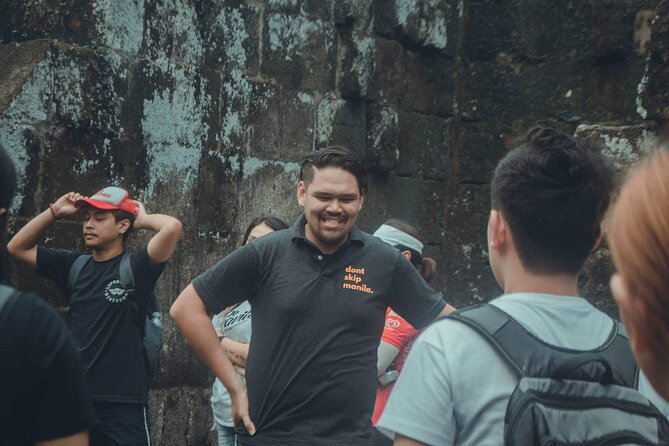
That broad approach is useful because Intramuros can otherwise feel like a collection of churches, ruins, and plazas. A good guide gives those places meaning. Ann and Andre receive especially strong praise for clear English, humor, energy, and the ability to answer questions without making the walk feel like a classroom lecture.
The tour lasts about three and a half hours. That is long enough to see the main sites without trying to cover every corner of the district. You should still expect a steady walk in a tropical climate. The pace has worked for families with young children and teenagers, but you will enjoy it more if you wear light, casual clothes and sensible shoes.
More ways to see Intramuros:
- Manila Old and New: Sightseeing Tour Including Intramuros and Fort Santiago
★ 4.5 · 377 reviews - Express Bamboo Bike Tour inside Intramuros
★ 4.5 · 66 reviews - Manila: Intramuros, Chinatown, and Old Manila Half-Day Tour
★ 5.0 · 37 reviews
Starting at Fort Santiago and the Rizal Shrine
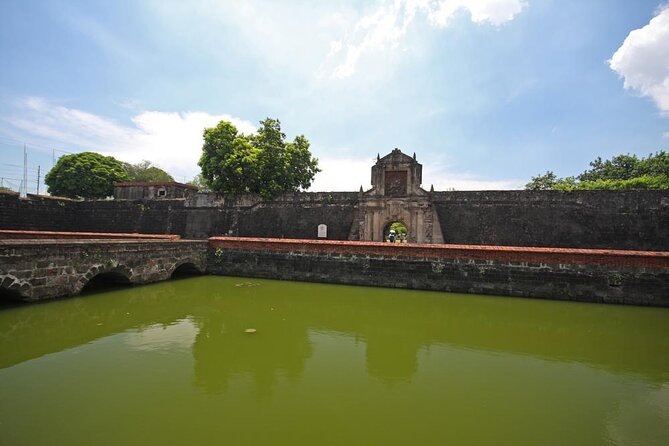
Fort Santiago is the natural opening point. Miguel López de Legazpi, the Spanish navigator and governor who established Manila as a Spanish city, first built the citadel. Its walls and defensive design introduce the political importance of Intramuros and give you an immediate sense of how the old city was protected.
The scheduled visit here takes about one hour, making it the longest stop. That extra time matters. You are not rushing through a gate, taking one photograph, and moving on. The fort includes spaces where your guide can explain Manila’s military past and the changes that shaped the city.
The grounds are also among the more photogenic sections of the route. You might find a mix of preserved structures, open areas, and stone details that make the fort easier to appreciate with context. The condition of individual areas can vary, but the site is described as well maintained.
The Rizal Shrine follows for roughly 30 minutes. José Rizal is one of the Philippines’ national heroes, and the shrine marks the place where he was imprisoned before his execution in 1896. The museum displays personal memorabilia, giving you a closer look at the person behind the national symbol.
This is one of the tour’s strongest moments for anyone interested in Philippine identity. The guide can explain why Rizal matters, rather than leaving you with only dates and a portrait. If you are visiting with children or teenagers, this stop gives the wider political story a personal focus.
You should remember that Fort Santiago involves walking outdoors, and the weather can affect your comfort. Morning departures may be easier for heat-sensitive visitors. Afternoon departures can fit better into a busy Manila schedule, but you should bring water even though a bottle is supplied.
Manila Cathedral and the changing face of Intramuros
Manila Cathedral is a short stop of about 20 minutes. Officially called the Minor Basilica and Metropolitan Cathedral of the Immaculate Conception, it is the cathedral of Manila and one of the central religious landmarks inside Intramuros.
The visit gives you a chance to see a working place of worship as well as a historic building. Its importance is not only architectural. The cathedral reflects the long role of Catholicism in Philippine public and cultural life.
A short stop means you should not expect an extended museum-style visit. Instead, the guide uses the cathedral to explain the religious and colonial setting of Intramuros. You may have time for photographs, but this is not the place to linger loudly or dress casually in a way that conflicts with church rules.
Dress requirements matter throughout the tour. Mini-shorts and sleeveless tops may prevent entry to places of worship and selected museums. Casual clothing is fine, but modest clothing is the safer choice if you want to enter every stop without interruption.
The kalesa or Tranvia ride adds a welcome pause
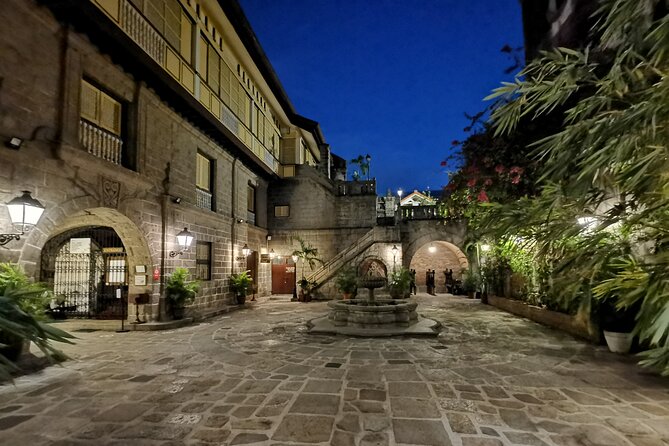
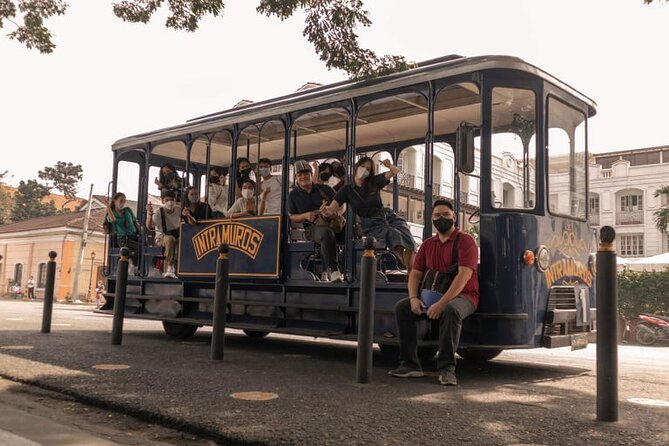
At some point, the walking route includes a ride around Intramuros by kalesa, a traditional horse-drawn carriage, or by Tranvia, a tram. The exact option can depend on the day and operation, but the purpose is the same: to let you see the walled city as a whole while giving your feet a break.
I like this part because it changes the rhythm of the outing. Three and a half hours on foot can feel long in Manila’s heat, even with a good guide. A carriage or tram ride gives you a more relaxed look at the streets and walls, and it creates another chance for photographs.
The kalesa is also more than a novelty. It connects the sightseeing experience with an older form of local transport. You should view it as a pleasant component of the route rather than a long independent excursion. The supplied details do not specify the ride length or whether every departure uses the same vehicle, so do not book this tour solely for an extended carriage journey.
For families, this break can be especially helpful. One family found the ride a relaxing and unusual way to understand the area as a whole. It also helps younger children stay interested when the route includes several historical explanations.
More walking tours in Luzon:
- Manila Intramuros Walking tour with Local Tour Guide
★ 5.0 · 33 reviews - Intramuros & Chinatown Manila Tour – Walking, Food & Culture
★ 4.5 · 32 reviews - Manila: Binondo Walking Tour ( Oldest Chinatown )
★ 5.0 · 30 reviews - Manila Old & New City Walking Tour With A Guide
★ 4.0 · 9 reviews
Memorare Manila 1945 and the cost of war
The Memorare Manila 1945 Monument receives about 20 minutes. It commemorates people who died during the Battle for the Liberation of Manila, fought by Filipino and American forces against Imperial Japanese troops from February 3, 1945.
This stop adds essential balance to the colonial story. Intramuros is often presented through Spanish churches and military walls, but the monument reminds you that Manila’s modern past includes severe wartime destruction and loss.
A short visit can still be powerful when the guide explains the event clearly. The monument gives you a place to pause and consider what happened to the city, rather than treating history as a series of attractive old buildings.
You may find this section quieter and more reflective than Fort Santiago or Casa Manila. That change is useful. It prevents the tour from becoming only an architecture walk and helps you understand why preservation in Intramuros carries such weight.
San Agustin Church, a 1607 survivor
San Agustin Church is one of the most important stops. Completed in 1607, it is a Roman Catholic church from the Spanish colonial period and part of the UNESCO World Heritage Site titled the Baroque Churches of the Philippines.
The stop itself is listed at about 15 minutes, so the visit is fairly brief. Even so, the church deserves attention. Its age, religious role, and status as a protected heritage site make it more than another old building on the route.
You should take a moment to notice the contrast between the church’s endurance and the destruction that affected much of Manila during the war. Your guide can help explain why San Agustin is such a significant part of Intramuros.
Because this is an active place of worship, keep your voice low and follow any local instructions. Appropriate dress is required. The short scheduled time may also mean that you see the church as part of the walking narrative rather than receiving a long, separate church tour.
Casa Manila brings colonial life indoors
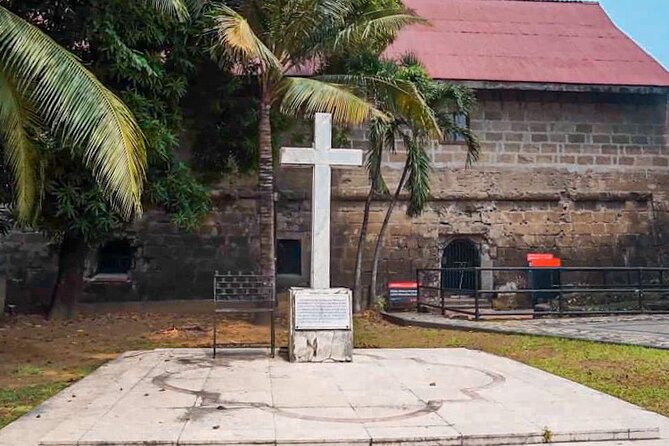
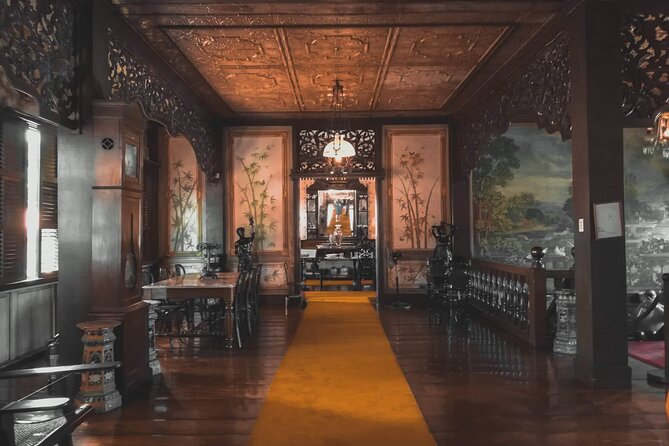
Casa Manila is the final major stop and the endpoint at the Plaza San Luis Complex. The museum recreates colonial lifestyle during the Spanish period and occupies an imposing stone-and-wood house dating from around 1850.
This is a useful counterpoint to Fort Santiago and San Agustin Church. Those sites tell you about defense and religion. Casa Manila shows how a wealthy household might have lived, giving the colonial period a domestic scale.
You spend around 30 minutes here. That is enough to see the furnished rooms and understand the social world the museum presents, though it is not a long museum visit. The interiors offer good photo opportunities, but follow the museum’s rules and avoid assuming that every room can be explored at your own pace.
Ending here makes practical sense. You finish at Casa Manila in the Plaza San Luis Complex rather than returning to the starting point at 1 Sta. Clara Street. If you have another appointment afterward, allow time to arrange your own transport from the end point. Hotel pickup and drop-off are not included.
What the $35 price really covers
The cost is $35 per person. For a three-and-a-half-hour guided visit, the price is reasonable if you want the main Intramuros sights organized into one route.
Several admissions are included, including Fort Santiago, the Rizal Shrine, and Casa Manila. You also receive an English-speaking local guide, bottled water, and snacks. San Agustin Church and Manila Cathedral are listed with no admission charge, so the value comes mainly from the guide, planning, included entries, and the chance to connect the sites through one clear story.
The snacks are simple rather than a full meal. They can still be welcome in the heat, especially when paired with the supplied water. One particularly appealing detail is the mention of fresh taho and ice cream from street vendors. Availability may vary, but this kind of small local refreshment feels more connected to Manila than a packaged tour lunch.
Group discounts are available, and the maximum group size is 30 people. A group of that size can feel less personal, especially in narrow streets or busy sites, but it also keeps the price below what you might pay for a private guide. If you prefer frequent questions and close contact, ask about the expected group size before booking.
Tips and gratuities are not included. Hotel pickup and drop-off are also excluded, so you need to reach the starting point yourself and make your own way onward after Casa Manila.
Who will get the most from this walking tour
I would recommend this experience to a first-time visitor who wants a clear introduction to Manila’s past without planning every admission and route separately. It works particularly well if you have only part of a day and want to see Fort Santiago, the cathedral, San Agustin Church, and Casa Manila in one outing.
Families can also make good use of it. The pace has suited a six-year-old and a teenager, and the kalesa or Tranvia ride breaks up the walking. Children must be accompanied by an adult, and the child rate applies only when sharing with two paying adults.
The tour is also a good fit for people with a personal connection to the Philippines. The story of Rizal, the colonial period, and the Battle for Manila can take on extra meaning if you are learning about Filipino family or national history.
You might prefer a different option if you want a private, slow-paced architectural tour or a food-focused experience. A maximum group of 30 and a fixed route limit flexibility. The tour also involves a moderate amount of walking, so anyone who struggles in heat should choose the cooler departure time, dress carefully, and prepare to pause when needed.
Practical details before booking
You can choose a morning or afternoon departure. That flexibility makes it easier to fit Intramuros around other Manila plans, but weather should influence your choice. Wear comfortable clothing, use sun protection, and carry any extra water you may need.
The meeting point is 1 Sta. Clara Street in Intramuros, Manila. The tour ends at Casa Manila in the Plaza San Luis Complex on General Luna Street. The area is near public transportation, but hotel transfers are not part of the package.
Mobile tickets are offered, and confirmation is normally received at booking. If you book within nine hours of departure, confirmation arrives as soon as possible and depends on availability.
Free cancellation is available if you cancel at least 24 hours before the local start time. Changes or cancellations inside that window are not accepted for a refund. The tour requires good weather and a minimum number of participants. If the operator cancels for either reason, you can choose another date or experience, or receive a full refund.
Should you book Manila’s Walled City tour?
I would book it if you want an efficient, story-led introduction to Intramuros. The strongest reasons are the guide-led connection between sites, the Rizal Shrine, the UNESCO-listed San Agustin Church, and the useful pause provided by the kalesa or Tranvia ride.
Ann and Andre have been praised for warmth, humor, clear English, and strong command of the material. That matters here. Intramuros is much easier to understand when someone explains why the fort, church, home, and war monument belong in the same story.
Skip it only if you dislike group tours, need a fully private pace, or cannot manage moderate walking in tropical weather. For most first-time visitors, $35 buys a well-planned half-day with several admissions, refreshments, and a solid introduction to Manila’s most important historic district.
FAQ
How long does the Intramuros walking tour last?
The tour lasts approximately 3 hours and 30 minutes.
What is included in the $35 price?
The price includes an English-speaking local guide, bottled water, snacks, and admission tickets for Fort Santiago, the Rizal Shrine, and Casa Manila.
Where does the tour start and end?
The tour starts at 1 Sta. Clara Street in Intramuros, Manila. It ends at Casa Manila in the Plaza San Luis Complex on General Luna Street.
Are morning and afternoon departures available?
Yes. You can choose between morning and afternoon departure times.
Is the tour suitable for children?
Most children can participate, but children must be accompanied by an adult. The child rate applies only when sharing with two paying adults.
What should I wear for the tour?
Wear comfortable clothing suited to a tropical climate. Dress modestly because mini-shorts and sleeveless tops may prevent entry to places of worship and selected museums.
Just added around Luzon
- Pagsanjan Falls Adventure with Lunch and Rapids Experience★ 4.5 · 3 reviews
- Private Airport Transfer Manila to Hotel in Manila or vice versa★ 5.0 · 3 reviews
- The Jeepney & Tuk Tuk Adventure ride with Local Guide★ 4.5 · 4 reviews
- Sagada and Banaue Rice Terraces 4-Day Tour★ 5.0 · 4 reviews
- Manila Food Tour Experience with Local Guide★ 5.0 · 4 reviews
- Mt. Pinatubo Day Tour from Manila★ 5.0 · 4 reviews
- Day Hike: Mount Daraitan plus Tinipak River start point Manila** updated 2022★ 5.0 · 4 reviews
- Manila Social and Political Walk★ 5.0 · 4 reviews
Intramuros Tours, side by side.

Intramuros, Manila: Historical Bamboo Bike Tour
Read the review →
Experience Intramuros with Bamboo Bicycle – Ecotours
Read the review →
Intramuros, Chinatown, and Old Manila Half-Day Tour
Read the review →Manila Old and New: Sightseeing Tour Including Intramuros and Fort Santiago
Read the review →

Explore Intramuros: Introduction to Philippine History
Read the review →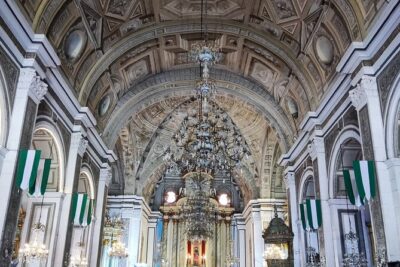
Experience Manila’s Heritage: Intramuros & More in Half a Day!
Read the review →Where else this one shows up