
Reviewed · INTRAMUROS TOURS
Manila Intramuros Walking tour with Local Tour Guide
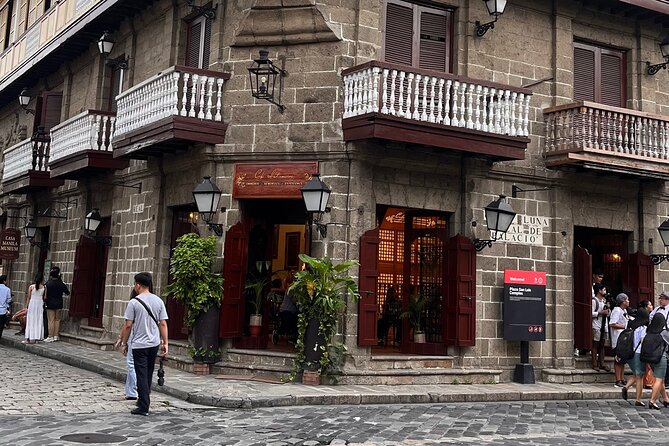
Old Manila tells its story in stone. This small-group walking tour brings you through Intramuros, Manila’s walled Spanish-era district, with a guide who connects grand landmarks to the painful events of the Battle of Manila. I like the focus on both celebrated and darker moments, and I like that the route includes Casa Manila, where history becomes more personal through rooms, furniture, and daily life.
The tour costs $55 per person and lasts about two to three hours. That is fair value if you want context rather than a quick photo stop. The main drawback is the heat and walking, plus San Agustin Church and Casa Manila are closed every Monday, so your route will be less complete on that day.
In This Review
- Key points to know before you go
- Why Intramuros is worth two or three hours
- Starting at Figaro Coffee in Intramuros
- Manila Cathedral and Plaza de Roma
- San Agustin Church and the value of the interior
- Fort Santiago and the Battle of Manila
- Casa Manila and everyday colonial life
- The guide can make or break the experience
- Is $55 good value?
- Who should book this walk?
- A practical plan for your day
- Should you book the Intramuros walking tour?
- FAQ
- How long does the Intramuros walking tour last?
- Where does the tour start?
- Where does the tour end?
- Which places are included in the route?
- Are San Agustin Church and Casa Manila open every day?
- What happens if bad weather cancels the tour?
Key points to know before you go
- Four major stops in one compact route: See Manila Cathedral, San Agustin Church, Fort Santiago, and Casa Manila in roughly two to three hours.
- History with its darker chapters included: The tour covers Spanish rule, the Battle of Manila, Fort Santiago’s wartime role, and the suffering linked to the old dungeons.
- A guide makes the walls easier to read: Guides such as Mari and Victor are praised for clear explanations, humor, patience, and helpful answers.
- Casa Manila is a highlight for many visitors: The recreated colonial mansion offers a look at how the Filipino elite lived during the Spanish period.
- Small groups keep questions manageable: The maximum group size is 10 people, with group discounts available.
- Plan around Mondays: San Agustin Church and Casa Manila Museum are closed every Monday.
Why Intramuros is worth two or three hours

Intramuros can look simple at first: old walls, churches, plazas, and a fort. Without help, you may see attractive buildings but miss the connections between them. A local guide gives the district a clearer shape, explaining how Manila developed and how the Philippines moved through centuries of Spanish rule, war, and rebuilding.
I especially like the time range covered here. The tour presents Intramuros as part of a much longer story, reaching back across about 700 years of Philippine history. That broad introduction matters because the district is not just a Spanish colonial set piece. It also reflects Filipino identity, Catholic tradition, military power, resistance, and the destruction of Manila during World War II.
The route is also useful for a first visit to Manila. You get a short, organized introduction before spending more time on your own. The tour returns to Figaro Coffee at the FEMII Building, so you do not need to solve a second transport problem at the end.
More ways to see Intramuros:
- Manila Old and New: Sightseeing Tour Including Intramuros and Fort Santiago
★ 4.5 · 377 reviews - Manila’s Walled City: Intramuros Walking Tour
★ 5.0 · 82 reviews - Express Bamboo Bike Tour inside Intramuros
★ 4.5 · 66 reviews
Starting at Figaro Coffee in Intramuros
The meeting point is Figaro Coffee, FEMII Building, 1002 Soriano Avenue, inside Intramuros. The area is near public transportation, which makes the start practical if you are already exploring central Manila.
Confirmation is provided at booking. The group can include up to 10 people, a useful limit in narrow streets and busy public spaces. A smaller group also gives you a better chance to ask about details that catch your eye, rather than simply following behind a guide.
The tour includes a local guide, bottled water, a welcome drink, and admission fees. Wear comfortable clothing and walking shoes. For church visits, dress modestly as well as comfortably. Manila’s heat can make a short walk feel much longer, so water and light clothing are sensible choices.
One unusual extra is the Lamborghini bike. The name sounds grander than the activity itself. In practical terms, it is a three-wheeled paddle bike, and you can try it briefly without doing the pedaling yourself because someone can pedal for you. Think of it as a light, playful break rather than a major part of the tour.
Manila Cathedral and Plaza de Roma
Manila Cathedral is one of the first important stops. The cathedral helps establish Intramuros as a center of Catholic life and Spanish colonial authority. Your guide can give the building a place in the wider story instead of leaving you to admire the facade without context.
The stop is planned for about 35 minutes, and admission is included. That gives you enough time to look around and hear the explanation without turning the visit into a long church tour.
Plaza de Roma is also part of the planned focus, although the listed stop details place the cathedral first. The plaza helps you understand how public and religious spaces were arranged inside the walled city. This is one of those places where a guide is particularly useful. A few minutes of explanation can show why an open square mattered to colonial Manila.
You should expect a historical introduction rather than a specialist architectural lecture. The strongest part of the guiding style is its ability to make a large amount of information manageable. Mari, one of the named guides, is praised for giving a short opening lesson on Philippine history before moving into Intramuros. That approach suits visitors who want a clear starting point without spending an entire day in a museum.
San Agustin Church and the value of the interior
San Agustin Church is one of the oldest stone churches in the Philippines. Its importance comes from both its age and its place in the development of Manila under Spanish rule. The planned visit lasts about 35 minutes, with admission included.
This stop gives the tour a different mood from Fort Santiago. The fort deals with power, confinement, and war. San Agustin presents the religious side of colonial life, with architectural details and a setting that helps explain why churches became such important centers in Philippine communities.
The interior is a reason to choose a guided visit instead of only walking past. You can ask about details you might otherwise overlook, and the guide can place the church within the larger story of Intramuros. The tour does not ask you to treat the building as decoration. It shows how faith and government were closely linked during the Spanish period.
There is one important scheduling catch: San Agustin Church is closed every Monday. If you book for that day, you should expect this part of the visit to be unavailable. Casa Manila Museum is also closed on Mondays, so Monday visitors miss two of the four main stops. Check the day before paying if seeing both interiors matters to you.
More walking tours in Luzon:
- Intramuros & Chinatown Manila Tour – Walking, Food & Culture
★ 4.5 · 32 reviews - Manila: Binondo Walking Tour ( Oldest Chinatown )
★ 5.0 · 30 reviews - Manila Old & New City Walking Tour With A Guide
★ 4.0 · 9 reviews - Manila Private Walking Tour With A Local Guide (Private Tour)
★ 4.5 · 7 reviews
Fort Santiago and the Battle of Manila
Fort Santiago is the emotional center of the tour. The stop lasts about 45 minutes, longer than the other individual visits, and focuses strongly on the past and present, including World War II and the Battle of Manila.
The fort’s walls and grounds are easier to understand when you hear what happened there. Your guide discusses the darkest parts of Intramuros, including the violence and suffering connected with the Battle of Manila and the dungeons. This is not a light sightseeing stop, and it should not be treated as one.
The tour also includes the Dr. Jose Rizal Shrine and the White Cross. These details expand the visit beyond military architecture. Jose Rizal is a central figure in Philippine history, and his connection with Fort Santiago gives the site a strong national meaning. The White Cross and dungeon add a more direct sense of the people affected by imprisonment and wartime destruction.
I like that the tour does not soften Intramuros into a tidy colonial postcard. The history includes beautiful churches and grand residences, but it also includes occupation, confinement, and the near destruction of Manila in World War II. That balance is one of the experience’s main strengths.
Fort Santiago can also be the most demanding stop emotionally. If you prefer only architecture and photography, the wartime material may feel heavy. If you want to understand why Intramuros matters to modern Manila, it is essential.
Casa Manila and everyday colonial life
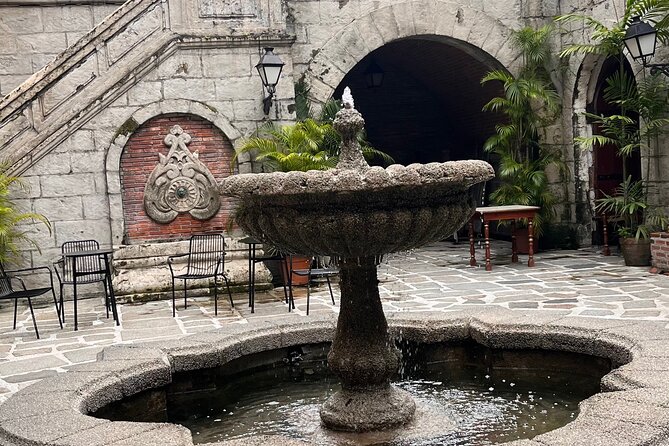
Casa Manila is a replica of a Spanish colonial mansion. Its purpose is to show how the Filipino elite lived during the Spanish colonial period, using rooms, furnishings, and decorative details rather than battlefield stories.
The planned visit lasts about 35 minutes. This is often the most accessible stop for visitors who enjoy interiors. You get a sense of domestic life, social status, and the way Spanish influence shaped elite homes. The intricate decor gives the guide plenty to explain, and it helps you picture the period in a way that a wall or plaza cannot.
Casa Manila also balances the darker tone of Fort Santiago. After hearing about imprisonment and war, it is useful to see how another part of colonial society lived. The contrast raises good questions about class, privilege, and the different experiences of people inside and outside the walls.
Do not expect an untouched ancestral home. It is a replica, so its value comes from the picture it creates, not from every object being original to one family. That distinction is worth keeping in mind. Still, for many visitors, the house is a highlight because it turns broad political history into familiar things: rooms, furnishings, household routines, and social habits.
Casa Manila is closed every Monday. Since San Agustin Church is closed that day too, Monday is not the best choice if you want the full route.
The guide can make or break the experience
The strongest praise for this tour centers on its guides. Mari is described as funny, engaging, enthusiastic, and capable of condensing several centuries of Philippine history into a short introduction. That is a useful skill in Intramuros, where the facts can pile up quickly.
Victor is praised for being informative and attentive. That combination matters. An informative guide gives you the background, while an attentive guide notices questions, adjusts the pace, and helps you understand places that might otherwise seem ordinary.
The guiding style appears friendly rather than formal. You should expect conversation, questions, and stories instead of a nonstop academic speech. That suits the tour’s short length. In two to three hours, the goal is not to memorize every date. The goal is to leave with a working sense of how Intramuros fits into Philippine history.
Practical kindness also comes through in the details. On one rainy outing, the guide provided umbrellas and water. That does not guarantee umbrellas on every departure, but it suggests a guide who pays attention to comfort rather than simply reciting information.
Is $55 good value?
At $55 per person, this is not the cheapest way to walk around Intramuros. You could visit the district independently and pay for some entries yourself. The real question is what you want from the visit.
The price makes more sense if you value:
- A local guide who explains the connection between the sites
- Admission fees included
- Bottled water and a welcome drink
- A small group capped at 10 people
- A compact route that covers the major landmarks
- Help understanding the Battle of Manila and Jose Rizal’s role
The value is weaker if you already know Philippine history, prefer to set your own pace, or want long, quiet visits inside each building. A two to three hour schedule is efficient, but it also means the stops are fairly focused. Casa Manila, San Agustin Church, and Fort Santiago each receive about 35 to 45 minutes, not an entire afternoon.
Group discounts may improve the price for larger parties. The experience had more than five bookings in the previous month and a 100 percent recommendation rate from 33 ratings, with a five-star average. Those figures suggest steady interest and strong satisfaction, but you should still choose it for the format, not just the score.
Who should book this walk?
I would recommend it to first-time visitors to Manila, history fans, and anyone who wants a clear introduction to Intramuros without arranging separate admissions and research. It also suits visitors who enjoy asking questions and prefer a personal explanation to reading signs alone.
Families and mixed-age groups may appreciate the variety. Churches, plazas, a fort, a shrine, a dungeon, and a colonial home create more contrast than a single museum visit. The short bike experience may also add a bit of fun for children, though it is not the main attraction.
It is less suitable for anyone who dislikes walking, hot weather, solemn wartime history, or a fixed route. The tour requires good weather, and poor conditions can lead to a new date or a full refund. Comfortable clothing is not optional advice here. It is part of making the day enjoyable.
Free cancellation is available up to 24 hours before the start time. Cancellations or changes made less than 24 hours ahead are not refunded or accepted, and cut-off times use local Manila time.
A practical plan for your day
Choose a day other than Monday if you want all four principal stops. Arrive at Figaro Coffee with enough time to find the meeting point inside Intramuros, then expect the tour to return there at the end.
Keep your clothing modest for the churches and comfortable for walking. Bring only what you need, since the route includes outdoor areas and historic interiors rather than a long stop for sitting.
Give the guide room to explain the difficult parts of the story. Fort Santiago and the Battle of Manila are not just background details. They explain why Intramuros carries such weight in Manila today.
If rain threatens, remember that the experience depends on good weather. The provider may offer another date or a full refund if conditions force cancellation.
Should you book the Intramuros walking tour?
Book it if you want a short, well-organized history lesson with a local guide, especially on your first visit to Manila. The route covers the district’s best-known landmarks, but its real strength is the connection between them: faith, colonial society, national identity, imprisonment, and wartime destruction.
I would choose Mari or Victor if available, based on their warm and clear guiding style. Pick a non-Monday date, wear practical clothes, and expect the most memorable moments at Fort Santiago and Casa Manila for very different reasons.
Skip it if you want complete freedom, long visits, or a purely scenic stroll. For most readers seeking a meaningful introduction to Intramuros, though, $55 is a reasonable price for the explanation, admissions, water, and efficient route.
FAQ
How long does the Intramuros walking tour last?
The experience lasts approximately two to three hours.
Where does the tour start?
The tour starts at Figaro Coffee in the FEMII Building, 1002 Soriano Avenue, Intramuros, Manila.
Where does the tour end?
The activity ends back at the meeting point at Figaro Coffee.
Which places are included in the route?
The route includes Manila Cathedral, San Agustin Church, Fort Santiago, and Casa Manila. It also covers Plaza de Roma, the Dr. Jose Rizal Shrine, the White Cross, and the dungeon as part of the historical focus.
Are San Agustin Church and Casa Manila open every day?
No. Both San Agustin Church and Casa Manila Museum are closed every Monday.
What happens if bad weather cancels the tour?
If the experience is canceled because of poor weather, you will be offered a different date or a full refund.
Just added around Luzon
- Pagsanjan Falls Adventure with Lunch and Rapids Experience★ 4.5 · 3 reviews
- Private Airport Transfer Manila to Hotel in Manila or vice versa★ 5.0 · 3 reviews
- The Jeepney & Tuk Tuk Adventure ride with Local Guide★ 4.5 · 4 reviews
- Sagada and Banaue Rice Terraces 4-Day Tour★ 5.0 · 4 reviews
- Manila Food Tour Experience with Local Guide★ 5.0 · 4 reviews
- Mt. Pinatubo Day Tour from Manila★ 5.0 · 4 reviews
- Day Hike: Mount Daraitan plus Tinipak River start point Manila** updated 2022★ 5.0 · 4 reviews
- Manila Social and Political Walk★ 5.0 · 4 reviews
Intramuros Tours, side by side.

Intramuros, Manila: Historical Bamboo Bike Tour
Read the review →
Experience Intramuros with Bamboo Bicycle – Ecotours
Read the review →
Intramuros, Chinatown, and Old Manila Half-Day Tour
Read the review →Manila Old and New: Sightseeing Tour Including Intramuros and Fort Santiago
Read the review →


Explore Intramuros: Introduction to Philippine History
Read the review →Where else this one shows up