
Reviewed · INTRAMUROS TOURS
Manila Old and New: Sightseeing Tour Including Intramuros and Fort Santiago
Manila makes more sense when you see both sides. This four-hour tour links modern Makati with old Intramuros, giving you a useful first look at the city’s financial center, Spanish colonial past, and wartime memory. I especially like the hotel transport in an air-conditioned vehicle and the visit to San Agustin Church and Fort Santiago, two places that give Manila’s story real weight. The main caution is traffic: a tour advertised at four hours can run much longer, especially later in the day.
The strongest guides bring the route to life. Nori, Richard, Frank, Stella, Fernando, and Marloo are praised for clear historical explanations and friendly service, though the experience can depend heavily on who leads your group. Walking is limited, which helps in Manila’s heat, but you should still wear comfortable shoes and allow extra time after the scheduled return.
In This Review
- Key points to know before you book
- Why this tour works as a first look at Manila
- Starting in Makati, Manila’s modern face
- A quiet pause at the Manila American Cemetery
- Roxas Boulevard and Rizal Park
- Walking through Intramuros
- San Agustin Church and its Baroque details
- Fort Santiago and the story of José Rizal
- The guide can make or break the experience
- Timing, traffic, and group size
- Is $103 good value?
- Who should book it?
- Should you book Manila Old and New?
- FAQ
- How long does the Manila Old and New tour last?
- What locations are included?
- Is hotel pickup included?
- Is transportation air-conditioned?
- Is admission to the historic sites included?
- How much walking is involved?
- Can children join the tour?
- What happens if rain affects the tour?
Key points to know before you book
- Makati and Intramuros in one outing: See modern business districts, old Spanish walls, Rizal Park, and major historic sites without arranging separate transport.
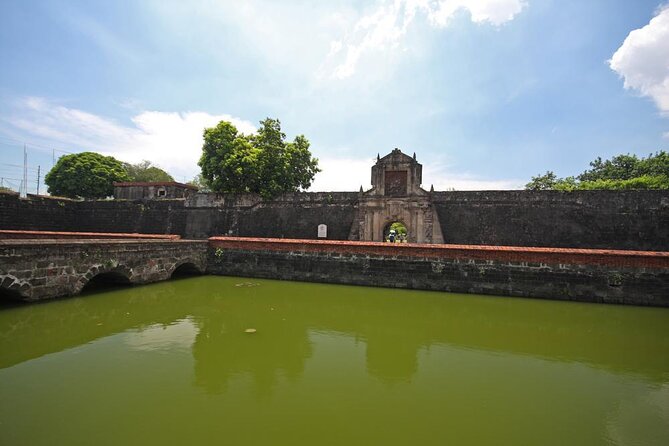
- Fort Santiago carries the emotional weight: The fort is tied to Dr. José Rizal, Philippine independence, wartime suffering, and several periods of colonial rule.
- San Agustin Church is a short but worthwhile stop: Its Baroque design and age make it one of the tour’s best architectural highlights.
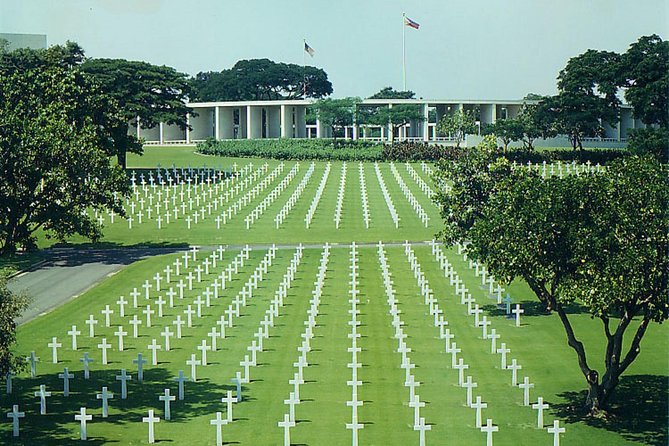
- The American Cemetery adds important context: Its memorial grounds connect Manila to the Second World War and honor American, Filipino, and Allied service members.
- Traffic can change the day: Some groups return close to schedule, while others have arrived 1.5 to 3 hours late.
- Small groups are possible, but not guaranteed: The vehicle can hold up to 30 people, yet several departures have had only three to six participants.
Why this tour works as a first look at Manila
Manila is not a city you understand from a single postcard view. Makati’s office towers and polished avenues tell one story. Intramuros, with its stone walls, churches, and ruined buildings, tells another. This tour puts both in the same half-day frame.
That contrast is the real purpose of the outing. You are not simply checking off monuments. You are seeing how the modern Philippine capital grew around layers of Spanish rule, American influence, Japanese occupation, war, and national independence.
At $103, the tour is not the cheapest way to see Manila. Its value rests in convenience and context. You receive hotel pickup and drop-off at selected hotels, an air-conditioned vehicle, an English-speaking guide, and admission to the paid historic sites. For a first visit, that can be worthwhile, especially if you prefer not to work out transport between Makati, Taguig, Rizal Park, and Intramuros.
The value weakens if your hotel is far from the route or if traffic stretches the day without adding much sightseeing. You are paying partly to avoid the hassle of crossing Manila on your own. If you already know the city or want a slow visit to Intramuros, an independent day may give you more control.
More ways to see Intramuros:
- Manila’s Walled City: Intramuros Walking Tour
★ 5.0 · 82 reviews - Express Bamboo Bike Tour inside Intramuros
★ 4.5 · 66 reviews - Manila: Intramuros, Chinatown, and Old Manila Half-Day Tour
★ 5.0 · 37 reviews
Starting in Makati, Manila’s modern face
The morning or afternoon outing begins with pickup from selected hotels, with Fairmont Makati listed as the meeting point. Confirm your pickup details carefully when booking, since hotel service is not offered everywhere.
The vehicle takes you through Makati, the center of the Philippine financial district. Ayala Boulevard, Nielson Tower, Forbes Park, and the area around Fort Bonifacio help set up the modern side of the city.
Nielson Tower receives a brief stop. The Filipinas Heritage Library collection is kept there, and the building offers an unusual link between Manila’s past and present. This is not a long museum visit, so think of it as a quick point of orientation rather than a major attraction.
The route then passes Forbes Park, an exclusive residential area often called Millionaire’s Row. This segment is viewed from the vehicle, so its value comes from the guide’s explanation and the contrast with the older districts later in the day.
Several strong guides make the drive useful. Nori is often praised for supplying historical facts while the van moves through the city. Richard is described as easy to talk with and good at explaining neighborhoods. Frank receives similar praise for connecting places to Philippine history and culture.
That said, guide performance is not completely consistent. One poor experience involved a long first drive with little introduction or commentary. If your guide is quiet, ask questions early. The route gives you plenty to ask about, from Makati’s growth to the city’s colonial boundaries.
A quiet pause at the Manila American Cemetery
The American Cemetery and Memorial in Fort Bonifacio is one of the tour’s most meaningful stops. The cemetery holds the largest number of American soldiers killed in the Second World War in any cemetery, along with Filipino and other Allied service members.
You have about 15 minutes here. That is enough for a short look and some reflection, but not a full study of the grounds. The setting is notably different from the crowded city streets, and the memorial adds wartime context before you reach Intramuros.
I consider this stop more important than its short timing suggests. It reminds you that Manila’s story is not only about Spanish churches and colonial walls. The city was also a major site of wartime destruction and loss.
The limited time is the drawback. If military history is your main interest, you may want to spend longer here than the tour allows, but the schedule moves on. Still, as part of a broad introduction, it is a powerful stop.
Roxas Boulevard and Rizal Park
The vehicle continues toward Old Manila along Roxas Boulevard, the waterfront road beside Manila Bay. The boulevard is known for its coconut trees and sunset views, though this tour does not promise a sunset stop. You mainly see it from the vehicle.
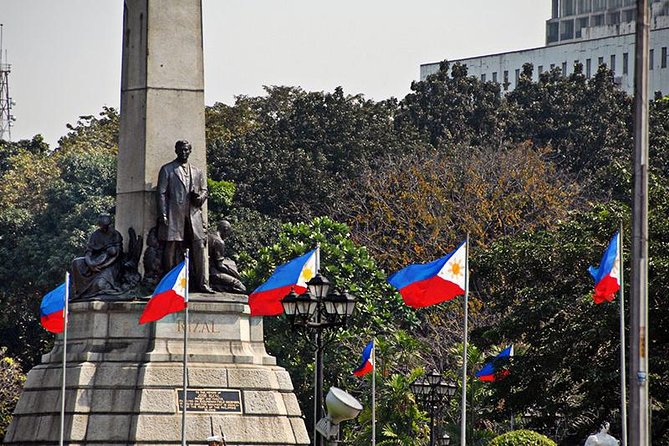
You also pass through Luneta, better known as Rizal Park. The tour includes about 10 minutes here, with a view of the statue of Dr. José Rizal, the Philippine national hero.
This short stop helps prepare you for Fort Santiago. Rizal’s name appears throughout Manila, and understanding his role makes the later visit more meaningful. He was a writer, doctor, and leading figure in the country’s national story. The tour connects his memorial at Luneta with the place where he was imprisoned and executed.
Ten minutes is enough for the main statue, but not for a long walk through the park. Treat Rizal Park as a brief introduction, not a full park tour.
A few more trips and experiences worth a look
- Manila Filipino Cooking Class: Meryenda Favorites
★ 5.0 · 80 reviews - Batad Guided Tour
★ 5.0 · 78 reviews - Manila Super Saver: Manila Sightseeing plus Tagaytay Tour with Taal Volcano
★ 4.0 · 75 reviews - PanoramicTagaytay Ridge Tour from Manila
★ 4.0 · 52 reviews
Walking through Intramuros
Intramuros is the heart of the old Manila portion. Built by the Spanish in the late 1500s, the walled district contains stone defenses, churches, lanes, ruins, and reminders of the colonial city.
You spend roughly 30 minutes exploring the area, with some walking on cobblestone paths. The pace is not especially demanding, but Manila’s humidity can make even a short walk tiring. Comfortable walking shoes are a good idea, and light clothing will make the outing easier.
Intramuros is where the tour feels most distinctive. Makati can resemble other major business districts, but the old walled city gives you a clear sense of Manila’s Spanish-era planning and defense. You can look closely at the masonry, church architecture, old walls, and remains that survived centuries of political change and wartime destruction.
The schedule is tight. Thirty minutes gives you an introduction, not a thorough exploration. You may want to return independently if you care about colonial architecture, religious art, or the district’s smaller streets.
The tour can also be affected by weather and religious services. Fort Santiago may close during heavy rain because of flooding. On Sundays, Mass at San Agustin Church can limit interior access and photography. A dry weekday is likely the safest choice if your schedule allows it.
San Agustin Church and its Baroque details
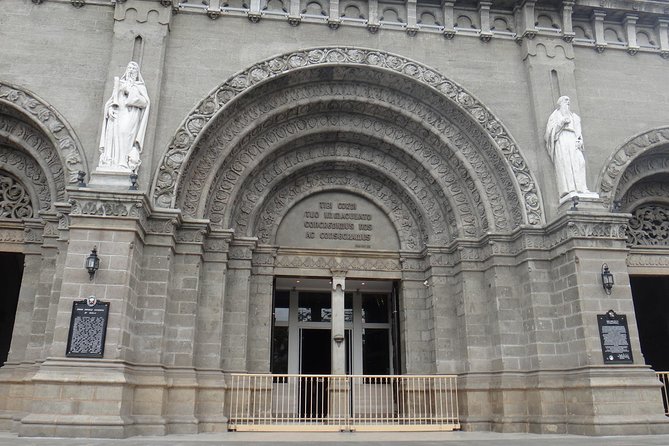
San Agustin Church is one of the tour’s best architectural stops. Located inside Intramuros, it is a UNESCO World Heritage site and one of the oldest churches in the Philippines.
The visit lasts about 15 minutes, with admission included. That is enough to see the church’s intricate Baroque design and appreciate its importance, though it is not enough for a leisurely architectural study.
The church matters because it shows how Spanish colonial power and Catholic worship shaped Manila. Its design is more than decoration. The heavy stone construction, ornate details, and formal interior reflect the era in which churches also served as centers of community life and colonial authority.
Your guide’s explanation makes a big difference here. Some guides provide useful context about the church and the Spanish period. Others have been less detailed at individual stops, leaving visitors to look around on their own.
If you want photographs, check the day’s conditions. Sunday services can restrict access, and poor weather can affect the overall route. The church is still worth seeing from the outside, but the interior is a key part of its appeal.
Fort Santiago and the story of José Rizal
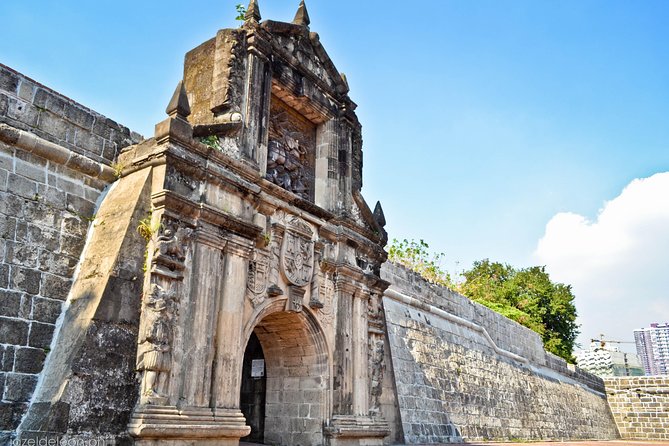
Fort Santiago is the final major stop and the historical centerpiece of the tour. Built in 1593, the citadel was created for Manila by Spanish navigator and governor Miguel López de Legazpi.
The fort changed hands under successive colonial powers. Its walls and gates reflect the military role of Intramuros, but the site is remembered just as strongly for its prison and its connection to José Rizal.
Rizal was held here before his execution by the Spanish in 1896. He wrote the poem My Last Farewell during this final period of his life. That connection turns Fort Santiago from an old fortress into a place tied directly to the Philippine independence movement.
You have about 20 minutes at the fort. The large stone gate, defensive structures, and Rizal shrine provide a focused introduction, but again, the time is brief. You will get the main story and a look at the key areas rather than a complete examination of the complex.
Rain can be a real problem here. The fort may close during wet conditions because of flooding, so do not choose this tour expecting the same experience in every kind of weather. If the forecast is poor, ask the operator about alternatives or rescheduling.
The guide can make or break the experience
The tour’s strongest feature is often the person in the front of the vehicle. Guides such as Nori, Richard, Frank, Stella, and Fernando are praised for explaining history, culture, and local neighborhoods in a way that makes the drive useful.
Stella is described as enthusiastic and clear, while Frank is praised for personal attention and strong knowledge of Philippine history. Nori is singled out for an almost encyclopedic grasp of historical facts. Richard is praised for making solo participants feel safe and comfortable.
This kind of guide turns long traffic delays into a moving classroom. You can learn about the districts outside the formal stops instead of staring out at slow-moving traffic.
But you should keep expectations realistic. Not every departure receives the same level of commentary. One weak experience involved a guide who offered little information during a long pickup drive and left participants to explore some stops without much explanation.
The practical answer is simple: ask questions. If you want more local context, say so. Ask about the Spanish period, the Second World War, José Rizal, or how Makati developed. A responsive guide can add a great deal to a short route.
Timing, traffic, and group size
The official duration is about four hours, but Manila traffic can stretch that estimate. Some outings have lasted around five hours, and one reported return was about 1.5 hours late. Another solo booking became a seven-hour day after long delays.
This matters most if you have an evening flight, dinner reservation, cruise departure, or another fixed commitment. Do not schedule anything tight after the tour. An afternoon departure may be especially risky for a punctual return because traffic can become slow later in the day.
The maximum group size is 30, though several departures have been much smaller. Groups of three and six are mentioned, and one person had a private-feeling outing when nobody else booked that day.
A small group makes the short stops easier. You can hear the guide more clearly, ask questions, and move between the vehicle and the sites without much fuss. A full vehicle would feel less personal, so ask about expected group size if that is important to you.
The air-conditioned transport is a major comfort in Manila’s heat and humidity. Vehicle quality can vary, though. One departure had a van described as only moderately comfortable. The air conditioning remains useful, but do not expect luxury transport.
Is $103 good value?
At $103, this is best viewed as a convenience tour rather than a bargain sightseeing loop. You are paying for transport across a difficult-to-navigate metro area, an English-speaking guide, hotel pickup and drop-off at selected hotels, and entry to San Agustin Church, Intramuros, and Fort Santiago.
The price looks more reasonable for a first-time visitor with limited time. You can see Makati, the American Cemetery, Rizal Park, Intramuros, San Agustin Church, and Fort Santiago without arranging separate rides. Several people also value the tour as a less expensive and more personal option than a cruise-line excursion.
Solo pricing deserves special attention. The listed price may rise sharply for one person, and one solo participant felt the cost was excessive after a long, delayed day. If you are traveling alone, compare the final checkout price with a private car and guide or a small independent tour.
Food and drinks are not included. Plan accordingly, especially if traffic may extend the outing. Stops are short, and the schedule is built around sightseeing rather than a meal.
Who should book it?
I would choose this tour for a first visit to Manila, particularly if you are staying in Makati and want a structured introduction without tackling the city’s traffic alone. It suits history-minded visitors, cruise passengers with a free half-day, families who prefer limited walking, and anyone who wants both modern and colonial Manila in one outing.
It is also a good fit if you want the story explained as you go. The best guides add local context that you would miss by simply taking a car between landmarks.
I would hesitate if you need a strict four-hour schedule, dislike vehicle time, or want long visits at each historic site. Intramuros, San Agustin Church, and Fort Santiago are the main rewards, but the time at each is short.
Book on a dry weekday if possible. Avoid Sunday if entering San Agustin Church is important, and allow extra time for traffic. Free cancellation is available up to 24 hours before the start time, while weather-related cancellations offer a different date or full refund.
Should you book Manila Old and New?
Book it if you want a practical first orientation to Manila, especially with hotel transport and a guide who can explain the city’s complicated past. The American Cemetery, San Agustin Church, and Fort Santiago give the outing substance, while Makati and Roxas Boulevard show how much the city has changed.
Skip it if you want a slow, detailed day in Intramuros or cannot tolerate an uncertain return time. The experience is at its best with a strong guide and manageable traffic. Choose your date carefully, leave your schedule open afterward, and this can be a useful and thoughtful introduction to Manila.
FAQ
How long does the Manila Old and New tour last?
The advertised duration is approximately four hours. Traffic can extend the outing, with some departures lasting about five hours or returning 1.5 hours late.
What locations are included?
The route includes Makati, Nielson Tower, Forbes Park, the Manila American Cemetery and Memorial, Roxas Boulevard, Rizal Park, Intramuros, San Agustin Church, and Fort Santiago.
Is hotel pickup included?
Hotel pickup and drop-off are included at selected hotels only. Fairmont Makati is listed as the meeting point, so confirm the exact pickup arrangement when booking.
Is transportation air-conditioned?
Yes. Transport is provided in an air-conditioned vehicle. The vehicle can hold up to 30 participants, although some departures have been much smaller.
Is admission to the historic sites included?
Admission to San Agustin Church, Intramuros, and Fort Santiago is included. Rizal Park and the Manila American Cemetery are listed with free admission.
How much walking is involved?
Walking is limited, but you will walk on cobblestone paths in Intramuros and explore the historic sites. Comfortable walking shoes are recommended.
Can children join the tour?
Children must be accompanied by an adult, and the minimum age is two years.
What happens if rain affects the tour?
The experience requires good weather. If it is canceled because of poor weather, you can receive a different date or a full refund. Fort Santiago may close during rain because of flooding, and Sunday Mass can limit access inside San Agustin Church.
Just added around Luzon
- Pagsanjan Falls Adventure with Lunch and Rapids Experience★ 4.5 · 3 reviews
- Private Airport Transfer Manila to Hotel in Manila or vice versa★ 5.0 · 3 reviews
- The Jeepney & Tuk Tuk Adventure ride with Local Guide★ 4.5 · 4 reviews
- Sagada and Banaue Rice Terraces 4-Day Tour★ 5.0 · 4 reviews
- Manila Food Tour Experience with Local Guide★ 5.0 · 4 reviews
- Mt. Pinatubo Day Tour from Manila★ 5.0 · 4 reviews
- Day Hike: Mount Daraitan plus Tinipak River start point Manila** updated 2022★ 5.0 · 4 reviews
- Manila Social and Political Walk★ 5.0 · 4 reviews
Intramuros Tours, side by side.

Intramuros, Manila: Historical Bamboo Bike Tour
Read the review →
Experience Intramuros with Bamboo Bicycle – Ecotours
Read the review →
Intramuros, Chinatown, and Old Manila Half-Day Tour
Read the review →


Explore Intramuros: Introduction to Philippine History
Read the review →
Experience Manila’s Heritage: Intramuros & More in Half a Day!
Read the review →Where else this one shows up