
Reviewed · INTRAMUROS TOURS
Intramuros & Chinatown Manila Tour – Walking, Food & Culture
Manila makes more sense one bite at a time. This five-hour outing links Quiapo Market, Binondo, and Intramuros, giving you a quick but lively introduction to the city’s food, faith, commerce, and colonial past. I like the way it moves beyond postcard Manila and puts you on ordinary streets where old customs and modern city life meet.
I also like the mix of transport and activities. Depending on the route, you may use a ferry, jeepney, tricycle, bus, or bicycle, and the included bike rental adds a pleasant change of pace inside the old city. The main drawback is the food tasting: the tour’s cultural explanation is excellent, but the food may feel uneven if you expect a carefully planned restaurant meal.
The tour begins at 9:00 a.m. at Quinta Market in Quiapo and finishes at Casa Manila in Intramuros. It costs $62 per person, includes snacks, transport between sites, entrance fees, a guide, and bike rental, and accepts groups of up to 18 people. Guides named in guest feedback include Mike, Fred, George, Erick, Carmen, Eric, and Jen, with praise focused on their storytelling and friendly approach.
In This Review
- Key points at a glance
- Why this five-hour route works
- Starting at Quiapo Market at 9:00 a.m.
- Binondo: two hours of food and neighborhood history
- Getting around Manila instead of watching it through glass
- Two hours inside Intramuros
- What the guide adds to the day
- Is $62 good value?
- Who should book this Manila tour?
- Final verdict: a strong first look at Manila
- FAQ
- How long does the Intramuros and Chinatown Manila Tour last?
- Where does the tour start?
- Where does the tour end?
- What places does the tour visit?
- Is food included?
- Is transportation included?
- How large is the group?
- What is the cancellation policy?
Key points at a glance
- Three very different sides of Manila: Start with the sensory rush of Quiapo, continue through Binondo’s Chinese-Filipino food culture, and finish among Intramuros walls.
- Food is part of the education: Tastings help explain how Manila’s many outside influences appear on the local table.
- Transport becomes part of the adventure: Ferry rides, jeepneys, tricycles, buses, and bicycles have all featured in the route described by past participants.
- Intramuros gets real attention: The old fortified city receives about two hours, enough time for history, streets, and a bike ride rather than a quick photo stop.
- Guides make the difference: Mike, Fred, George, Erick, Carmen, Eric, and Jen were praised for clear explanations, good humor, and practical Manila advice.
- A moderate fitness level helps: Expect walking, street conditions, food stops, and changing transport rather than a polished coach tour.
Why this five-hour route works
Manila can feel hard to read at first. It is a huge metropolis shaped by Catholic Spain, Chinese trade, American rule, Muslim communities, wartime destruction, and daily Filipino life. This tour gives you three strong starting points instead of asking you to understand the whole city from one museum or viewpoint.
The route also has a sensible geographic and cultural rhythm. Quiapo shows you a working market area. Binondo introduces Manila’s Chinese-Filipino center and its food traditions. Intramuros then slows the pace and gives you a setting where the country’s long political story is easier to see.
I like that the tour is not only about monuments. You get food, local transport, market streets, and a bike ride. Those details matter because Manila is best understood at street level, where a historic church, a fruit stall, a jeepney, and a modern business district can sit close together.
The group limit is 18 people. That is not a private tour, but it is small enough to keep a walking group manageable if the guide handles the pace well. The strongest feedback centers on guides who made the experience personal and entertaining, so the quality of your day will depend partly on who leads it.
More Food Tours in Manila
- Makati Street Food Experience end with a Rooftop Bar
★ 5.0 · 33 reviews - Manila Chinatown Food Tour Experience
★ 5.0 · 20 reviews - Makati Street Food tour Experience
★ 5.0 · 16 reviews
Starting at Quiapo Market at 9:00 a.m.
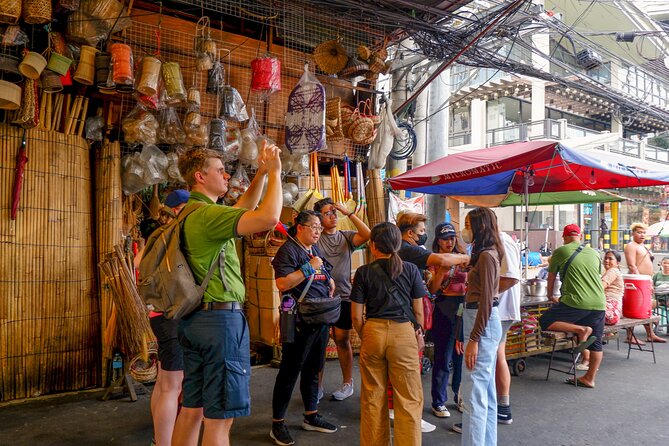
You meet at Quinta Market in Quiapo, at Carlos Palanca, Quiapo, Manila. The first hour is designed to wake up your senses. Quiapo brings together old and new, wealthy and ordinary, local and foreign influences, and the tour uses that setting to introduce Manila before moving to the more famous districts.
The market portion is not just filler before the major sights. It helps you see how people shop, eat, move, and work in central Manila. You will taste selected snacks and local food, with the guide explaining what you are seeing and eating.
The practical point is simple: arrive ready for a busy public market. The tour does not include bottled water, soft drinks, coffee, tea, or alcohol, so bring or buy water before you get too far into the morning. The meeting location is near public transport, but the clearest plan is to allow extra time to reach Quinta Market and find the group.
I would also wear light clothing and practical shoes. The tour requires a moderate level of fitness, and the day combines walking with market conditions rather than air-conditioned interiors. If you dislike crowds, heat, or unfamiliar food textures, Quiapo may be the most demanding part of the route.
Binondo: two hours of food and neighborhood history
The tour spends about two hours in Binondo, Manila’s Chinatown and an important business district. This section is where food becomes a way to talk about the city’s past and present. The guide connects Filipino cuisine with the many communities that have passed through or settled in Manila.
The tour description emphasizes neighboring Catholic, Chinese, and Muslim communities. That is useful context because Binondo is not a sealed-off cultural exhibit. It is part of a city where different traditions have developed side by side, sometimes visibly and sometimes through food, language, architecture, and commerce.
You should expect shared tasting rather than a full private meal. The provider explains that sharing dishes in eateries and restaurants is common in the Philippines and across East Asia. That approach lets you sample a wider range of food, but it can be a drawback if you prefer to choose every dish yourself or need a meal sized to your own appetite.
One participant rated the tour’s sightseeing and transport very highly but found most of the food only average, apart from the fruit. That is the fairest way to set expectations. Go for the food as a cultural tasting, not as a gourmet dining experience.
The food portion also has a social advantage. Sharing small portions gives your guide a chance to explain unfamiliar ingredients and lets you compare several tastes without committing to one large meal. Eric was praised for explaining different foods and fruits, while other guides were credited with making the history easy to follow.
If you have dietary restrictions, the supplied information does not state how substitutions are handled. Ask before booking if this matters to you. The same applies to allergies and strong food preferences. The tour includes snacks and tastings, but it does not promise a particular menu.
Getting around Manila instead of watching it through glass
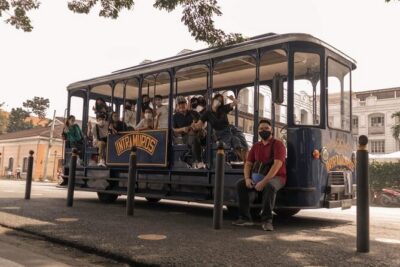
Transportation is one of the most memorable features of this experience. Feedback describes rides involving a river ferry, tricycle, jeepney, bus, and bicycle, though the exact combination can depend on the day’s route and conditions. The tour includes transportation between sites, and a bike rental is specifically included.
This is a major advantage over a standard sightseeing drive. A jeepney or tricycle gives you a closer look at how Manila works, while a ferry offers a different view of the city. Cycling through Intramuros then brings you down to street level at a slower speed.
It is also the part that requires flexibility. Public transport does not always follow a neat sightseeing schedule, and a group of up to 18 people takes time to move. You should enjoy the experience of getting from place to place, not treat each ride as a guaranteed timed connection.
The transport mix gives the tour a genuine local feel, but it can make the day less comfortable than a private vehicle. If you want cool air, fixed seating, and a predictable route, this may not be your ideal Manila introduction. If you want to see the city in motion, it adds real value to the $62 price.
More ways to see Intramuros:
- Manila Old and New: Sightseeing Tour Including Intramuros and Fort Santiago
★ 4.5 · 377 reviews - Manila’s Walled City: Intramuros Walking Tour
★ 5.0 · 82 reviews - Express Bamboo Bike Tour inside Intramuros
★ 4.5 · 66 reviews - Manila: Intramuros, Chinatown, and Old Manila Half-Day Tour
★ 5.0 · 37 reviews
Two hours inside Intramuros
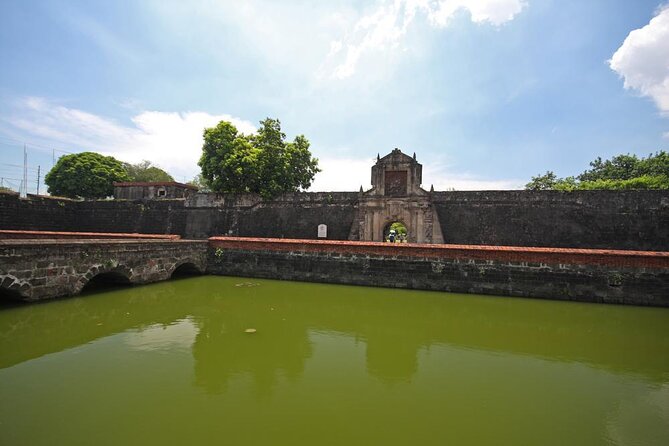
Intramuros is the tour’s historical anchor. The name refers to the old fortified city of Manila, and the route gives it about two hours. You explore the small streets, see surviving beauty alongside wartime damage, and learn about the country’s story from the ninth century through 1946.
That time period is broad, so do not expect a complete national history course. What you get is a guided framework for understanding why Intramuros looks the way it does and why Manila’s past cannot be separated from occupation, trade, religion, war, and reconstruction.
The old city suffered heavy damage during World War Two. That fact is important to keep in mind as you walk. You are not seeing a perfectly preserved colonial quarter. You are seeing a place rebuilt and maintained after destruction, with traces of earlier Manila still visible in its streets and structures.
The included entrance fees remove one common source of small expenses. Casa Manila, at Plaza San Luis on General Luna Street, is the finishing point, and the tour ends there. Since the experience concludes in Intramuros rather than returning to Quiapo, you can plan your next activity from the old city.
The bike ride is a particular highlight for many people. Jen was praised for making the biking and food tasting memorable while sharing stories about Manila’s past. Cycling can cover more ground than walking alone, but you should still expect to stop, listen, and move at a group pace.
Intramuros is also where the tour’s emotional tone changes. Quiapo and Binondo show Manila as a living, working city. Intramuros asks you to look backward, but the guide’s stories keep the place connected to Filipino resilience and hospitality rather than treating it as a frozen monument.
What the guide adds to the day
A good guide is essential on this route because much of its value lies in explanation. Markets and city streets do not come with labels, and transport rides can pass quickly. You need someone who can connect what you see with the larger story.
Mike received praise for explaining history, pointing out good places, and making the food stops enjoyable. Fred was praised for creating a fun experience and for suggesting later activities, including Barbara’s Heritage Dinner and Show and drinks at the Bayleaf Hotel penthouse bar.
George and his coworkers were credited with making the country’s long period of occupation easier to understand while keeping the experience personal. Erick and Carmen were praised for taking their group to places even a former Manila resident had not seen.
These details suggest a tour that works best when you ask questions. Bring curiosity about food, religion, transport, architecture, and daily life. The guides appear to be strongest when they can respond to your interests instead of simply reciting a prepared script.
The advice you receive may also help shape the rest of your Manila visit. Fred’s recommendations were useful enough to become part of one person’s later plans. That is a quiet but important benefit of a local guide: you may leave with ideas for the evening, not just photographs from the morning.
Is $62 good value?
At $62, this is not the cheapest way to walk around Manila, but the price covers several pieces that would be awkward to arrange separately. You receive a guide, food tastings, transportation to the sites, entrance fees, and a bike rental. The five-hour length also gives you more than a short orientation walk.
I see the best value in the combination. A market visit alone might feel confusing. A Chinatown food stop alone might leave out the city’s political story. An Intramuros visit alone might show you old walls without explaining how modern Manila grew around them.
The food quality is the main question mark. If you are booking primarily to eat special dishes, you may find the experience inconsistent. If you value context, variety, and the chance to sample food while learning about the city, the tastings make more sense.
Group discounts may improve the price for some bookings. The group size can reach 18, so you should also weigh the personal space and pace you prefer. The tour is a better deal for someone who wants an active introduction in one morning than for someone planning to spend a whole day in one neighborhood.
Who should book this Manila tour?
I would choose this experience for a first visit to Manila, especially if you have one free morning and want several parts of the city explained together. It suits people who like walking, trying unfamiliar food, using local transport, and asking questions.
It is also a good fit if you are curious about how different communities shaped Manila. Quiapo, Binondo, and Intramuros offer more contrast than a route focused only on one historic site.
You should think twice if you need a slow, private, or highly polished outing. Five hours is a full morning, the group can reach 18 people, and the moderate fitness requirement is real. The food is shared, the route uses public transport, and the city environment can be demanding.
Book with weather in mind. The experience requires good weather, and a cancellation caused by poor conditions results in a different date or a full refund. You can cancel for a full refund up to 24 hours before the start time, but changes or cancellations inside that window are not accepted.
Final verdict: a strong first look at Manila
I recommend the Intramuros and Chinatown Manila Tour if you want Manila presented as a living city, not just a collection of landmarks. Its best features are the guide-led storytelling, the unusual combination of market, Chinatown, and fortified old city, and the chance to ride local transport and a bicycle.
The food should be treated as an introduction rather than the main event. Some tastings may be memorable, while others may simply be adequate. For $62, the overall value comes from the full package: access, transport, history, local context, and a useful five-hour route.
Choose it if you want a friendly, active orientation and are comfortable with a little noise, uncertainty, and shared food. Skip it if you want a quiet museum day or a guaranteed restaurant-quality meal.
FAQ
How long does the Intramuros and Chinatown Manila Tour last?
The tour lasts approximately five hours.
Where does the tour start?
It starts at 9:00 a.m. at Quinta Market, Carlos Palanca, Quiapo, Manila, 1001 Metro Manila, Philippines.
Where does the tour end?
The tour ends at Casa Manila in the Plaza San Luis complex on General Luna Street, Intramuros, Manila.
What places does the tour visit?
The route includes Quiapo Market, Binondo’s Chinatown, and Intramuros.
Is food included?
Yes. Snacks and food tastings are included. Bottled water, soda, coffee, tea, and alcoholic drinks are not included.
Is transportation included?
Yes. Transportation to all sites is included, along with a tour guide, entrance fees, and bike rental.
How large is the group?
The tour can include a maximum of 18 people, and group discounts are available.
What is the cancellation policy?
You can cancel at least 24 hours before the start time for a full refund. Cancellations or changes made less than 24 hours before the start time are not accepted.
More Food Tours
- Manila Food Tour Experience with Local Guide
★ 5.0 · 4 reviews - Manila Food Tour: Introduction to Philippine Street Food
★ 5.0 · 417 reviews - Boracay Sunset Cruise with Party DJ & Unlimited Food and Drinks
★ 5.0 · 211 reviews - Manila Food Tour: Explore World’s Oldest Chinatown
★ 5.0 · 158 reviews
More Binondo and Chinatown Food Walks
- Manila: Binondo Walking Tour ( Oldest Chinatown )
★ 5.0 · 30 reviews - Intramuros, Manila Chinatown and Tondo Manila Day Tour
★ 4.0 · 8 reviews - Binondo Bites Manila Food Tour with 15+ Tastings
★ 5.0 · 5 reviews - The Oldest Chinatown in Manila with Local Guide
★ 5.0 · 4 reviews
Just added around Luzon
- Pagsanjan Falls Adventure with Lunch and Rapids Experience★ 4.5 · 3 reviews
- Private Airport Transfer Manila to Hotel in Manila or vice versa★ 5.0 · 3 reviews
- The Jeepney & Tuk Tuk Adventure ride with Local Guide★ 4.5 · 4 reviews
- Sagada and Banaue Rice Terraces 4-Day Tour★ 5.0 · 4 reviews
- Manila Food Tour Experience with Local Guide★ 5.0 · 4 reviews
- Mt. Pinatubo Day Tour from Manila★ 5.0 · 4 reviews
- Day Hike: Mount Daraitan plus Tinipak River start point Manila** updated 2022★ 5.0 · 4 reviews
- Manila Social and Political Walk★ 5.0 · 4 reviews
Intramuros Tours, side by side.

Intramuros, Manila: Historical Bamboo Bike Tour
Read the review →
Experience Intramuros with Bamboo Bicycle – Ecotours
Read the review →
Intramuros, Chinatown, and Old Manila Half-Day Tour
Read the review →Manila Old and New: Sightseeing Tour Including Intramuros and Fort Santiago
Read the review →

Explore Intramuros: Introduction to Philippine History
Read the review →Where else this one shows up