
Reviewed · INTRAMUROS TOURS
Viva Old Manila: Intramuros Walking Tour
History gets under your feet here. Viva Old Manila’s three-hour walk through Intramuros links Fort Santiago, Rizal’s final days, old churches, wartime memorials, and colonial homes in one well-planned route. I like the passionate DOT-accredited guides, especially Russell, Steven, Jerome, and Jonathan, who explain the past with humor instead of turning it into a classroom lecture. I also like that entrance fees, bottled water, sunscreen, and mosquito repellent are included.
The main drawback is simple: this is a real walking tour on old streets, fortress walls, and cobblestones. You cover a lot in three hours, so anyone who stops often for photos needs to keep an eye on the group. The meeting point can also be confusing, so arrive early at the Fort Santiago entrance in front of United Philippine Lines on Sta. Clara Street.
In This Review
- Key points at a glance
- Why a guide helps inside Intramuros
- Starting at Fort Santiago’s Sta. Clara Street entrance
- Fort Santiago and the dungeon
- Rizal’s final days at the museum and shrine
- Manila Cathedral in a 15-minute stop
- Memorare Manila 1945 and the city’s wartime memory
- San Agustin Church and the final walk to Casa Manila
- Pace, walking conditions, and practical comfort
- The guides are the main reason to book
- Is $27 good value?
- Who will enjoy this Intramuros walk?
- Should you book Viva Old Manila?
- FAQ
- Where does the Intramuros walking tour meet?
- How early should I arrive?
- How long does the tour last?
- What language is the tour conducted in?
- Is the tour wheelchair accessible?
- Is a private group available?
- Are admission fees included?
- Is hotel pickup or drop-off included?
- What should I bring?
- Can I cancel for a full refund?
Key points at a glance
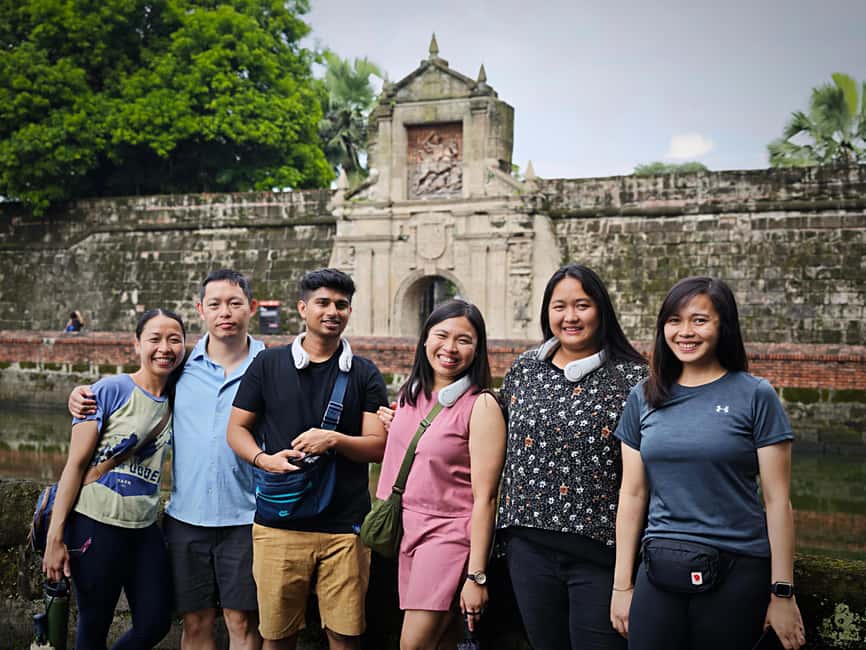
- Fort Santiago anchors the morning: You spend about an hour exploring Manila’s most important citadel, including its grim dungeon.
- The history covers several eras: Spanish rule, American influence, Japanese occupation, wartime destruction, and the Philippines’ national story all appear along the route.
- Rizal’s final days add emotional weight: The Museum of Jose Rizal and Rizal Shrine make the country’s national hero feel like a person, not just a name in a textbook.
- The guide makes the difference: Russell, Steven, Jerome, Jonathan, Jimmy, and other guides are praised for clear English, humor, patience, and personal stories.
- The route mixes major sights with atmosphere: Manila Cathedral, San Agustin Church, Memorare Manila 1945, and Casa Manila give you more than a single fort visit.
- The $27 price is sensible: Admission fees and guide service are bundled together, which makes the tour good value for a first visit to Intramuros.
Why a guide helps inside Intramuros
Intramuros is compact, but it is not always easy to understand on your own. The walls, plazas, churches, museums, and rebuilt buildings can look impressive without making their place in Philippine history clear. A good guide supplies the missing links.
That is the strongest part of this experience. The guides do not just point at a doorway and name it. They explain why each place matters, connect Spanish rule to later American and Japanese periods, and add myths, old photographs, language notes, and personal stories. Russell is repeatedly praised for his clarity and passion, while Steven is described as funny, patient, and easy to follow. Jerome is especially good at adjusting explanations to the group and answering unusual questions.
I like that mix of facts and personality. The history of Intramuros includes religion, military power, colonial life, imprisonment, resistance, and wartime tragedy. Delivered as a long list of dates, it could become heavy. Delivered by a guide with humor and a clear sense of place, it becomes easier to remember.
The tour is conducted in English. It is also available as a private group, which may suit families or friends who want more time for questions and photos.
More ways to see Intramuros:
- Intramuros, Manila: Historical Bamboo Bike Tour
★ 4.8 · 583 reviews - Experience Intramuros with Bamboo Bicycle – Ecotours
★ 5.0 · 508 reviews - Manila: Intramuros, Chinatown, and Old Manila Half-Day Tour
★ 4.8 · 475 reviews
Starting at Fort Santiago’s Sta. Clara Street entrance
Meet at the Fort Santiago entrance in front of the United Philippine Lines building on Sta. Clara Street. You are encouraged to arrive at least 15 minutes early, and that is good advice. One July visitor found the meeting spot vague, although the guide was waiting at the gate and looking for people who seemed lost.
That detail matters in Manila. Give yourself time to reach the entrance, identify the correct gate, and contact the operator through Viber or WhatsApp if you have an arrival problem. Hotel pickup and drop-off are not included, and transportation is your responsibility.
The route begins with a short guided introduction to Intramuros, lasting about 30 minutes. This opening helps you understand the Walled City before you move into the larger Fort Santiago visit. The setting itself is part of the experience: old defensive walls, historic streets, plazas, and buildings that reflect Manila’s colonial past.
The activity information identifies the location as Nueva Vizcaya, but every meeting and sightseeing detail points to Intramuros in Manila. Use the specific Sta. Clara Street meeting instructions rather than relying on a broad location label.
Fort Santiago and the dungeon
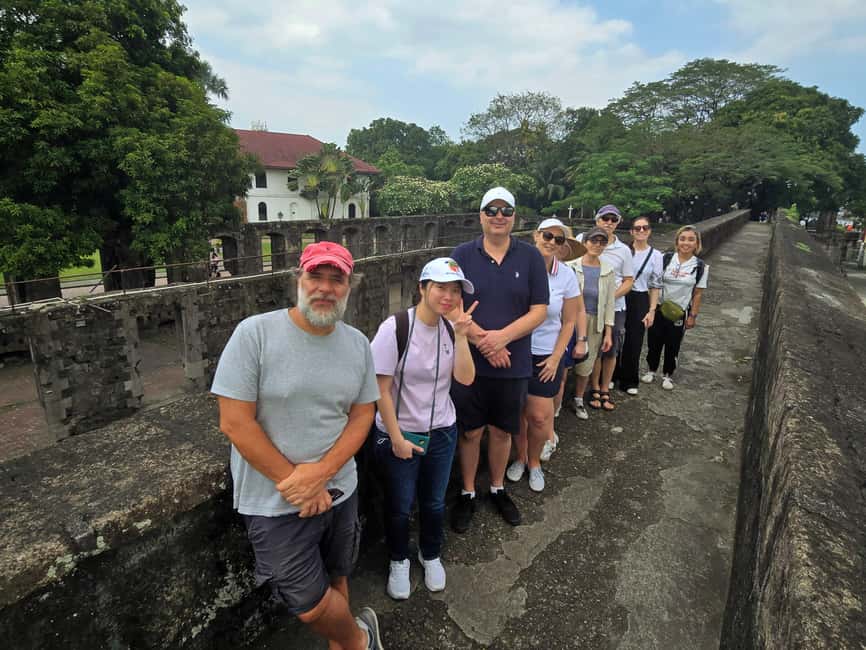
Fort Santiago receives the longest stop, about one hour, and rightly so. This citadel shaped Manila’s military and political story. Its walls and gates give you a physical sense of how the old city was protected and controlled.
The visit is not limited to outdoor views. You also enter the dungeon, where the wartime stories become especially grim. This is one of the tour’s more haunting moments, and it gives the fort a human cost that stone walls alone cannot convey.
I would pay close attention here. Fort Santiago can be photogenic, but the guide’s explanation is the real value. The stories connect the fort to wider events in the Philippines, including the Japanese occupation and the suffering associated with the war.
You get enough time to learn without spending the whole morning inside one site. Several guests felt the three-hour schedule was well paced, with plenty of information but no sense of a lecture dragging on. Still, take photos promptly. The group continues moving, and one visitor specifically cautioned that wandering off for pictures can leave you searching for everyone else.
Rizal’s final days at the museum and shrine
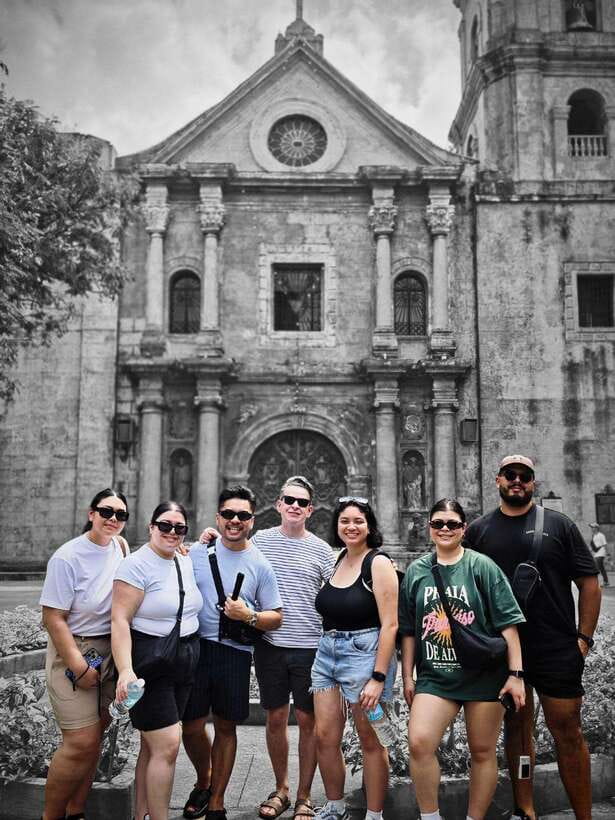
The Museum of Jose Rizal receives about 30 minutes. This stop focuses on Dr. Jose Rizal, the Filipino national hero, and the final part of his life. The tour’s emphasis on his last days gives the visit a personal center.
Rizal is not treated as a distant statue. The guide explains the setting and the events surrounding his final days, helping you understand why his story carries such importance in the Philippines. For a first visit to the country, this is useful background because it introduces a figure central to national identity.
The itinerary also highlights the Rizal Shrine. Together, the museum and shrine make this more than a quick historical aside. You have time to listen, look around, and consider how one person’s writing and political ideas became part of the country’s public memory.
This stop may appeal most to people who enjoy biography and national history. If your main interest is architecture, it is a smaller portion of the morning, but it adds emotional depth to the fort visit.
More walking tours in Manila:
- Manila: Street Food and Drinks Walking Tour with Tastings
★ 4.8 · 114 reviews - Manila’s Walled City: Intramuros Walking Tour
★ 5.0 · 82 reviews - Manila: Sightseeing and Food Walking Tour with Tastings
★ 4.7 · 68 reviews - Manila: Intramuros Walking Tour.
★ 4.9 · 63 reviews
Manila Cathedral in a 15-minute stop
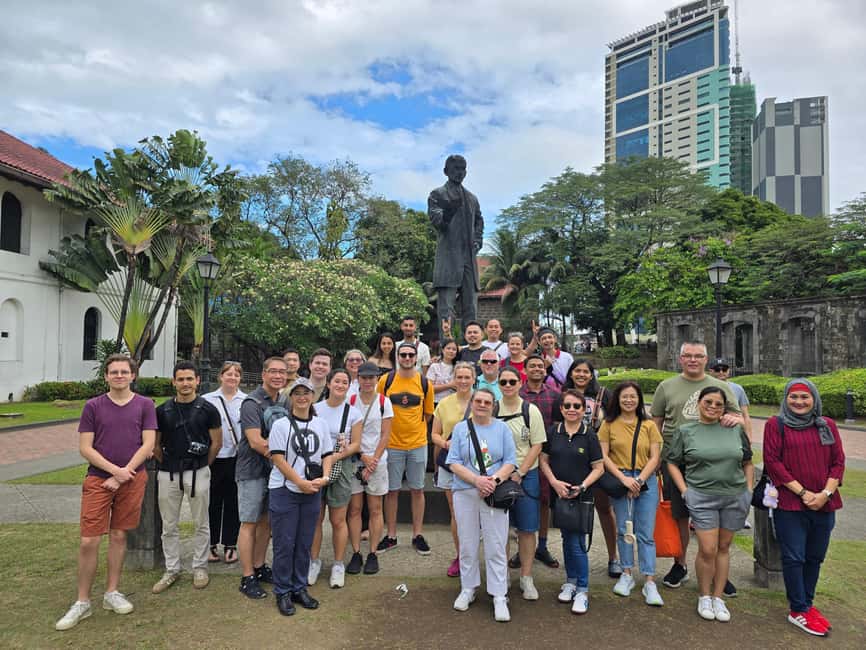
The tour then moves to Manila Cathedral for about 15 minutes. The short visit gives you a chance to see one of Intramuros’ central religious landmarks and to hear how the church fits into the city’s Spanish colonial story.
Do not expect a long period of quiet inspection. Fifteen minutes is enough for an introduction and a look around, not a slow architectural study. The advantage is variety. After the military focus of Fort Santiago and the personal story of Rizal, the cathedral shows the religious power that helped shape old Manila.
The compact schedule also keeps the tour moving. You are not asked to spend an entire morning at every stop, which helps explain how so many places fit into three hours.
Memorare Manila 1945 and the city’s wartime memory
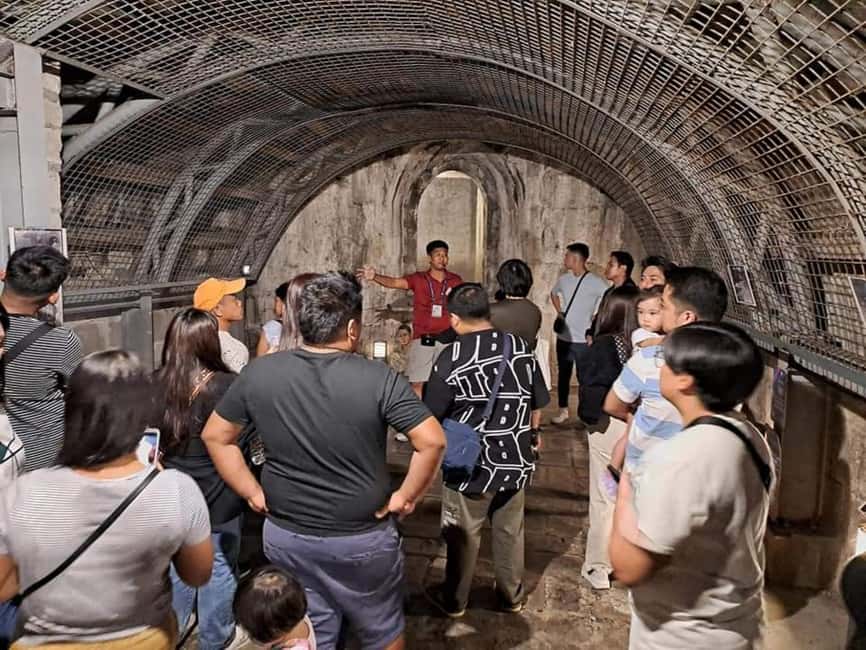
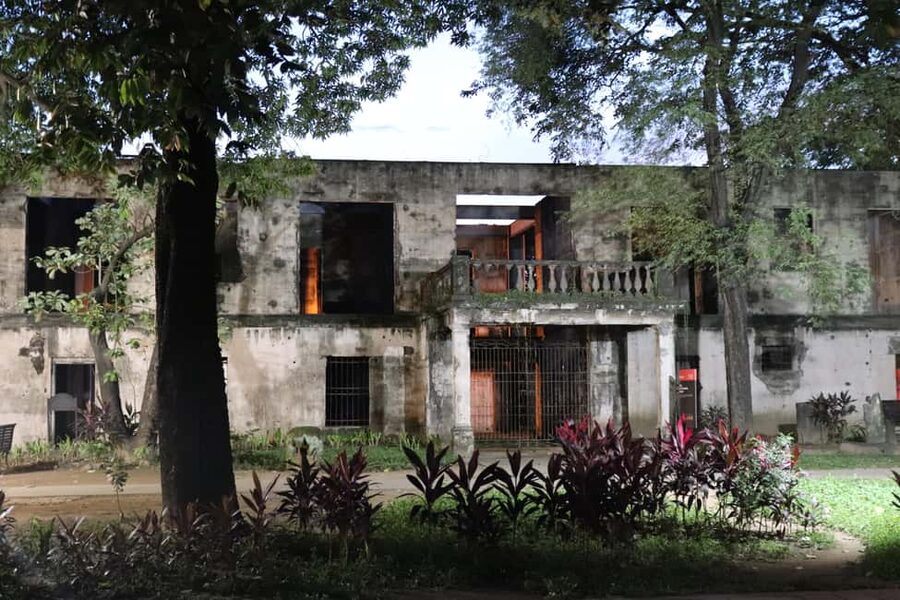
Memorare Manila 1945 is another brief stop, planned for about 15 minutes. It brings the wartime destruction of Manila into the route and balances the earlier colonial and religious sites.
This memorial matters because Intramuros is not simply a preserved Spanish-era quarter. Much of Manila’s old core was affected by war, and the memorial helps you confront that loss. The guide’s explanation gives context to what you see elsewhere in the Walled City.
The stop is short, so listen closely and ask your question while the group is together. It is not designed as a long museum visit. Instead, it places wartime memory directly into your walk through the old city.
San Agustin Church and the final walk to Casa Manila
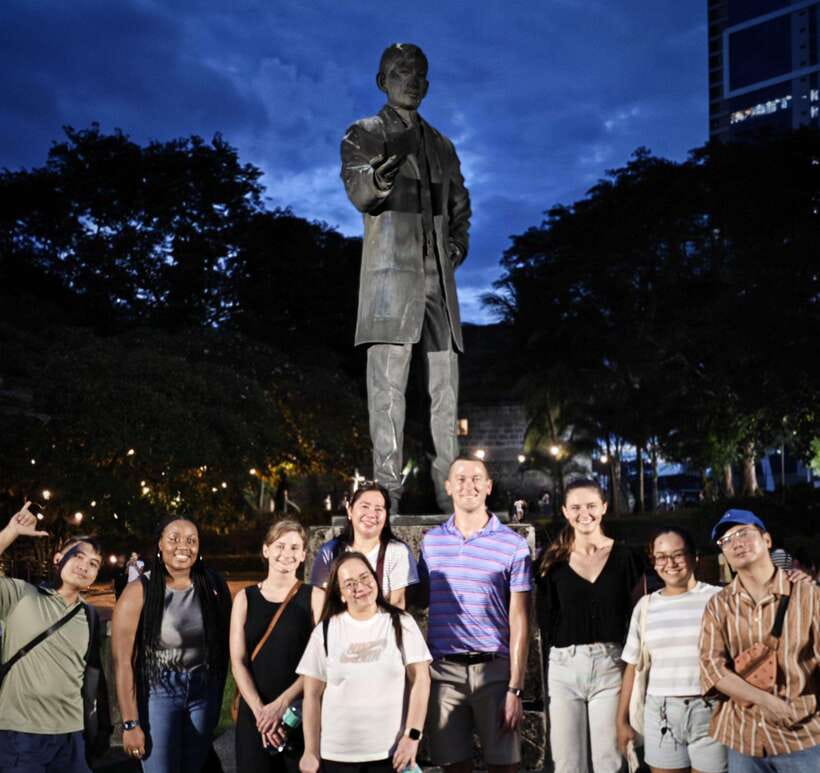
San Agustin Church receives about 15 minutes and adds another strong architectural and religious stop. It is one of the places that helps you picture how Spanish influence shaped Intramuros beyond forts and government buildings.
The visit is brief, but the church fits well after Memorare Manila 1945. You move from wartime loss to one of the city’s enduring historic religious sites. The contrast is effective and gives the route a broad sweep.
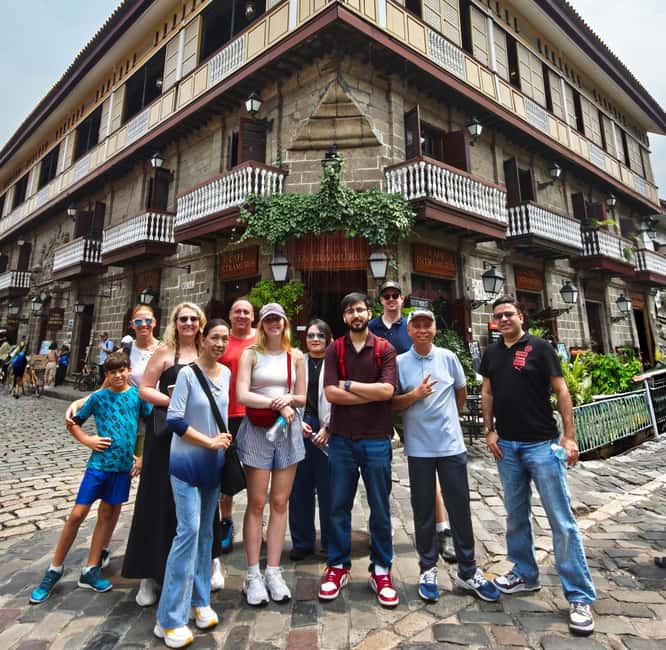
Casa Manila is the final stop and the finishing point. This traditional-home museum offers a glimpse of colonial domestic life, so the tour ends indoors with details about how people lived, rather than with another defensive structure.
That variety is one of the route’s best features. In a single morning, you see a citadel, dungeon, shrine, cathedral, memorial, church, and historic home. Each stop covers a different part of Manila’s past.
Pace, walking conditions, and practical comfort
The tour lasts three hours and is designed to be taken on foot. You should expect time outdoors, changing surfaces, and regular movement between sites. The route is described as wheelchair accessible, but the old streets and fortress setting still make it sensible to consider your own comfort with walking and uneven historic surfaces.
Bring an umbrella and water. Manila’s heat or rain can change the feel of the morning quickly, and one person completed the tour in rainy weather. A complimentary bottle of water is included, with one guest noting that it arrived midway through the walk. I would still carry your own supply rather than depend on a single bottle.
Sunscreen and mosquito repellent are available for free, which is a thoughtful touch. A hat is also a good idea. If you are taking a morning tour, plan your clothing around heat, humidity, and the possibility of rain.
The pace seems to be one of the tour’s most consistent strengths. Guides allow time to listen and look around, but they keep the group moving. That balance works well for first-time visitors who want a clear introduction rather than an exhaustive study of every building.
The guides are the main reason to book

The official qualification matters, but the personal style matters just as much. The strongest guide names associated with this tour are Russell, Steven, Jerome, Jonathan, Jimmy, and Sedie. The spelling of Sedie’s name may vary, but the description is consistent: lively and informative.
Russell receives especially strong praise for his thorough explanations, clear presentation, humor, and attention to each person in the group. Steven is described as friendly, patient, funny, and able to answer questions. Jerome is noted for his wit, direct communication, and ability to adapt the walk to the group’s interests.
That does not mean every guide will use the same jokes or tell every story in the same way. It does mean the experience depends heavily on the guide assigned that day. The information supplied for the tour promises an English-speaking DOT-accredited local guide, and the guide quality is the feature that gives the $27 price its real value.
You are not only paying for entry tickets. You are paying to understand what you are seeing, avoid getting lost in a compact but confusing area, and ask questions as the story unfolds.
Is $27 good value?
At $27 per person, the tour is reasonably priced for a three-hour guided walk with admission fees included. You also receive bottled water, guide service, group photo opportunities, sunscreen, and mosquito repellent.
The strongest value comes if you are visiting Intramuros for the first time. You could walk past Fort Santiago, the cathedral, San Agustin Church, and Casa Manila on your own, but you would miss much of the connection between them. The guide turns a collection of old buildings into a coherent introduction to Manila.
The price is less compelling if you prefer to spend a long time inside one museum or take photos at your own speed. The group follows a schedule, and the short stops at the cathedral, memorial, church, and Casa Manila leave limited room for lingering.
Free cancellation up to 24 hours before the tour and reserve-now, pay-later booking make it easier to fit the walk into a changing Manila schedule. Skip-the-ticket-line access is also included. Private groups are available for people who want a more personal format.
Who will enjoy this Intramuros walk?
I would recommend it to first-time Manila visitors, history enthusiasts, families with older children, and anyone who wants a useful orientation to the Walled City. It is especially good if you want Spanish colonial history explained alongside American and Japanese periods, rather than treated as a single-era sightseeing stop.
It also suits people who appreciate a guide with personality. The best moments come from the stories, jokes, myths, old photos, and answers to questions. You do not need to arrive with a background in Philippine history. The guides explain the main ideas in clear English.
I would be more cautious if you dislike group pacing, need extended time for photography, or want a quiet self-guided visit. The schedule is sensible, but it is still a schedule. Keep your camera ready, then return your attention to the guide before the group moves on.
Should you book Viva Old Manila?
Yes, I would book this tour if you have three hours in Manila and want to understand Intramuros instead of simply photographing it. The best reasons are the one-hour Fort Santiago visit, the dungeon stories, the focus on Rizal’s final days, and the guides’ ability to make complicated history clear and human.
Arrive 15 minutes early, meet at the Fort Santiago gate by United Philippine Lines, wear comfortable shoes, and bring an umbrella and extra water. Keep your photos efficient so you do not fall behind.
Skip it only if you want to explore entirely at your own speed. For most first-time visitors, $27 is fair value for the admissions, structure, and guide who helps the Walled City make sense.
FAQ
Where does the Intramuros walking tour meet?
The guide meets participants at the Fort Santiago entrance in front of the United Philippine Lines building on Sta. Clara Street.
How early should I arrive?
You are encouraged to arrive at least 15 minutes before the tour begins.
How long does the tour last?
The walking tour lasts three hours.
What language is the tour conducted in?
The live tour guide speaks English.
Is the tour wheelchair accessible?
Yes, the activity information states that the tour is wheelchair accessible.
Is a private group available?
Yes, a private group option is available.
Are admission fees included?
Yes, admission fees to the listed sites are included in the tour price.
Is hotel pickup or drop-off included?
No, hotel pickup and drop-off are not included. Transportation to and from the meeting point is your responsibility.
What should I bring?
Bring an umbrella and water. A hat can also be useful for the outdoor walking portions.
Can I cancel for a full refund?
Yes, you can cancel up to 24 hours in advance for a full refund. You can also reserve now and pay later.
Just added around Manila
- Embark on a 7-Day Banaue-Sagada Adventure of a Lifetime★ 5.0 · 3 reviews
- Philippines Intro 3 days 2 nights Tour Best of Manila and Beyond★ 5.0 · 3 reviews
- Pagsanjan Falls Adventure with Lunch and Rapids Experience★ 4.5 · 3 reviews
- Manila: Intramuros Tour ( Dark)★ 4.7 · 3 reviews
- Manila: Intramuros Heritage Tour★ 4.2 · 3 reviews
- From Manila: Philippines Private Tour Guide★ 4.1 · 3 reviews
- Discover the Real Manila with a Local Guide★ 5.0 · 3 reviews
- MANILA: HISTORICAL KALESA RIDE TOUR EXPERIENCE IN INTRAMUROS★ 4.0 · 3 reviews
Intramuros Tours, side by side.

Intramuros, Manila: Historical Bamboo Bike Tour
Read the review →
Experience Intramuros with Bamboo Bicycle – Ecotours
Read the review →
Intramuros, Chinatown, and Old Manila Half-Day Tour
Read the review →Manila Old and New: Sightseeing Tour Including Intramuros and Fort Santiago
Read the review →


Explore Intramuros: Introduction to Philippine History
Read the review →
Experience Manila’s Heritage: Intramuros & More in Half a Day!
Read the review →Where else this one shows up