
Reviewed · BINONDO CHINATOWN TOURS
Manila Food Tour: Explore World’s Oldest Chinatown
Come hungry, leave curious. This three-hour walk through Binondo links small food stops with stories about Chinese-Filipino life, making it a good way to see Manila beyond its usual sights. You begin at Binondo Church, then follow your guide through Carvajal Street, dumpling shops, noodle counters, dim sum restaurants, and a historic bakery.
I like the generous tasting plan, with eight sweet and savory food items, and I like the small-group setup, which keeps the walk social without turning it into a parade. The main caution is that the tour is not suitable for vegans, and one past guest felt the food was better than the historical commentary. Your experience may depend quite a bit on the guide.
In This Review
- Key points to know before booking
- Starting at Binondo Church in Manila
- Carvajal Street and the first tastes
- Handmade dumplings and the value of a local guide
- Mami, the noodle soup that slows the pace
- Classic dim sum in a local setting
- Hopia at the historic bakery
- The guides make the biggest difference
- Is the $60 price fair?
- Who should book this Binondo food walk?
- Should you book the Manila Chinatown food tour?
- FAQ
- Where does the Manila food tour begin?
- Where does the tour end?
- How long does the tour last?
- How many foods are included?
- What foods might I taste?
- Are drinks included?
- Is transportation included?
- Is the tour suitable for vegans?
- What is the group size?
- Can I cancel for a refund?
Key points to know before booking
- Eight food tastings fill the three-hour route: Expect fresh lumpia, Chinese-Filipino pastries, dumplings, noodles, dim sum, and hopia, along with drinks and water.
- Binondo Church is the easy meeting point: The tour starts and ends at the Minor Basilica and National Shrine of Saint Lorenzo Ruiz, at Plaza Lorenzo Ruiz.
- The guides can shape the experience: Jian, Nel, Chloe, Rian, Nelly, and Pat have all led tours, with praise focused on warmth, food knowledge, local stories, and practical help.
- This is a walking and eating tour, not a restaurant meal: You move between several stops, often sharing portions. Wear comfortable shoes and save room for later dishes.
- Small groups help with busy food stops: The tour is marketed around a maximum of 10 people, though the additional information lists a maximum of 15. Confirm the expected group size if that matters to you.
- The $60 price buys more than snacks: You are paying for the food, drinks, guide, route planning, and help navigating places you might not find alone.
Starting at Binondo Church in Manila
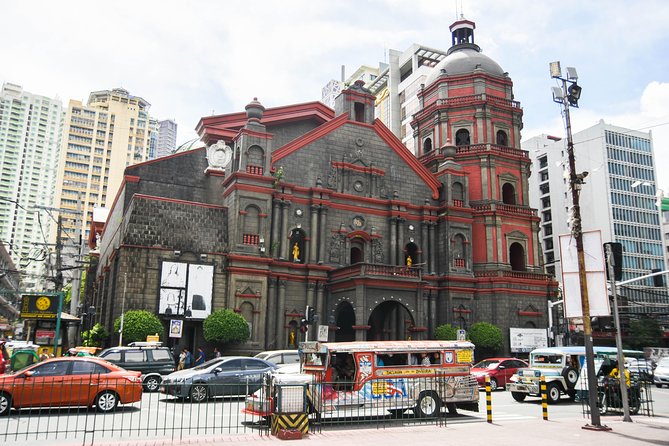
The tour begins at the Minor Basilica and National Shrine of Saint Lorenzo Ruiz, better known as Binondo Church. Its address is 1006 Plaza Lorenzo Ruiz, Binondo, Metro Manila, and the activity returns here at the end.
That fixed start and finish makes planning easier. You do not need to chase a moving meeting point through Chinatown, and you can arrange your next activity from the same general area. The meeting place is near public transportation, which matters in Manila, where a short distance on a map can take longer than expected.
Binondo Church also gives the walk a useful opening point. Instead of beginning with a random snack stall, you start near an important local landmark and then move into the food streets. The route connects place, community, and cuisine rather than treating Chinatown as one long collection of restaurants.
The tour is about three hours, so it fits neatly into a morning or afternoon. You still have much of the day left for Intramuros, museums, shopping, or a quiet break. If you book a morning departure, skip breakfast. The portions add up quickly, and several people found themselves full before the final stop.
More Food Tours in Manila
- Manila Food Tour: Introduction to Philippine Street Food
★ 5.0 · 417 reviews - Manila: Street Food and Drinks Walking Tour with Tastings
★ 4.8 · 114 reviews - Manila: Sightseeing and Food Walking Tour with Tastings
★ 4.7 · 68 reviews
Carvajal Street and the first tastes
Carvajal Street sets the tone. Here, you encounter the smells and close-up activity of local food preparation, beginning with fresh lumpia and Kuchay Ah Pie.
Fresh lumpia gives you a savory start. It is a useful first bite because it shows how Chinese cooking traditions became part of Filipino food culture. Kuchay Ah Pie brings a different texture and flavor, with the tour presenting these foods as local specialties rather than generic street snacks.
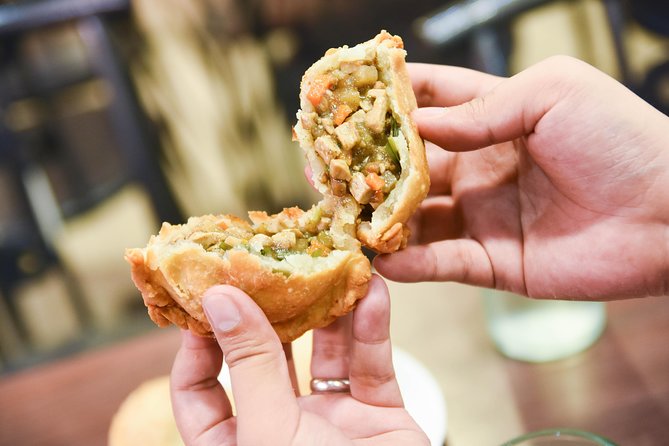
Chinese empanadas are also part of the food lineup. The exact order of dishes can vary, but the route covers both handheld snacks and more filling plates. That variety is one of the tour’s strengths. You are not eating eight versions of the same dumpling, and you are not spending the entire walk on sugary pastries.
This is also where the route feels most connected to everyday Binondo. Food stalls and small shops give you a sense of how people actually eat in the district. The tradeoff is that the surroundings can be crowded and active, so you should expect a street-level experience rather than a calm, seated tasting menu.
Handmade dumplings and the value of a local guide
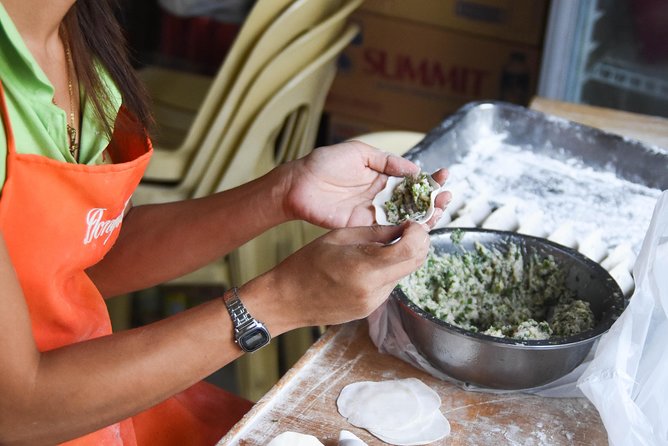
The dumpling stop is often the star of the tour. The route takes you to a place where dumplings are made by hand, and the food is served as part of the group tasting.
That detail matters. Handmade dumplings give you something more specific than a familiar dim sum order, and the stop highlights the skill behind the food. One particularly enthusiastic guest compared the dumplings favorably with those found in the San Francisco Bay Area. That is a strong claim, but it matches the repeated praise for this part of the experience.
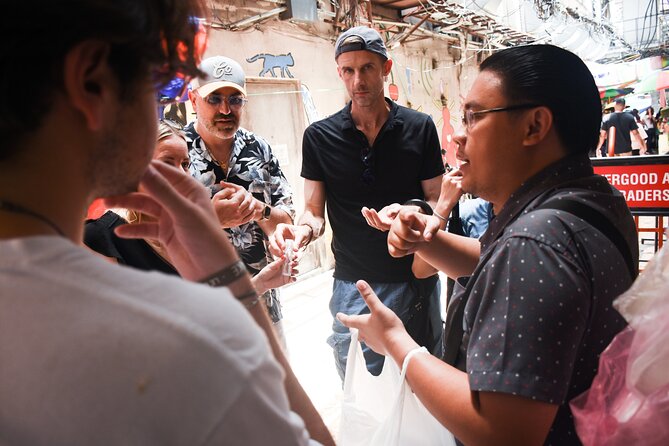
The small-group format is especially helpful here. A guide can place the order, explain what is being served, and help the group get food efficiently. At one stop, the guide’s relationship with the shop helped the group receive dumplings quickly despite a long queue. That kind of local connection has practical value.
You may receive crystal shrimp dumplings or other handmade varieties. The tour includes eight food items in total, but the precise dishes may change based on availability. One account also mentions the chance to try pigeon, shared among a group. Treat that as a possible extra, not a guaranteed part of the published food list.
Mami, the noodle soup that slows the pace
After the early snacks and dumplings, the tour moves to Mami, a noodle soup tied to Filipino comfort food. This is an important shift in the meal. You move from quick bites to a warm, more substantial dish.
Mami gives the guide a natural opening to explain how Chinese foodways became part of Filipino home cooking. The tour is not limited to food names. Guides such as Nel, Chloe, Rian, and Jian have been praised for explaining the background of the dishes and connecting food to life in Manila.
Still, keep your expectations measured. The strongest praise focuses on food and guide personality, while one guest found the Chinatown information too light. If you want a formal lecture on Binondo’s past, this may feel casual. If you prefer short stories while walking and eating, the approach should suit you.
The meal pacing also matters here. A well-run food tour gives you time to taste, listen, and walk off a little of the previous stop. The route has been praised as well paced, but you should not expect long breaks. You are eating often over roughly three hours.
More Binondo and Chinatown food walks:
- Manila: Intramuros, Chinatown, and Old Manila Half-Day Tour
★ 4.8 · 475 reviews - Manila: Guided Food Tour of Binondo with Tastings
★ 4.8 · 38 reviews - Manila: Intramuros, Chinatown, and Old Manila Half-Day Tour
★ 5.0 · 37 reviews - Intramuros & Chinatown Manila Tour – Walking, Food & Culture
★ 4.5 · 32 reviews
Classic dim sum in a local setting
The next stop brings you to a destination known for classic dim sum. This is where the tour shifts from individual street snacks to the shared restaurant experience that many people associate with Chinatown.
You may find several items arriving at once, and the guide helps the group understand what to try first. Sharing makes the $60 price work better for a group because everyone can sample more dishes without ordering a full serving for one person.
A useful tip is to take smaller portions when possible. One group sampled roughly half of each order and still ended up stuffed. Another group could not finish every item, though the guide helped wrap leftovers from several places for the hotel. That is a practical advantage of having a guide who knows how the stops work.
The drawback is predictable: this is a lot of food. If you dislike sharing, have strict dietary needs, or prefer a light tasting menu, the quantity may feel excessive. The tour includes soda or pop, tea, and bottled water, so you do not need to arrange drinks along the way.
Hopia at the historic bakery
The final food stop is a historic bakery known for hopia. These flaky pastries provide a sweet finish and a clear link between Chinese and Filipino baking traditions.
Hopia comes in several flavors, giving the last stop some variety. After savory snacks, soup, dumplings, and dim sum, the pastry works as a portable ending. You may also be able to take some back with you, depending on what the group buys and how the stop operates.
This bakery visit helps the tour finish with a food that is easy to remember and share. It also shows that Binondo’s Chinese-Filipino food culture is not limited to restaurant dishes. Pastries and bakery goods are part of the neighborhood’s identity too.
Do not plan a large dinner immediately afterward. The tour is designed to leave you well fed. Since the activity ends back at Binondo Church, you can walk away with leftovers or continue exploring nearby rather than rushing to another part of Manila.
The guides make the biggest difference
The guide roster has included Jian, Nel, Chloe, Rian, Nelly, and Pat. The strongest guide praise centers on three things: clear food explanations, personal warmth, and help with the practical side of moving through Binondo.
Jian is described as friendly, flexible, and attentive. In one case, heavy rain affected several food stops, and he adjusted the plan rather than forcing the original route. He also helped one participant with a later taxi departure. That kind of care is valuable in a busy district.
Nel has been praised for cheerful energy, food knowledge, and stories about local life. Chloe has received praise for lively commentary, careful organization, and personal help after the tour. Rian has been described as personable and easy to understand in English.
Guide quality is not a minor detail here. The food stops are only part of the experience. A good guide explains what you are tasting, keeps the group moving, handles restaurant orders, and adds enough context to make the route feel connected. The one lukewarm assessment suggests that the amount of history can vary, so book this primarily for food and local orientation, not as a dedicated heritage lecture.
Is the $60 price fair?
At $60 per person, this is not the cheapest way to eat in Manila. You could spend far less by ordering individual dishes on your own. The value comes from the combination of eight food items, drinks, a planned route, and a guide who knows where to go.
You are also paying to reduce trial and error. Binondo can be confusing on a first visit, especially when you are trying to identify a good shop, understand a menu, or find a seat during a busy period. The tour takes care of those decisions and lets you sample several places in one outing.
The price works best if you arrive hungry and enjoy variety. It is less attractive if you eat small portions, avoid most Chinese-Filipino dishes, or already know Binondo well. Even locals from outside Manila have enjoyed the better versions of familiar foods, but a regular Chinatown visitor may gain less from the guided route.
Group discounts may reduce the cost for larger bookings. The tour is offered as a small-group activity, with a stated maximum of 10 in the highlights and 15 in the additional details. That discrepancy is worth checking before you pay if a very small group is important to you.
Who should book this Binondo food walk?
I would recommend it to first-time Manila visitors who want a guided introduction to Binondo without giving up the rest of the day. It also suits solo visitors, couples, and small families who want to share many dishes without ordering everything themselves.
Food-focused locals can enjoy it too, especially if they are new to Binondo or want a better version of familiar Filipino dishes. The route has been praised by people who already knew the food, mainly because the guide added context and led them to places they would not have found alone.
Bring comfortable walking shoes and a good appetite. If you have food restrictions, tell the operator in advance. One guide accommodated different restrictions thoughtfully, but the tour is explicitly not suitable for vegans, and the published food list does not promise a full range of substitutions.
Weather can affect the activity. If poor weather forces cancellation, you are offered another date or a full refund. You can also cancel for a full refund up to 24 hours before the start time. Changes or cancellations inside that window are not accepted.
Should you book the Manila Chinatown food tour?
Book it if you want a friendly, food-heavy introduction to Binondo, especially if you value small eateries, handmade dumplings, hopia, and local guidance over formal sightseeing. The strongest part is the tasting sequence, which moves from street snacks to soup, dim sum, and pastries without wasting your limited Manila time.
I would be cautious if your main goal is detailed Chinatown history, vegan food, or a light meal. The tour can be very filling, and the depth of historical commentary may depend on who leads your group.
For most food-loving visitors, the combination of eight tastings, drinks, a three-hour route, and guides such as Jian, Nel, or Chloe makes the $60 worthwhile. Go early if that option is available, do not eat breakfast first, and leave room for the dumplings.
FAQ
Where does the Manila food tour begin?
It begins at the Minor Basilica and National Shrine of Saint Lorenzo Ruiz, also called Binondo Church, at 1006 Plaza Lorenzo Ruiz, Binondo, Metro Manila, Philippines.
Where does the tour end?
The activity ends back at the Binondo Church meeting point.
How long does the tour last?
The tour lasts approximately three hours.
How many foods are included?
The tour includes eight different food items, ranging from sweet to savory.
What foods might I taste?
The route features foods such as fresh lumpia, Kuchay Ah Pie, Chinese empanadas, handmade dumplings, Mami noodle soup, dim sum, and hopia. Crystal shrimp dumplings are also part of the described food selection.
Are drinks included?
Yes. Soda or pop, tea, and bottled water are included.
Is transportation included?
No. Private transportation is not included. The meeting point is near public transportation.
Is the tour suitable for vegans?
No. The tour information states that it is not suitable for vegans.
What is the group size?
The highlights describe a maximum of 10 people for the small-group tour. The additional information lists a maximum of 15 travelers, so confirm the group size if this is important to you.
Can I cancel for a refund?
Yes. You can cancel at least 24 hours before the start time for a full refund. Cancellations or changes made less than 24 hours before the start time are not accepted for a refund. Poor-weather cancellations offer a different date or a full refund.
Just added around Manila
- Philippines Intro 3 days 2 nights Tour Best of Manila and Beyond★ 5.0 · 3 reviews
- Embark on a 7-Day Banaue-Sagada Adventure of a Lifetime★ 5.0 · 3 reviews
- Pagsanjan Falls Adventure with Lunch and Rapids Experience★ 4.5 · 3 reviews
- Manila: Intramuros Tour ( Dark)★ 4.7 · 3 reviews
- Manila: Intramuros Heritage Tour★ 4.2 · 3 reviews
- From Manila: Philippines Private Tour Guide★ 4.1 · 3 reviews
- Discover the Real Manila with a Local Guide★ 5.0 · 3 reviews
- MANILA: HISTORICAL KALESA RIDE TOUR EXPERIENCE IN INTRAMUROS★ 4.0 · 3 reviews
Binondo Chinatown Tours, side by side.

Intramuros, Chinatown, and Old Manila Half-Day Tour
Read the review →
Intramuros, Chinatown, and Old Manila Half-Day Tour
Read the review →
Intramuros & Chinatown Manila Tour – Walking, Food & Culture
Read the review →
Where else this one shows up