
Reviewed · INTRAMUROS TOURS
A Step Back in Time: Intramuros Walking Tour
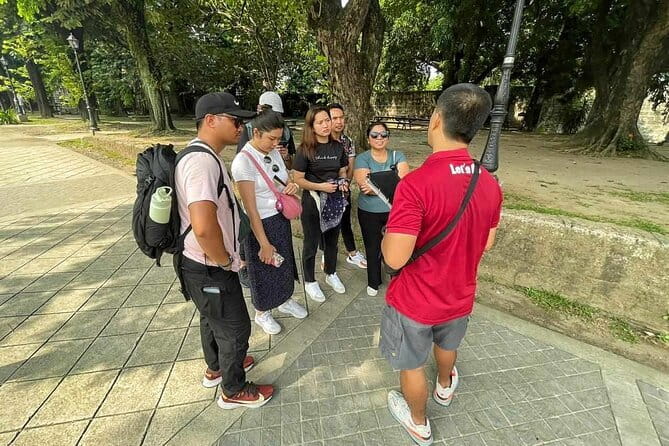
History comes alive behind Manila’s old walls. This three-hour walk through Intramuros connects Fort Santiago, the Rizal Shrine, Manila Cathedral, San Agustin Church, and Casa Manila in a clear, story-led route. Russell Leyco guides the experience, bringing humor, local insight, and personal feeling to the city’s difficult past.
I especially like the strong mix of major sights and human stories. You get both famous landmarks and important places such as the Memorare Manila Monument, where the guide explains the Japanese invasion and Manila Massacre. The admission fees are also included, which makes the $25 price easy to understand.
The main drawback is simple: this is a walking tour in a warm city, and the schedule is fairly full. You may want water, comfortable shoes, and enough energy for three hours on foot. The group can reach 30 people, so the experience may feel less personal on a busy day.
In This Review
- Key points to know before you book
- Why Intramuros is best understood on foot
- Fort Santiago: one hour inside Manila’s fortress
- The Rizal Shrine and the story of a national hero
- Manila Cathedral: the Mother Church of the Philippines
- Memorare Manila Monument and the painful wartime past
- San Agustin Church: Baroque design and living faith
- Casa Manila: finishing with colonial domestic life
- Russell Leyco’s storytelling style
- Is $25 a fair price?
- Timing, group size, and comfort
- Who will enjoy this Intramuros walk?
- Should you book A Step Back in Time?
- FAQ
- How much does the Intramuros walking tour cost?
- How long does the tour last?
- What time does the tour start?
- Where does the tour begin?
- Where does the tour end?
- Which places are included in the route?
- Are admission fees included?
- Is transportation included?
- How large can the group be?
- Can I cancel for a full refund?
Key points to know before you book
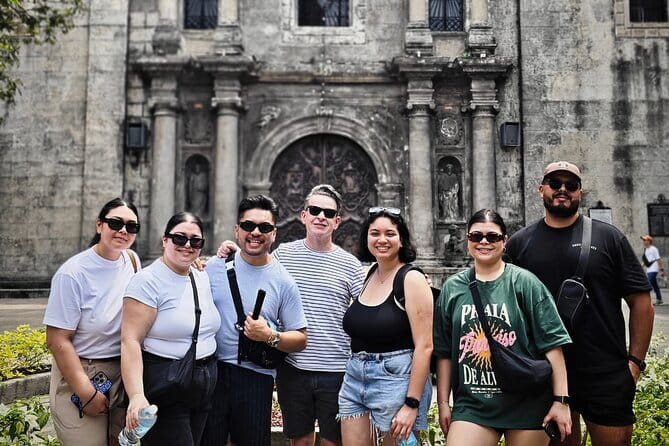
- Six historic stops in three hours: The route covers Fort Santiago, the Rizal Shrine, Manila Cathedral, Memorare Manila Monument, San Agustin Church, and Casa Manila.
- Russell Leyco leads with stories, not just dates: His style is described as lively, empathetic, humorous, and easy to follow.
- Fort Santiago takes the largest share of time: One hour allows room for the dungeon, the Lego museum, and other attractions inside the fort.
- The tour ends at Casa Manila: You finish inside the Plaza San Luis area rather than returning to the starting point.
- Site admission is included: You do not need to pay separately for Fort Santiago or Casa Manila.
- The group may include up to 30 people: That keeps the cost low but can affect how much individual attention you receive.
Why Intramuros is best understood on foot
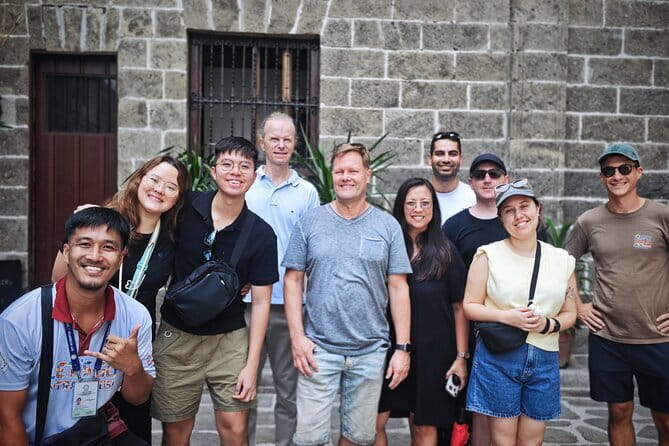
Intramuros is not just a collection of old buildings. It is a compact area where Spanish colonial rule, Filipino resistance, wartime destruction, religion, and national identity meet within a few streets. A walking tour gives those places an order and a human voice.
I like this format because the sites can feel disconnected when visited alone. Fort Santiago introduces the military and political past. The Rizal Shrine brings the story down to one person. The churches show the power of faith and colonial society. The Memorare Manila Monument turns toward wartime suffering, while Casa Manila gives you a look at upper-class domestic life in an earlier period.
The experience begins at 9:00 a.m. at United Philippine Lines, One Fort Santiago on Sta. Clara Street. The route ends at Casa Manila Museum on General Luna Street. Since the tour does not include hotel pickup, drop-off, or private transportation, you need to make your own way to Intramuros and arrange your return afterward.
More ways to see Intramuros:
- Manila Old and New: Sightseeing Tour Including Intramuros and Fort Santiago
★ 4.5 · 377 reviews - Manila’s Walled City: Intramuros Walking Tour
★ 5.0 · 82 reviews - Express Bamboo Bike Tour inside Intramuros
★ 4.5 · 66 reviews
Fort Santiago: one hour inside Manila’s fortress
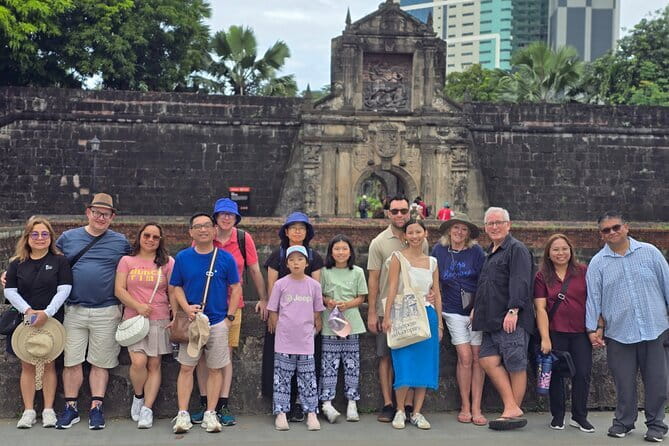
Fort Santiago is the anchor of the morning. You spend about one hour here, and that is sensible because the site contains several separate points of interest rather than one single building.
The fort is one of the most important historic parts of Intramuros. Your Department of Tourism-accredited guide explains what you are seeing while leading you through attractions that include the dungeon, the Lego museum, and other areas inside the complex. The guide’s role matters here. Without context, a fortress can become a series of walls, gates, and dark rooms. With stories, its political and military purpose becomes easier to grasp.
The dungeon gives the visit a serious tone. It is not a light sightseeing stop, and the fort’s past carries real weight. I appreciate that the tour does not treat Fort Santiago as a mere photo backdrop. The purpose is to connect the physical spaces with the people held there and the events that shaped the Philippines.
At the same time, the one-hour visit means you should not expect every corner of the fort to receive equal attention. The tour gives you a guided introduction rather than unlimited time for independent exploration. If Fort Santiago is your main reason for visiting Intramuros, you may want to return on your own another day.
Admission to Fort Santiago is included in the tour price. That removes one small task from your morning and helps explain why the cost is reasonable.
The Rizal Shrine and the story of a national hero
The Rizal Shrine is inside Fort Santiago and receives about 20 minutes. It is a museum devoted to Dr. Jose Rizal, the Philippines’ national hero.
Inside, you can see personal items, photographs, and artwork connected with Rizal’s life, writing, and role in the country’s struggle for independence. The museum also explains his time at the fort before his execution and how his death helped inspire the Philippine revolution.
This stop gives the larger story a clear focus. Instead of hearing only about institutions and battles, you learn about a writer and public figure whose ideas helped shape national identity. I find that useful for anyone arriving with limited knowledge of Philippine history.
Twenty minutes is enough for an introduction, but it is not a long museum visit. You will likely depend on the guide to point out the most important details and explain why Rizal matters. If you enjoy reading every display at a museum, you may want extra time later.
Manila Cathedral: the Mother Church of the Philippines
The next stop is Manila Cathedral, with about 20 minutes set aside for information about the country’s Mother Church.
The cathedral adds a religious and civic layer to the walk. Its importance is not only architectural. It represents the place of Catholic worship in Philippine public life and helps explain why Intramuros developed around major religious institutions.
The visit is described as an informative stop rather than a long guided interior tour. You should expect historical explanation and time to take in the church, not an extended church service or architectural study. Admission is free for this part of the experience.
I like the balance here. The tour does not load the morning with churches alone. Manila Cathedral is one piece of a wider story, and the guide helps connect it to the rest of Intramuros.
More walking tours in Luzon:
- Manila Intramuros Walking tour with Local Tour Guide
★ 5.0 · 33 reviews - Intramuros & Chinatown Manila Tour – Walking, Food & Culture
★ 4.5 · 32 reviews - Manila: Binondo Walking Tour ( Oldest Chinatown )
★ 5.0 · 30 reviews - Manila Old & New City Walking Tour With A Guide
★ 4.0 · 9 reviews
Memorare Manila Monument and the painful wartime past

The Memorare Manila Monument receives about 15 minutes. It is the shortest scheduled stop, but its subject is among the most difficult.
Here, the guide tells the story of the Japanese invasion and the Manila Massacre. The monument gives you a place to consider the civilian suffering and destruction tied to the Battle of Manila. The stop is brief, yet it prevents the tour from presenting Intramuros as a preserved colonial postcard.
This is one of the tour’s strongest choices. History in Intramuros is not only about old walls, grand churches, and elegant houses. It also includes loss, violence, and the city’s wartime scars. A good guide needs tact here, and the comments about Russell’s empathetic style suggest that this part is handled with care.
Do not expect a long memorial program. Fifteen minutes is enough for a focused explanation, but the emotional subject may stay with you longer than the clock suggests.
San Agustin Church: Baroque design and living faith

The walk continues to San Agustin Church, also known as the Immaculate Conception Parish. About 20 minutes are planned here.
San Agustin is a UNESCO World Heritage baroque church, making it one of the most important architectural stops in Intramuros. The church offers a change of mood from Fort Santiago and the war memorial. Here, the focus turns to design, religious practice, and the long presence of Catholic institutions in the walled city.
I like that the itinerary includes both Manila Cathedral and San Agustin Church. Seeing them together gives you a better sense of the religious character of Intramuros, while their place in the route keeps the morning moving.
The time is again limited. You will get a guided visit and an explanation of why the church matters, but you may not have room for a slow, detailed study of every architectural feature. If you have a special interest in Baroque churches, plan to pay close attention and ask your guide focused questions.
Casa Manila: finishing with colonial domestic life
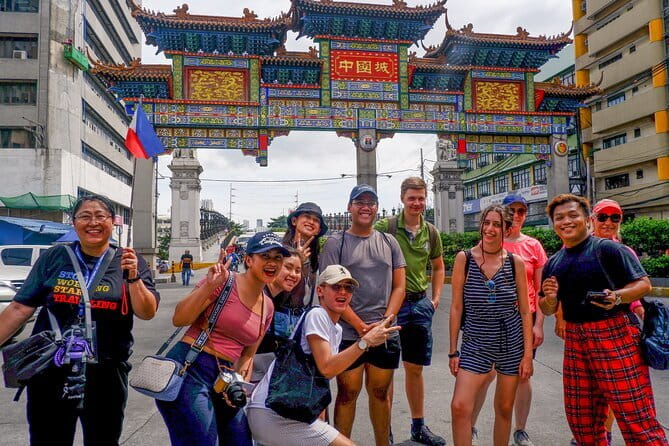
Casa Manila is the final stop and the tour’s endpoint. About 20 minutes are scheduled inside the museum.
After forts, heroes, churches, and wartime memory, Casa Manila shifts the scale to everyday life. The museum recreates an earlier colonial-era home, allowing you to consider how wealthy residents may have lived, furnished their rooms, and organized domestic space.
This is a smart place to finish. You move from public institutions and national events into interiors and household details. A home can reveal social class and customs in ways that a fortress cannot.
The visit is included in the admission fees, and the tour ends at Casa Manila Museum in the Plaza San Luis Complex on General Luna Street. That ending is practical if you want to continue exploring Intramuros, eat nearby, or arrange your own transportation from the area.
One point to keep in mind is the short visit. Twenty minutes gives you a guided look, not a leisurely museum afternoon. I would treat Casa Manila as an introduction and return later only if its interiors become your main interest.
Russell Leyco’s storytelling style

The guide can make or break a history walk, and Russell Leyco receives the strongest praise in the feedback provided about this experience. He is described as lively, considerate, inspiring, and entertaining, with a way of explaining the past that includes humor without making serious subjects feel trivial.
That combination matters in Intramuros. You are moving between military sites, churches, museums, and memorials. A dry recital of dates would make the three hours feel long. Russell’s approach appears to focus on stories, interpretation, and the strength of the Filipino people, not just a list of buildings.
Several comments also highlight his ability to keep people interested and comfortable throughout the full walk. One account from a long-term foreign resident says the tour still offered fresh historical perspectives and useful interpretations. That suggests the experience can work for first-time visitors as well as people who already know the Philippines.
The guide is also praised for offering tips for the rest of a stay in the country. That can be useful if you have just arrived in Manila and want local suggestions beyond the walls of Intramuros.
The listing identifies Russell Leyco as the storyteller, while one comment refers to a guide as Sir Rasa. If having a particular guide is important to you, confirm who will lead your departure when booking.
Is $25 a fair price?
At $25 per person, this is a sensible price for a three-hour guided walk with admission fees included. You are paying for a Department of Tourism-accredited guide, Fort Santiago entry, Casa Manila entry, and a planned route through six significant stops.
The value is strongest if you want structure. You could walk around Intramuros on your own for less, but you would need to research the sites, pay any separate admission charges, decide what to see, and connect the stories yourself. The tour handles that work.
It is also useful for someone who knows little about Philippine history. One of the strongest comments describes the guide as fixing a complete lack of background knowledge through a fun, all-inclusive experience. That is exactly where a guided walk earns its fee.
The value is weaker if you prefer to move slowly, take long photographs, or spend an hour inside each museum. The schedule is tight, and the group may reach 30 people. You are buying access and interpretation, not a private tour.
Water is mentioned positively in one comment, but it is not formally listed among the inclusions. I would still bring your own bottle and avoid assuming refreshments are provided.
Timing, group size, and comfort
The 9:00 a.m. start gives you a full morning and places the walk before the hottest part of the day. You will be outside for much of the experience, with stops inside museums and churches. Comfortable footwear is a practical choice because the tour lasts about three hours and includes several moves between sites.
The maximum group size is 30 people. That is not a tiny private walk, so your experience may depend partly on where you stand and how easily you hear the guide. The upside is a lower price and the chance to share the morning with other curious people.
Most people can participate, and the meeting point is near public transportation. Private transportation is not included, and neither are hotel pickup or drop-off. You should allow enough time to reach Fort Santiago before the 9:00 a.m. start rather than arriving at the last second.
The mobile ticket is convenient. You can keep the confirmation on your phone, and confirmation is received at booking.
Who will enjoy this Intramuros walk?
I would recommend this tour most strongly to:
- First-time visitors who want a clear introduction to Intramuros
- History enthusiasts interested in Rizal, colonial Manila, and World War II
- Families who benefit from a guide’s stories and a fixed route
- Residents who have seen Intramuros but want more context
- Solo visitors who prefer company and a planned morning
- Anyone who wants major sights covered without arranging separate tickets
You may want another option if you dislike group walks, need a very slow pace, or want extensive time inside every museum. The maximum group size and short stop lengths are the main limits.
The tour also suits people who appreciate a guide with personality. Russell’s strongest quality appears to be his storytelling, especially his mix of humor, empathy, and historical interpretation. That makes a real difference in a place where the subject matter moves from charming interiors to imprisonment and mass violence.
Should you book A Step Back in Time?
I would book this tour if you want an efficient, human introduction to Intramuros for $25. The route includes the essential landmarks, admission fees are covered, and the guide’s storytelling gives the old walls meaning.
Book it especially if you are new to Philippine history or want a better understanding of why Fort Santiago, Rizal, the churches, and the Manila Massacre belong in the same story. Add lunch afterward at Barbara’s if you want to continue the colonial-era atmosphere, a suggestion specifically praised in the feedback.
Skip it if you already know the area well and prefer to explore at your own pace. For most first-time visitors, though, this is a strong-value morning walk with substance, good pacing, and a guide who appears to care about the place he is explaining.
FAQ
How much does the Intramuros walking tour cost?
The tour costs $25 per person.
How long does the tour last?
The experience lasts approximately three hours.
What time does the tour start?
The tour starts at 9:00 a.m.
Where does the tour begin?
It begins at United Philippine Lines, One Fort Santiago 1, Sta. Clara Street, Intramuros, Manila.
Where does the tour end?
The tour ends at Casa Manila Museum in the Plaza San Luis Complex on General Luna Street, Intramuros.
Which places are included in the route?
The route includes Fort Santiago, the Rizal Shrine, Manila Cathedral, the Memorare Manila Monument, San Agustin Church, and Casa Manila.
Are admission fees included?
Yes. Admission fees to the included sites are covered.
Is transportation included?
No. Private transportation, hotel pickup, and hotel drop-off are not included.
How large can the group be?
The tour can have a maximum of 30 participants.
Can I cancel for a full refund?
Yes. You can receive a full refund if you cancel at least 24 hours before the experience start time. Cancellations or changes made less than 24 hours before the start are not accepted for a refund.
Just added around Luzon
- Pagsanjan Falls Adventure with Lunch and Rapids Experience★ 4.5 · 3 reviews
- Private Airport Transfer Manila to Hotel in Manila or vice versa★ 5.0 · 3 reviews
- The Jeepney & Tuk Tuk Adventure ride with Local Guide★ 4.5 · 4 reviews
- Sagada and Banaue Rice Terraces 4-Day Tour★ 5.0 · 4 reviews
- Manila Food Tour Experience with Local Guide★ 5.0 · 4 reviews
- Mt. Pinatubo Day Tour from Manila★ 5.0 · 4 reviews
- Day Hike: Mount Daraitan plus Tinipak River start point Manila** updated 2022★ 5.0 · 4 reviews
- Manila Social and Political Walk★ 5.0 · 4 reviews
Intramuros Tours, side by side.

Intramuros, Manila: Historical Bamboo Bike Tour
Read the review →
Experience Intramuros with Bamboo Bicycle – Ecotours
Read the review →
Intramuros, Chinatown, and Old Manila Half-Day Tour
Read the review →Manila Old and New: Sightseeing Tour Including Intramuros and Fort Santiago
Read the review →


Explore Intramuros: Introduction to Philippine History
Read the review →Where else this one shows up