
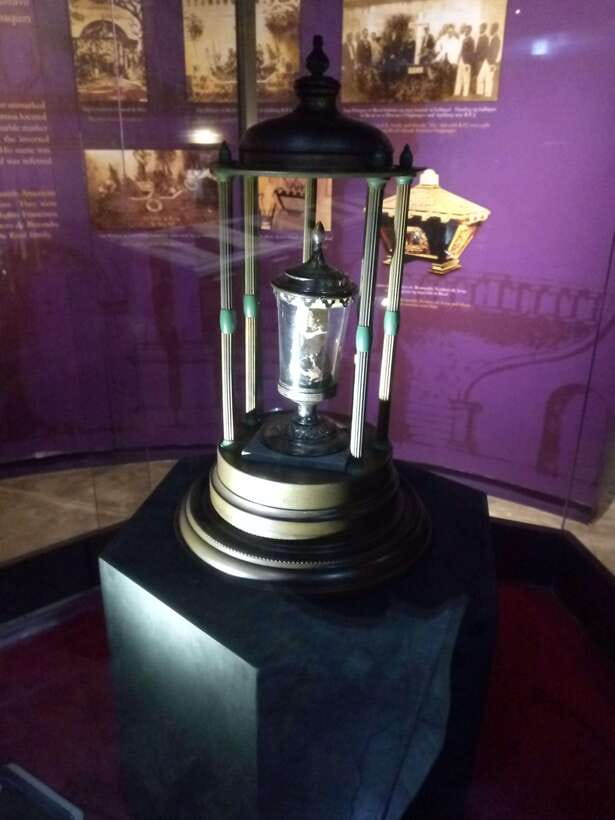
Reviewed · INTRAMUROS TOURS
Manila: Intramuros Myths and Nights Tour
Ghost stories can reveal real history. The Intramuros Myths and Nights Tour gives you two things I value in a city walk: fresh insight into Philippine history and memorable stories about Aswangs, Kapres, Duwendes, and Tikbalangs. I also like that the tour reaches Fort Santiago, Jose Rizal’s chapel-cell, the dungeons, and Manila’s oldest churches in only two hours. The main consideration is the nighttime setting, since you should bring biodegradable insect repellent and be comfortable walking outdoors after dark.
This is not a standard colonial sightseeing circuit. Guide Jerome uses folklore to question the stories left by conquerors, then connects those tales to Philippine resistance and independence. The tour costs $49 per person, including entrance, the guide, and a snack. That is fair value if you want interpretation rather than a quick look at old walls, though it may feel costly if you only want photographs and basic dates.
The route begins at Plaza Moriones and ends at Puerta del Parian. You can choose a day or night departure, with English and German guiding available. The tour is wheelchair accessible, offers free cancellation up to 24 hours before departure, and allows you to reserve now and pay later.
In This Review
- Key points to know before you book
- Why this Intramuros walk feels different
- Starting under the Acacia tree at Plaza Moriones
- Fort Santiago and the Balete tree stories
- Jose Rizal’s chapel-cell and the role of agimat
- The dungeons and the memory of 600 civilians
- Manila Cathedral and San Agustin Church
- Ending at Puerta del Parian
- What the $49 price includes
- Day or night, English or German?
- Who will get the most from this tour?
- Should you book the Intramuros Myths and Nights Tour?
- FAQ
- Where does the tour start?
- Where does the tour end?
- How long does the tour last?
- What is included in the price?
- Is a night tour available?
- Which languages are available?
- Is the tour wheelchair accessible?
- What should I bring?
- Can I cancel for a full refund?
- Can I reserve now and pay later?
Key points to know before you book
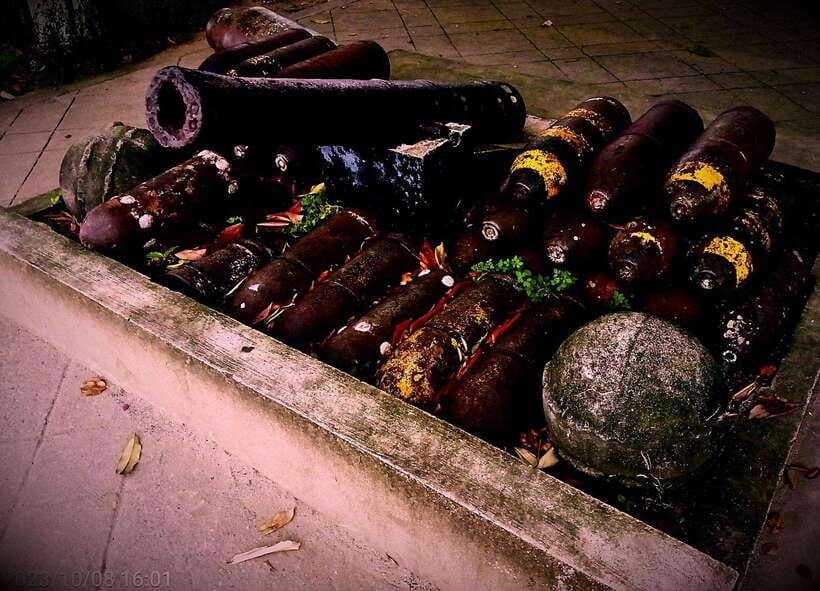
- Folklore becomes a history lesson: Aswangs, Kapres, Duwendes, Tikbalangs, and White Ladies are used to explain how belief shaped colonial rule and resistance.
- The Acacia and Balete trees set the mood: Stories at Plaza Moriones and Fort Santiago take place beside trees tied to Filipino legends.
- Jose Rizal anchors the independence story: The chapel-cell stop links agimat, monasticism, faith, and the struggle against Spanish rule.
- The dungeons are treated with care: You hear about the 600 civilians who died there, with the focus placed on memory rather than cheap ghost drama.
- Jerome is the tour’s strongest asset: He is praised for clear explanations, humor, flexibility, and making the past accessible to both Filipinos and foreign visitors.
- The price includes the essentials: Your $49 covers the entrance fee, guide fee, and a snack, with a two-hour route through several major Intramuros sites.
Why this Intramuros walk feels different
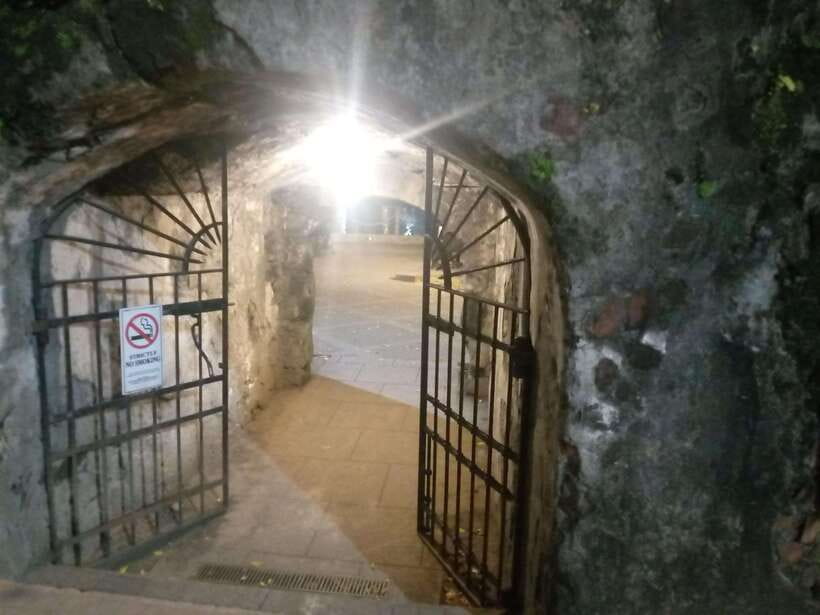
Intramuros can be easy to read as a collection of stone walls, churches, gates, and military buildings. This tour asks you to look at the stories beneath those places. I like that approach because colonial power was not built only with forts and laws. It also relied on ideas about who was civilized, who was dangerous, and whose beliefs were treated as superstition.
The tour presents Philippine mythology as part of that larger struggle. You hear how Spanish authorities were said to use tales of monsters and spiritual danger to shape the mindset of local people. The point is not simply that Filipino folklore is entertaining. The point is to ask who labeled certain beliefs as evil, primitive, or frightening.
That gives the walk a clear purpose. You are not just collecting ghost stories for a night out. You are looking at how folklore, Catholicism, colonial authority, and nationalism crossed paths.
Guide Jerome appears to be central to the experience. I would choose this tour partly because his style combines serious historical discussion with humor. One participant who had already taken another Intramuros tour still found that Jerome added information and a new angle. That matters here, since the value depends heavily on how well the guide connects each story to the place around you.
More ways to see Intramuros:
- Intramuros, Manila: Historical Bamboo Bike Tour
★ 4.8 · 583 reviews - Experience Intramuros with Bamboo Bicycle – Ecotours
★ 5.0 · 508 reviews - Manila: Intramuros, Chinatown, and Old Manila Half-Day Tour
★ 4.8 · 475 reviews
Starting under the Acacia tree at Plaza Moriones
The tour starts at Plaza Moriones, where the first stories are told under an Acacia tree. This is a useful opening point because it introduces the Filipino creatures that many people encounter in childhood stories: Aswangs, Kapres, and other supernatural beings.
The Aswang is commonly described in the supplied material as a Filipino vampire, while the Kapre is another major figure in local folklore. You also hear about the wider role these creatures play in Filipino imagination. Jerome’s task here is to explain the meaning behind the stories, not merely list strange creatures.
I like this opening because it makes the first few minutes approachable. If you know little about Philippine mythology, you receive a clear introduction. If you grew up with these tales, the discussion may help you consider them in a new way.
The nighttime version should add atmosphere, especially beneath an old tree in a walled colonial district. Still, the mood is part of the package. You should expect a little darkness, outdoor walking, and insects. Biodegradable insect repellent is specifically recommended, so bring it rather than relying on luck.
The day option may suit you better if you want easier visibility or prefer a calmer setting. The night option is the natural choice for anyone who enjoys folklore and a touch of suspense.
Fort Santiago and the Balete tree stories
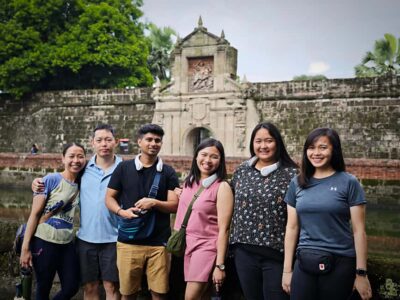
From Plaza Moriones, the group continues to Fort Santiago. This is one of Intramuros’s most important sites, and the tour uses the setting to discuss White Ladies, Duwendes, and related beliefs.
The Balete tree is especially important in Filipino supernatural stories. Under this tree, the conversation turns to spirits, dwarves, and the way local beliefs were described by colonial authorities. The tour’s central argument becomes clearer here: stories can reinforce power when one culture presents its own beliefs as superior and another culture’s traditions as backward or dangerous.
I appreciate that the tour does not treat folklore as a decorative extra. It places these tales in a political setting. The discussion asks how conquerors shaped the thinking of the people they ruled, including the idea that the Spanish were better than the local population.
That is a more useful way to visit Fort Santiago than simply photographing the walls. You still see a famous Intramuros site, but you also consider how authority works inside people’s minds.
The precise amount of time spent at each stop is not stated, so you should not expect a long, detailed museum visit at Fort Santiago. This is a moving walking discussion with several stops. If you want to study every exhibit or read every plaque, you will need extra time before or after the tour.
Jose Rizal’s chapel-cell and the role of agimat
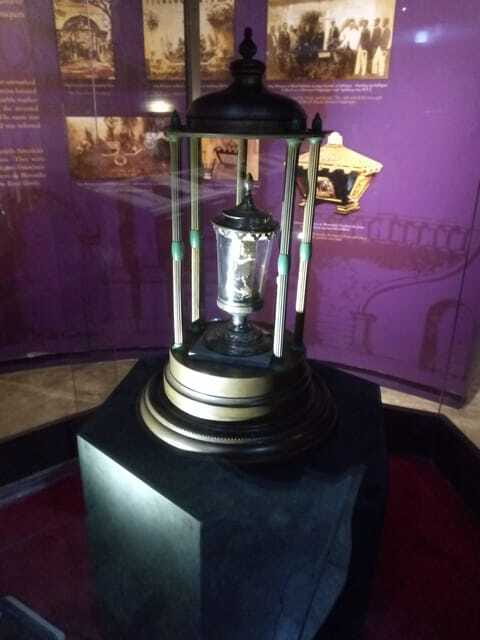
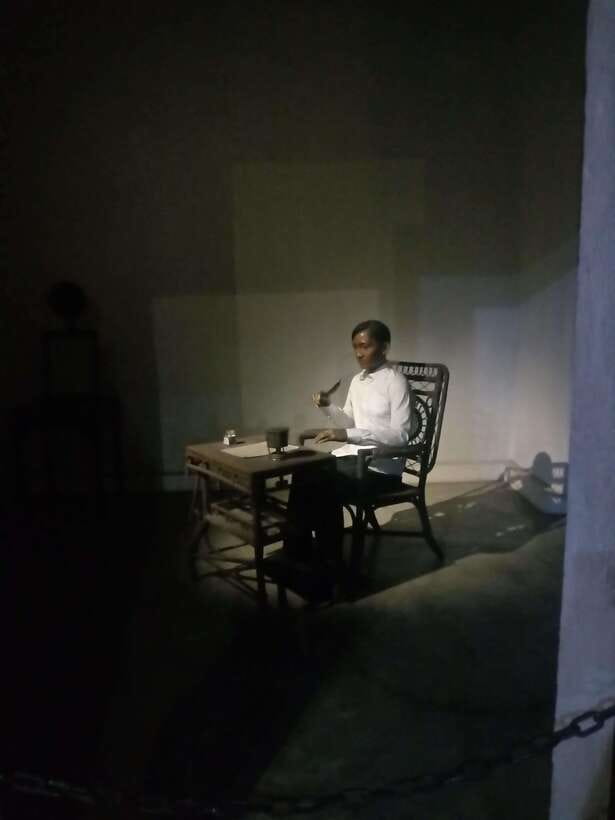
The route then reaches the chapel-cell of Jose Rizal. Rizal is one of the key figures in the Philippine struggle for independence, and this stop gives the tour a human and spiritual center.
Here, the discussion includes agimat, or protective charms, and monasticism. The tour connects these ideas to the fight for independence, showing that resistance was not only a military or political matter. Faith, symbols, local beliefs, and personal courage also shaped how people understood freedom.
This section should appeal to you if you want more than a familiar national-hero story. Rather than presenting Rizal as a distant figure on a pedestal, the tour places him within a wider world of religious practice, folk belief, and colonial pressure.
The chapel-cell is also a quieter contrast to the creature stories at the trees. The mood shifts from playful fear to reflection. I would pay close attention here, because the relationship between Catholic religious life and local traditions is one of the tour’s most interesting themes.
The use of agimat also helps explain why local spiritual ideas remained important even as Catholic institutions became powerful. The tour does not ask you to choose between folklore and history. It shows how both can help explain the past.
A few more trips and experiences worth a look
- Manila: Old & New 4-Hour City Tour
★ 4.5 · 458 reviews - Manila Food Tour: Introduction to Philippine Street Food
★ 5.0 · 417 reviews - Manila Old and New: Sightseeing Tour Including Intramuros and Fort Santiago
★ 4.5 · 377 reviews - Spectacular Manila to Tagaytay: Full-Day Sightseeing Tour
★ 5.0 · 349 reviews
The dungeons and the memory of 600 civilians
The walk continues into the dungeons, where the tone becomes more serious. The tour addresses the 600 civilians who died there and asks you not to fear ghosts as much as you should fear forgetting the people who died.
That framing is important. Many nighttime tours lean on haunted-place thrills, but this section appears to resist turning tragedy into a cheap scare. The dead are not presented only as spirits for entertainment. Their deaths are part of the historical record, and remembering them is treated as a responsibility.
I find this one of the strongest parts of the route. A place connected to mass suffering deserves more than a dramatic sound effect or a spooky punch line. By linking the dungeons to memory and oblivion, Jerome gives the stop moral weight.
You should also be aware that the dungeons may not suit everyone. The tour information does not describe the exact conditions inside, but a confined historic dungeon and a story about civilian deaths can feel heavy. If you prefer light sightseeing, this part may be difficult. If you want a more serious understanding of Intramuros, it adds real value.
Manila Cathedral and San Agustin Church
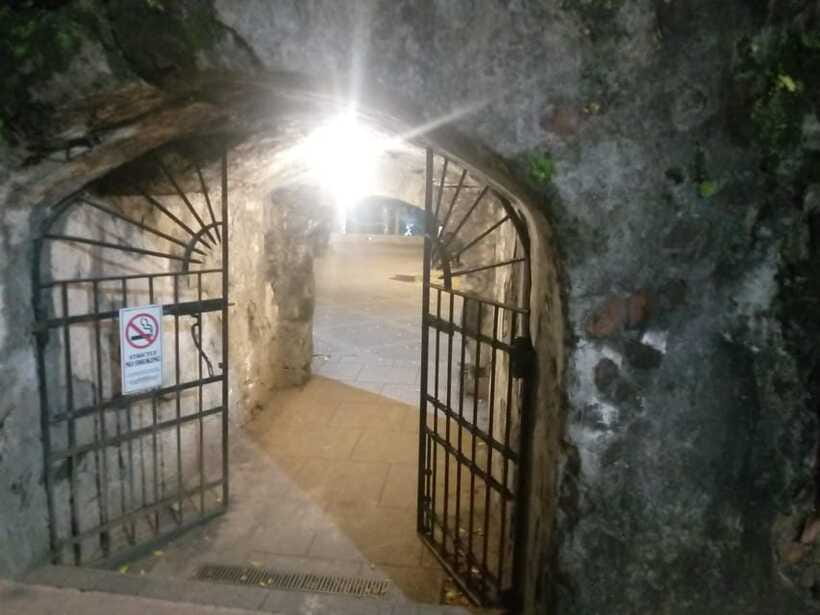
After Fort Santiago and the dungeons, the route moves toward Manila Cathedral and San Agustin Church. These churches allow the guide to discuss how Catholicism mixed with local religions.
The subject is handled as a meeting and conflict of belief systems. Local supreme beings could be recast as demons by conquerors, and older practices could be pushed aside or reinterpreted. That idea helps explain why religious conversion was also a cultural and political process.
You may already know the churches as major architectural sights. This tour gives you another way to see them. Instead of focusing only on age or appearance, you consider what happened when a new religious system entered an existing world of spirits, gods, rituals, and sacred places.
The stop should be especially useful for anyone who has wondered why Filipino religious life can contain both Catholic customs and older folk practices. The tour does not offer a simple answer, but it gives you a framework for understanding that blend.
Keep in mind that the experience lasts only two hours and includes several locations. The church stops are part of a broader walking story, not separate guided visits with long interior lectures. If you want detailed art or architectural commentary, you may need another tour.
Ending at Puerta del Parian
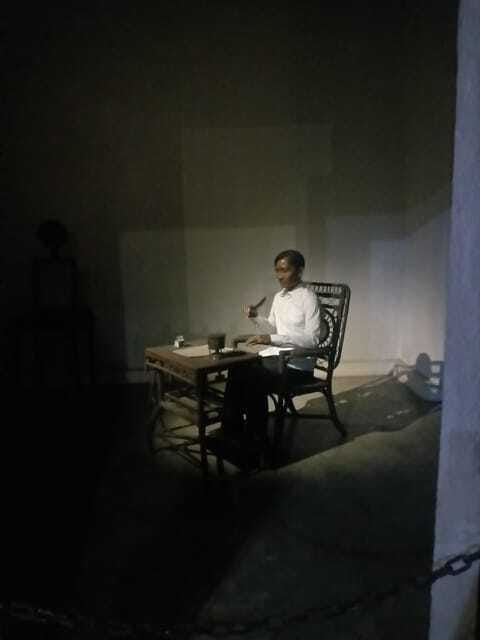
The walk ends at Puerta del Parian, where the focus returns to uprisings and resistance. Ending here gives the route a clear direction. You begin with stories about supernatural beings, pass through sites connected to colonial power and suffering, and finish by reviving the spirit of rebellion.
That arc is one of the tour’s best features. The folklore is not left floating in the air as a collection of spooky tales. It feeds into a discussion of nationalism, memory, religion, and the struggle for independence.
I also like the choice of an ending connected to uprisings. It leaves you thinking about the people who resisted, rather than treating Intramuros as a preserved Spanish backdrop. The Walled City becomes a place where competing ideas about identity and authority were contested.
The exact arrangements for transport after the tour are not provided, so plan your onward journey before you arrive. Since the walk ends at a different location from the starting point, you should note the route and allow time to arrange your next stop.
What the $49 price includes
At $49 per person, this is priced above a simple self-guided walk, but the comparison is not quite fair. You are paying for a live guide, entrance, a snack, and a planned interpretation of several historic sites.
The biggest value comes from the connections between stops. You could visit Plaza Moriones, Fort Santiago, the churches, and Puerta del Parian on your own, but it would be harder to link Aswang stories with colonial control, or the dungeons with the importance of historical memory.
The included snack is a small benefit, not the main reason to book. The guide fee and entrance are more important. I would consider the price worthwhile if you enjoy cultural context, folklore, and discussion. I would hesitate if you want a short photo walk with little commentary.
There are only five published ratings, all at five out of five, so the numerical score is encouraging but based on a small sample. The written praise consistently centers on Jerome’s delivery. He is described as funny, flexible, attentive, and able to explain Philippine history with real feeling.
One particularly useful detail is that Jerome accommodated a last-minute mix-up involving a start time. He also helped a solo participant get home safely. That does not guarantee the same situation for every booking, but it suggests a guide who pays attention to people rather than simply reciting a script.
Day or night, English or German?
You can choose between a day and night tour. Select the day option if visibility, heat management, or a less eerie setting matters most to you. Choose night if you want the Acacia and Balete tree stories to carry a stronger mood.
English and German guiding are available. The supplied information does not identify which departure uses which language, so confirm your preferred language when checking availability.
The tour is wheelchair accessible, which is useful information for planning. Even so, the route includes historic sites, trees, churches, and dungeons, and the exact surface conditions are not described. If you use a wheelchair, confirm the practical route details before booking.
The age restriction is unusual: the experience is not suitable for people over 95. No other age limits are provided. Bring biodegradable insect repellent, and wear something suitable for a two-hour outdoor walk.
Who will get the most from this tour?
I would recommend this experience to you if you enjoy history told through stories rather than dates alone. It also suits people who have already seen Intramuros and want a different angle.
Filipinos who think they know the standard national story may find the folklore and colonial critique particularly useful. One participant from the Philippines described the experience as a new way to reconsider familiar history. That is a good sign that the tour is not aimed only at people arriving with no background.
It should also suit solo visitors. Jerome has been praised for being accommodating and attentive, including helping a solo participant get home safely. Still, that personal kindness is not a formal service guarantee, so make your own transport plan.
You may want to skip it if you dislike ghost stories, serious discussions of death, or questions about religion and colonial power. This is not a purely cheerful evening stroll. It moves between humor, fear, faith, political criticism, and grief.
Should you book the Intramuros Myths and Nights Tour?
Book it if you want to understand Intramuros through Filipino folklore, colonial history, and the long struggle for independence. The two-hour length is efficient, the route covers several important places, and the $49 fee includes entrance, guiding, and a snack.
I would choose the night departure for atmosphere, provided you bring insect repellent and enjoy walking outdoors after dark. The day option is better if you prefer clear visibility and a lighter mood.
The strongest reason to book is Jerome. His humor, flexibility, and ability to add material beyond a basic Intramuros circuit receive the clearest praise. The main reason to hesitate is price, especially if you are satisfied with sightseeing on your own.
One practical note deserves attention: the supplied location information names Nueva Vizcaya, while the route and meeting point are clearly described as Intramuros in Manila. Confirm the exact booking location before paying, so you do not arrive in the wrong province. With that detail checked, this is a thoughtful choice for anyone who wants the Walled City to tell more than one story.
FAQ
Where does the tour start?
The tour starts at Plaza Moriones in Intramuros.
Where does the tour end?
The tour ends at Puerta del Parian.
How long does the tour last?
The tour lasts two hours.
What is included in the price?
The $49 price includes the entrance fee, guide’s fee, and a snack.
Is a night tour available?
Yes. You can choose between a day tour and a night tour.
Which languages are available?
Live guiding is available in English and German.
Is the tour wheelchair accessible?
Yes, the tour is listed as wheelchair accessible.
What should I bring?
Bring biodegradable insect repellent, especially for an evening departure.
Can I cancel for a full refund?
Yes. You can cancel up to 24 hours in advance for a full refund.
Can I reserve now and pay later?
Yes. The reserve now and pay later option lets you hold a place without paying at the time of booking.
Just added around Manila
- Embark on a 7-Day Banaue-Sagada Adventure of a Lifetime★ 5.0 · 3 reviews
- Philippines Intro 3 days 2 nights Tour Best of Manila and Beyond★ 5.0 · 3 reviews
- Pagsanjan Falls Adventure with Lunch and Rapids Experience★ 4.5 · 3 reviews
- Manila: Intramuros Tour ( Dark)★ 4.7 · 3 reviews
- Manila: Intramuros Heritage Tour★ 4.2 · 3 reviews
- From Manila: Philippines Private Tour Guide★ 4.1 · 3 reviews
- Discover the Real Manila with a Local Guide★ 5.0 · 3 reviews
- MANILA: HISTORICAL KALESA RIDE TOUR EXPERIENCE IN INTRAMUROS★ 4.0 · 3 reviews
Intramuros Tours, side by side.

Intramuros, Manila: Historical Bamboo Bike Tour
Read the review →
Experience Intramuros with Bamboo Bicycle – Ecotours
Read the review →
Intramuros, Chinatown, and Old Manila Half-Day Tour
Read the review →Manila Old and New: Sightseeing Tour Including Intramuros and Fort Santiago
Read the review →

Explore Intramuros: Introduction to Philippine History
Read the review →Where else this one shows up