
Reviewed · INTRAMUROS TOURS
Manila: Filipino Historic Walking Tour in Intramuros
History becomes easier to grasp on foot. This three-hour walk through Intramuros links churches, an aristocratic home, old fortifications, a wartime memorial, and the country’s former military center into one clear story. I like the route’s variety, especially the combination of San Agustin Church and Museum with Casa Manila, Fort Santiago, and the Manila Cathedral.
I also like the human touch. Guides speak English or Tagalog, the group is limited to 15 people, and one guide named Jerome earned praise for being friendly, flexible, and well informed. The main drawback is the walking itself: narrow streets, old surfaces, and historic sites make this a poor choice for anyone with mobility limits.
In This Review
- Key Points at a Glance
- Why a Guided Walk Helps You Read Intramuros
- San Agustin Church and Museum: A Strong Opening
- Casa Manila and the Meeting of East and West
- Intramuros Walls and the WWII Memorial
- Manila Cathedral and the Catholic Center
- Fort Santiago and the Fight for Independence
- Is $55 a Fair Price?
- What to Wear and How Much Walking to Expect
- Who Will Get the Most From This Tour?
- Should You Book the Intramuros Walking Tour?
- FAQ
- Where does the tour begin?
- Where does the tour finish?
- How long does the walking tour last?
- What languages are available?
- What entrance fees are included?
- Is hotel pickup included?
- What should I wear?
- Is the tour suitable for wheelchair users?
- What happens if bad weather cancels the tour?
Key Points at a Glance
- Begin at the country’s oldest stone church: San Agustin Church gives the tour a strong starting point for understanding Spanish rule and Catholic influence.
- Step inside a restored 19th-century home: Casa Manila shows how eastern and western design influences met in an aristocratic residence.
- Visit several major Intramuros landmarks: The route includes San Agustin Museum, Memorare Manila 1945, Manila Cathedral, and Fort Santiago.
- Expect a small, guided group: The maximum group size is 15, with English and Tagalog tours available.
- Allow three hours for steady walking: Comfortable shoes matter, and the experience requires good weather.
- Pay for context, not just admission: At $55 per person, the value rests on the guide’s explanations and the fact that several entrance fees are included.
Why a Guided Walk Helps You Read Intramuros
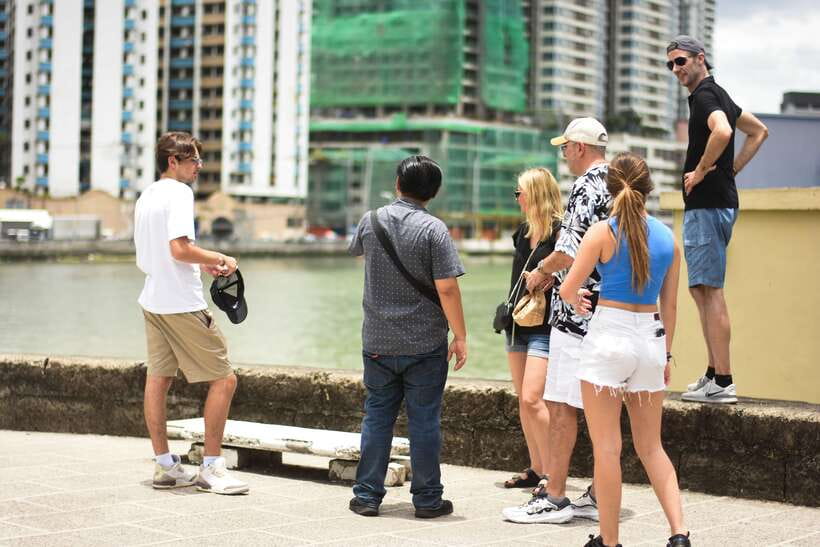
Intramuros is compact enough to explore on your own, but its buildings do not explain themselves. A church, a defensive wall, a military garrison, and a colonial home can seem like separate sights until someone connects them.
This tour gives you that connecting thread. You hear why Spain reached the Philippines, how more than 300 years of Spanish occupation shaped the country, and how Catholic institutions became tied to Manila’s public life. The focus is not only on architecture. It is also on power, religion, war, and the Filipino struggle for independence.
I find that especially useful in Intramuros because the area contains several layers of history close together. You can move from church art to aristocratic interiors, then to military history and the destruction remembered by a World War II memorial. A self-guided visit may let you see the same buildings, but you would need to do much more preparation to understand how they fit together.
The group limit of 15 is another practical advantage. That is large enough to keep the price reasonable, but small enough for questions and a more personal exchange with the guide. The strongest feedback about the experience centers on this human side: guides are described as funny, motivated, friendly, and well informed. One booking singled out Jerome for adapting the walk to what the group wanted to see.
More Historical Tours in Manila
- Intramuros, Manila: Historical Bamboo Bike Tour
★ 4.8 · 583 reviews - Explore Intramuros: Introduction to Philippine History
★ 5.0 · 80 reviews - Experience Manila’s Heritage: Intramuros & More in Half a Day!
★ 5.0 · 76 reviews
San Agustin Church and Museum: A Strong Opening
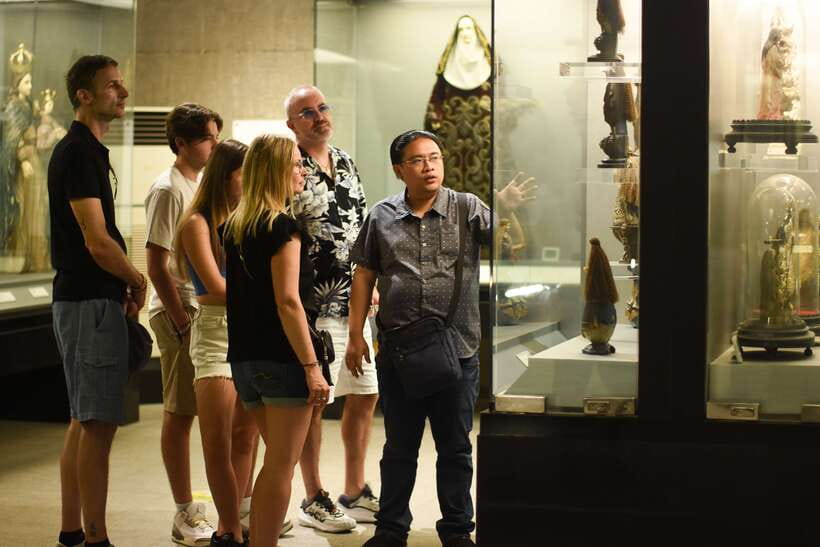
Meet in the lobby of the San Agustin Church Museum. This is an important detail because the meeting point is not a hotel or a general plaza. You should arrive at the museum lobby and use the provided WhatsApp contact number to identify your guide.
San Agustin Church is presented as the oldest stone church in the Philippines. That gives your guide a natural way to explain the arrival of the Spanish, the reasons for their presence in this part of the world, and the long effects of colonial rule.
The church also introduces the close relationship between Spanish power and the Catholic Church. As you listen, architectural details and religious objects become part of a bigger story rather than isolated sights.
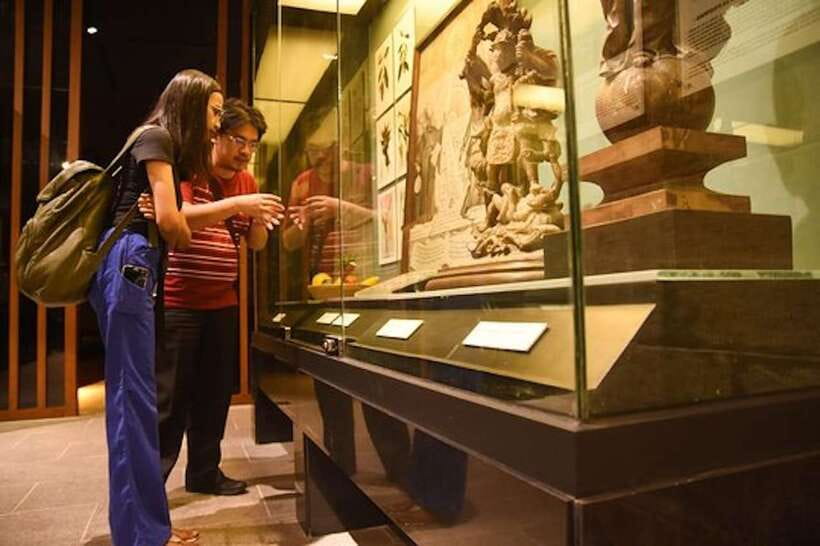
The adjoining San Agustin Museum adds another layer. You can see old artifacts and learn more about Manila’s old city through the church’s connection to Catholic history. The museum is included in the price, which matters because indoor collections are often the places where a walking tour gains depth.
I would pay close attention here, since the opening sets up themes that return at the Manila Cathedral and Fort Santiago. The experience is not simply a procession of photo stops. The early part explains how institutions shaped daily life and public authority.
Casa Manila and the Meeting of East and West
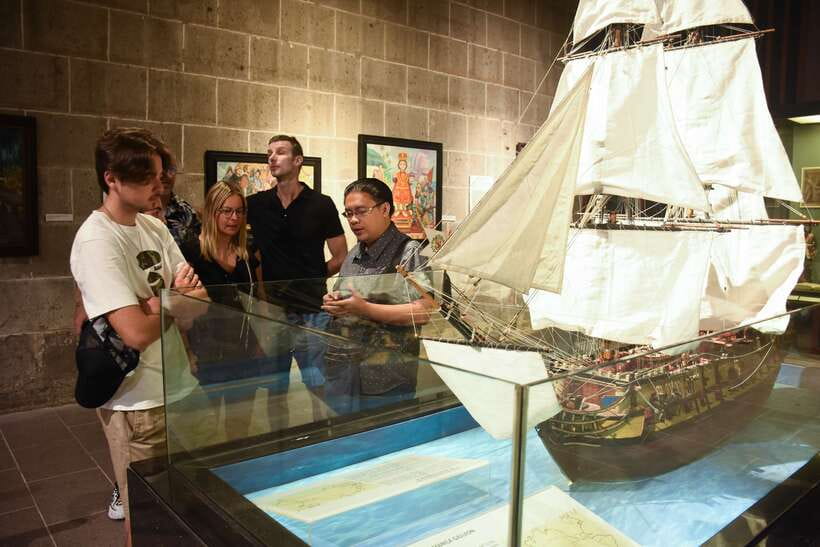
After San Agustin, you cross the street to Casa Manila. This restored 19th-century home once belonged to the world of aristocrats, and its furnishings and design show the meeting of eastern and western influences.
Casa Manila changes the scale of the story. San Agustin Church speaks about religious and colonial institutions. Casa Manila lets you consider how wealth and social position were expressed inside a private home.
The guided visit is included, so you are not left to guess what rooms, furnishings, and design choices meant. I like this part because it gives the tour a domestic setting. Colonial history can feel abstract when it is explained only through dates and rulers. A home helps you picture how cultural influence appeared in everyday surroundings.
The stop also breaks up the outdoor walking. That is useful in a three-hour tour, particularly in warm or unsettled weather. Still, you should not expect a long, leisurely house visit. The overall route has several major stops, so the guide needs to keep moving.
Intramuros Walls and the WWII Memorial
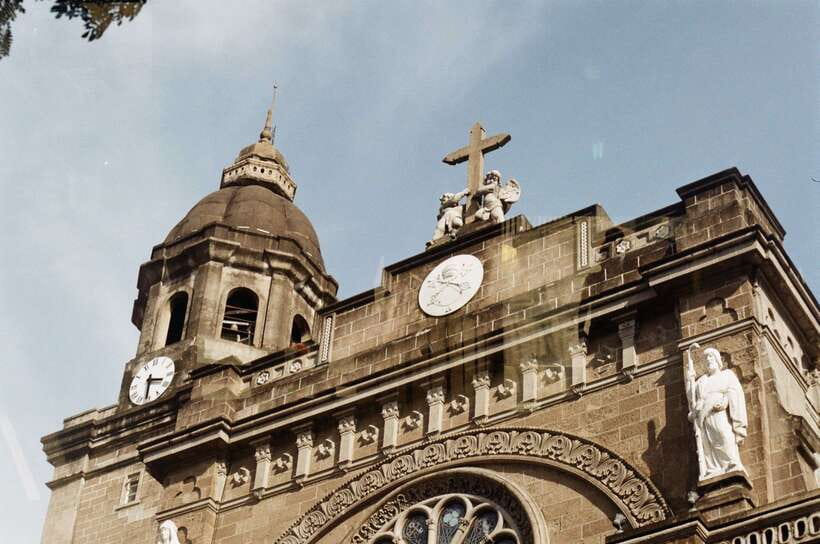
The walk continues toward a less frequently visited section of the Intramuros wall. The tour description promises a look at the wall’s past, but it does not specify exactly how long you spend there or which section you enter.
That uncertainty is worth keeping in mind. The wall stop is best viewed as a chance to hear about the defensive side of old Manila, not as a separate long museum visit. It adds physical scale to the history. You are no longer only looking at interiors and religious buildings. You are seeing the fortified character of the old city itself.
The route then makes a short stop at Memorare Manila 1945. This World War II memorial provides a moment to learn about the Philippines’ role in the war and the suffering connected to Manila during that period.
The memorial stop is brief, but it gives the tour a necessary modern historical layer. Spanish colonial rule is only part of Intramuros’ story. The wartime past also shaped the city and the people who live in the Philippines today.
If a religious procession or major local event is taking place, expect the normal flow to change. One booking described confusion during the Parade of Mary, with details temporarily turned around. That sounds like an occasional event-related issue rather than a flaw in the route, but it is a reminder that an active historic district does not always behave like a quiet museum.
More ways to see Intramuros:
- Experience Intramuros with Bamboo Bicycle – Ecotours
★ 5.0 · 508 reviews - Manila: Intramuros, Chinatown, and Old Manila Half-Day Tour
★ 4.8 · 475 reviews - Manila Old and New: Sightseeing Tour Including Intramuros and Fort Santiago
★ 4.5 · 377 reviews - Manila: Guided Sunset Bamboo Bike Tour in Intramuros
★ 4.8 · 119 reviews
Manila Cathedral and the Catholic Center
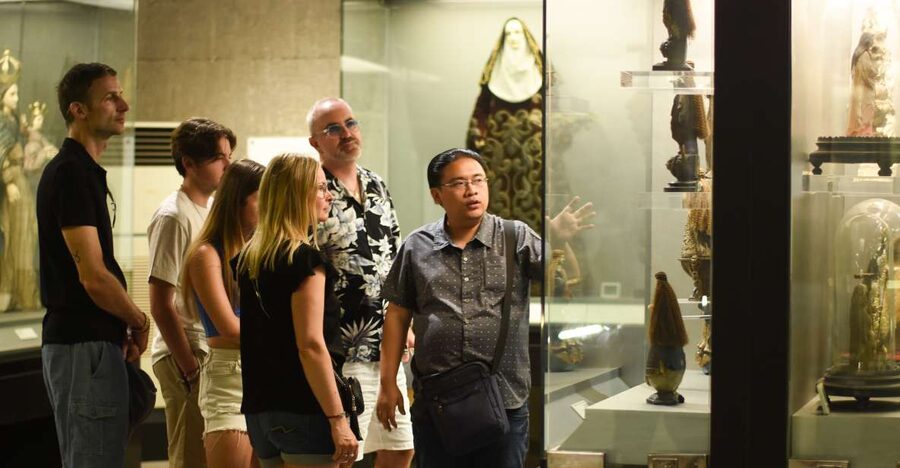
The next short stop is Manila Cathedral, described as the seat of the Catholic Church in the Philippines. You see the building from the route and hear why it matters within the country’s religious structure.
Placed after San Agustin Church and the museum, the cathedral helps you compare different parts of Catholic Manila. The earlier stop gives you artifacts and a longer guided explanation. Here, the emphasis is on the cathedral’s national role.
This is a sightseeing stop rather than a separate guided entrance listed among the included visits. That distinction matters if you expect to spend a long time inside. The tour gives you context and a chance to see the cathedral, but the detailed exploration is reserved for San Agustin, Casa Manila, and Fort Santiago.
Fort Santiago and the Fight for Independence
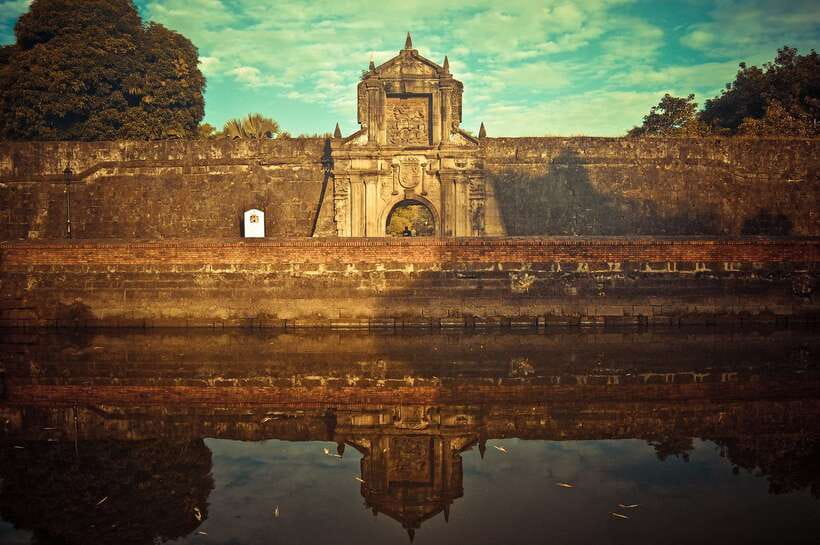
The tour finishes at Fort Santiago, the old military garrison within Intramuros. This is where the story shifts toward the Filipino fight for independence.
Fort Santiago is one of the most important stops for understanding the city’s military and political past. The walls and garrison setting make the subject feel concrete. Instead of hearing only about colonial control, you are brought to a place tied to authority, imprisonment, defense, and the push for self-rule.
A guided visit to Fort Santiago is included, along with the entrance fee. The tour ends here, which is convenient if you want to continue exploring Intramuros afterward or make your own way to another part of Manila. There is no hotel pickup or drop-off, so you are responsible for reaching San Agustin Church and arranging your onward transport from Fort Santiago.
The finish also gives the tour a satisfying historical direction. You begin with the Spanish arrival and religious influence, move through social life and wartime memory, and end with the Filipino struggle for independence. That sequence is one of the experience’s strongest features.
Is $55 a Fair Price?
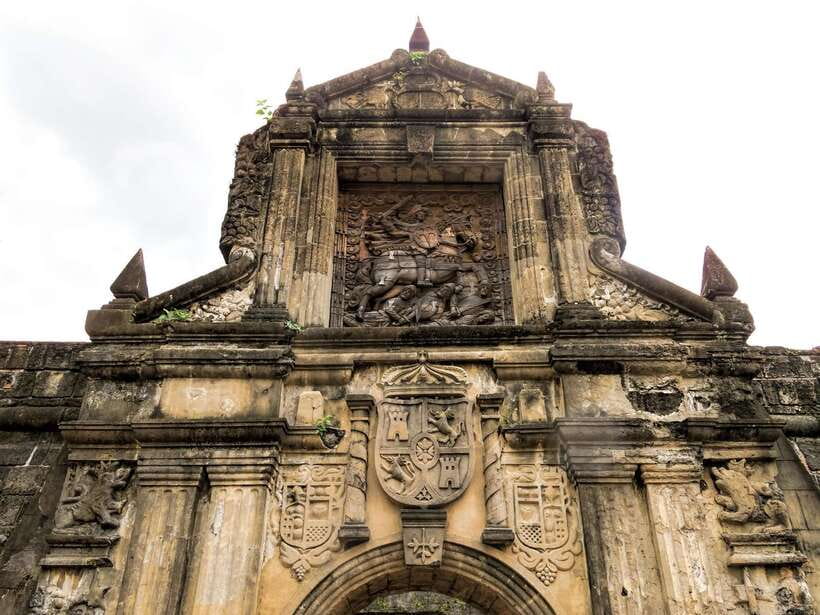
At $55 per person, this is not the cheapest way to walk around Intramuros. You can see the streets and exterior landmarks without paying for a guide. The question is what you would miss without the explanations and included admissions.
The price includes a professional guide plus entrance fees to Fort Santiago, San Agustin Church and Museum, and Casa Manila Museum. Those admissions reduce the gap between the tour price and a do-it-yourself visit.
I think the fee is reasonable if you want a clear introduction to Manila’s colonial past in one morning or afternoon. You are paying for interpretation, route planning, and access to several paid sites, not merely for someone to lead you down a street.
The value is strongest for first-time visitors, history-minded people, and anyone who wants to understand how Spanish rule, Catholicism, war, and independence connect. It is less compelling if you already know Intramuros well or prefer to spend an entire day studying one building at your own pace.
One useful detail comes from the timing. A booking with Jerome lasted just under three hours, and the participant considered that length ideal. That seems right for this route. Three hours is enough to cover the main sights without turning the walk into an exhausting full-day program, but you should not expect unhurried time at every stop.
What to Wear and How Much Walking to Expect
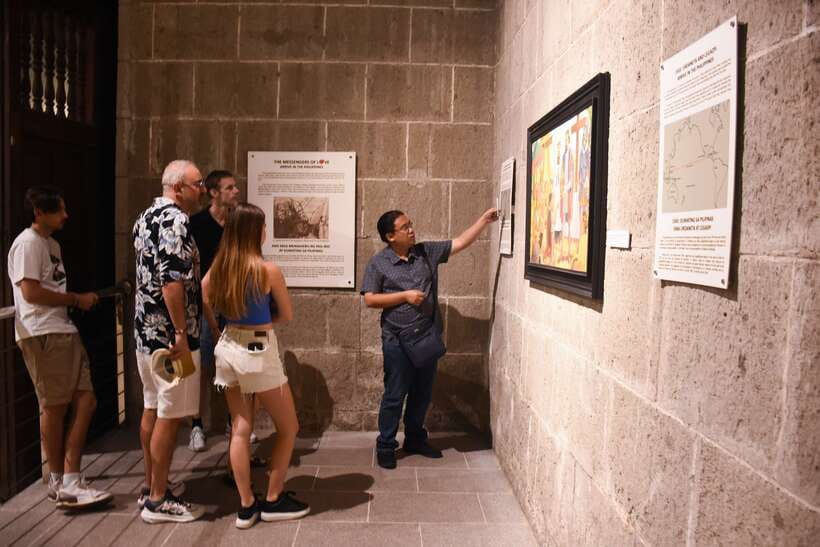
Wear comfortable shoes. That advice is basic but important here because the experience covers several sites on foot, including narrow streets and parts of the historic wall area.
The tour is not suitable for wheelchair users or people with mobility impairments. The supplied information does not provide a step-free route, seating plan, or detailed surface conditions, so you should treat the walk as physically demanding enough to require steady movement between stops.
Short skirts and sleeveless shirts are not allowed. San Agustin Church and the other religious settings require respectful clothing, so dress with covered shoulders and a suitably modest hemline.
Weather also matters. The activity requires good weather, and a cancellation caused by bad conditions results in the choice of another date or a full refund. You can cancel up to 24 hours before the start for a full refund, and the reserve-now, pay-later option lets you hold a place without paying immediately.
The tour is offered in English and Tagalog. Since the guide’s explanations are central to the experience, choose the language in which you can comfortably follow discussions about colonial rule, religion, and independence.
Who Will Get the Most From This Tour?

I would recommend this walk to you if you are visiting Manila for the first time and want more than a list of old buildings. It gives you a useful framework for understanding Intramuros before you explore other parts of the city.
It also suits you if you enjoy architecture, church history, museums, or the story of Philippine independence. The route includes enough variety to keep the three hours moving: religious art, household design, defensive walls, wartime memory, a cathedral, and a military garrison.
Families with older children may appreciate the short stops and clear sequence, though the clothing rules and walking demands still apply. The guide’s friendly and humorous approach can make difficult subjects easier to follow.
I would be more cautious if you have trouble walking, need wheelchair access, or want a slow photographic tour. The group size is capped at 15, but this remains a scheduled route with several required stops. You will have less freedom than you would on a private visit.
Also confirm the location before booking. The supplied location label says Nueva Vizcaya, but the meeting point and every named stop are in Manila’s Intramuros. Since the tour begins at San Agustin Church Museum, check that your booking confirmation shows the Manila meeting point.
Should You Book the Intramuros Walking Tour?
Book it if you want a well-organized introduction to old Manila and prefer learning from a live guide rather than reading plaques. The route covers the major historical subjects in a sensible order, and the included admissions make the $55 price easier to justify.
The best reason to choose it is the guide-led context. Jerome’s reported flexibility is a good sign for anyone who wants to ask questions or adjust the emphasis slightly, while the strong overall rating of 4.8 from 17 ratings suggests the experience usually delivers on its promise.
Skip it if you need an accessible route, dislike fixed schedules, or already have detailed plans for San Agustin, Casa Manila, and Fort Santiago. For most first-time visitors who can manage three hours of walking, though, this is a useful and human-scale way to meet Intramuros.
FAQ
Where does the tour begin?
The meeting point is in the lobby of the San Agustin Church Museum in Intramuros. You should look for your guide using the provided WhatsApp contact number.
Where does the tour finish?
The tour finishes at Fort Santiago.
How long does the walking tour last?
The scheduled duration is three hours. One booking described the walk as lasting just under three hours.
What languages are available?
The live guide can conduct the tour in English or Tagalog.
What entrance fees are included?
The price includes entrance to Fort Santiago, San Agustin Church and Museum, and Casa Manila Museum.
Is hotel pickup included?
No. Hotel pickup and drop-off are not included, so you must make your own way to San Agustin Church and arrange onward transport after Fort Santiago.
What should I wear?
Wear comfortable shoes, and avoid short skirts and sleeveless shirts. Modest clothing is required for the religious sites.
Is the tour suitable for wheelchair users?
No. The experience is not suitable for wheelchair users or people with mobility impairments.
What happens if bad weather cancels the tour?
If bad weather causes a cancellation, you will be offered another date or a full refund. You can also cancel up to 24 hours in advance for a full refund.
More Walking Tours in Manila
- Manila: Street Food and Drinks Walking Tour with Tastings
★ 4.8 · 114 reviews - Viva Old Manila: Intramuros Walking Tour
★ 4.9 · 104 reviews - Manila’s Walled City: Intramuros Walking Tour
★ 5.0 · 82 reviews - Manila: Sightseeing and Food Walking Tour with Tastings
★ 4.7 · 68 reviews
Just added around Manila
- Embark on a 7-Day Banaue-Sagada Adventure of a Lifetime★ 5.0 · 3 reviews
- Philippines Intro 3 days 2 nights Tour Best of Manila and Beyond★ 5.0 · 3 reviews
- Pagsanjan Falls Adventure with Lunch and Rapids Experience★ 4.5 · 3 reviews
- Manila: Intramuros Tour ( Dark)★ 4.7 · 3 reviews
- Manila: Intramuros Heritage Tour★ 4.2 · 3 reviews
- From Manila: Philippines Private Tour Guide★ 4.1 · 3 reviews
- Discover the Real Manila with a Local Guide★ 5.0 · 3 reviews
- MANILA: HISTORICAL KALESA RIDE TOUR EXPERIENCE IN INTRAMUROS★ 4.0 · 3 reviews
Intramuros Tours, side by side.

Intramuros, Manila: Historical Bamboo Bike Tour
Read the review →
Experience Intramuros with Bamboo Bicycle – Ecotours
Read the review →
Intramuros, Chinatown, and Old Manila Half-Day Tour
Read the review →Manila Old and New: Sightseeing Tour Including Intramuros and Fort Santiago
Read the review →


Explore Intramuros: Introduction to Philippine History
Read the review →Where else this one shows up