
Reviewed · TUK-TUKS
Discover the Real Manila with Tuktuk and Jeepney
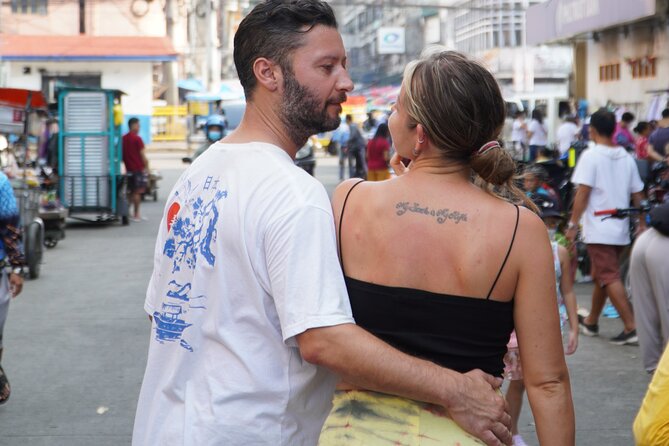
Manila reveals itself away from the monuments. This two-hour outing takes you through Tondo, Divisoria, and Binondo, where markets, narrow lanes, and daily life provide a far more direct look at the city than a standard sightseeing loop. I like the chance to see Old Manila Tondo market and I like that photography is included, with photos sent after the experience. The main drawback is the price: $85 per person is a serious sum for only two hours.
This is especially useful if you have one or two days in Manila, or a long layover and want a guided introduction rather than a list of famous buildings. The small maximum of 10 people should keep the group manageable, but the tour is not designed as a relaxed, polished city walk. Tondo includes difficult living conditions, so you should be ready for an honest and sometimes uncomfortable look at the city.
In This Review
- Key points at a glance
- Why this short Manila tour feels different
- Starting around Tondo’s local market
- Seeing Tondo, Divisoria, and everyday Manila
- Walking through Binondo, Manila’s oldest Chinatown
- Photography with a local guide
- What guide Venus adds to the route
- Is $85 a fair price for two hours?
- Who should book this Manila experience?
- Should you book it?
- FAQ
- Where does the tour start?
- Where does the tour end?
- How long does the experience last?
- What time does the tour operate?
- Which places are included?
- Is photography included?
- How many people can join?
- Can I cancel for a full refund?
Key points at a glance
- Tondo market opens the tour: Your first hour takes place around an active local market, with produce, vendors, street scenes, and plenty to photograph.
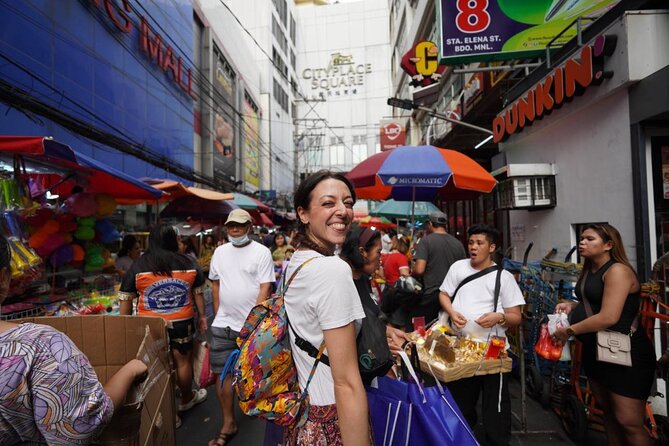
- Binondo is Manila’s oldest Chinatown: The second hour shifts to Chinese-Filipino culture, temples, market stalls, and atmospheric alleyways.
- Local guidance adds meaning: Guide Venus is praised for her local knowledge and for making the route enjoyable for both first-time visitors and people with family ties to Manila.
- Photography is part of the experience: You may bring an extra camera, while the included photography service sends the finished photos after the tour.
- The timing suits short stays: Choose 8 to 10 a.m. or 2 to 4 p.m., with the tour beginning and ending in Tondo.
- The outing asks for cultural sensitivity: You will see poverty as well as commerce and heritage, so this is best for people who want an unvarnished view of Manila.
Why this short Manila tour feels different
Many first visits to Manila focus on major sights, shopping centers, or historic landmarks. This experience takes another route. It places you in working neighborhoods where the city is seen through markets, alleys, local commerce, and ordinary routines.
I like that the route connects three distinct parts of Manila in a short period. Tondo presents one side of the city, Divisoria adds a major commercial setting, and Binondo brings Chinese-Filipino traditions into the picture. You are not simply moving between photo stops. You are getting a compact lesson in how several communities shape Manila.
The tour is also aimed at visitors who may not know where to begin. If you have only a day or two, a local guide can save you from spending your limited time wandering without context. That matters in a large city where the most interesting streets are not always the easiest to identify on your own.
Still, this is not a gentle introduction for everyone. The route includes areas with very poor living conditions, and the experience presents that reality as part of the story. If you prefer museums, grand churches, and carefully maintained historic streets, you may find the focus too confronting. If you want to understand more than Manila’s postcard image, the route has real value.
A few more trips and experiences worth a look
- The Jeepney & Tuk Tuk Adventure ride with Local Guide
★ 4.5 · 4 reviews - Manila: Guided Tuk Tuk Ride
★ 4.8 · 57 reviews - Manila Tuktuk and Jeepney Ride Guided Tour
★ 4.9 · 16 reviews
Starting around Tondo’s local market
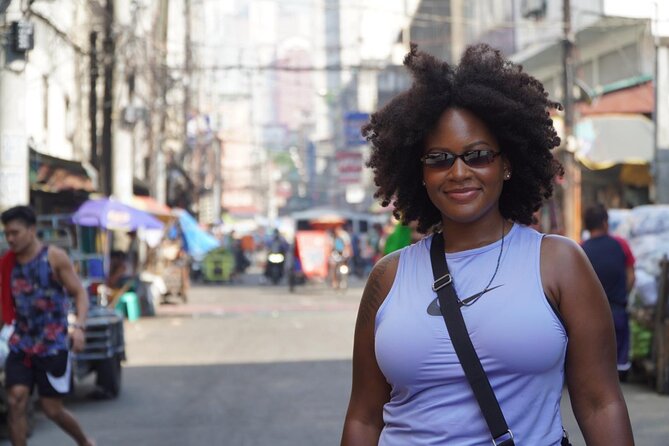
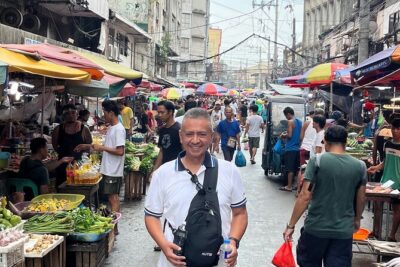
The first hour centers on the Old Manila Tondo local market. This is the most immediate part of the tour, because the setting is active and practical rather than arranged for sightseeing.
You can expect a mix of colorful produce, local vendors, street activity, and close-up views of daily commerce. The market gives you natural subjects for photography, from goods on display to people working and moving through the streets. Its appeal comes from the fact that it functions as a real market, not a recreated attraction.
I would keep your camera ready but your manners even readier. A working market is a place where people are earning a living, so follow your guide’s lead about where to pause and what to photograph. The tour includes photography, but that does not mean every person or moment should be treated as a prop.
The Tondo stop also carries the most serious social weight. The route shows the surroundings and living conditions of some of Manila’s poorest residents. That can make the experience meaningful, but it can also feel uncomfortable if the focus becomes poverty alone.
Try to pay attention to more than hardship. Notice how people use the market, how goods move through the neighborhood, and how the streets function as shared public space. A respectful approach helps you see residents as part of a community, not as scenery.
The market visit lasts about one hour. That is enough time to take in the setting without turning the entire afternoon into a long walk through one neighborhood. It also leaves room for the very different atmosphere of Binondo.
Seeing Tondo, Divisoria, and everyday Manila
The tour description highlights Tondo and Divisoria together as a central part of the route. Divisoria is associated here with the broader market and commercial experience, adding another layer to the first half of the outing.
This is useful because Manila can seem confusing when you see only isolated sights. Markets show how the city works. They bring together sellers, buyers, goods, transport, and neighborhood life in a way that a formal attraction cannot.
The route is also described as a walking tour, with tuktuk and jeepney named in the experience title. The supplied details do not specify exactly when or how much of the journey uses either vehicle, so you should not book this expecting a fully vehicle-based sightseeing ride. The confirmed structure is a roughly two-hour experience beginning in Tondo and returning to the same meeting point.
That return to Tondo makes planning easier. You do not need to arrange a second pickup at the end, though you should allow extra time around the two-hour estimate if your next appointment is fixed. The tour operates in two time slots, 8 to 10 a.m. and 2 to 4 p.m.
The morning departure may suit you if you want to make the most of a short Manila stay. The afternoon option can work better if you arrive late, prefer a slower start, or have morning plans. Since the activity requires good weather, keep the cancellation terms in mind when fitting it into a tight schedule.
Walking through Binondo, Manila’s oldest Chinatown
The second hour moves to Binondo, described as Manila’s oldest Chinatown. This changes the tone of the experience. Instead of focusing mainly on working-class market life and difficult housing conditions, you get a look at Chinese-Filipino culture through streets, temples, stalls, and alleyways.
Binondo is well suited to photography. The route includes ornate temples, narrow lanes, market activity, and street scenes that show the district’s daily character. You can use this part of the tour to look for details rather than rushing from one landmark to the next.
I like the contrast between the two stops. Tondo and Binondo are not presented as interchangeable neighborhoods. One emphasizes the realities of poverty and local commerce. The other gives you a window into a long-established Chinese-Filipino community and its visual traditions.
The word Chinatown can sometimes suggest a theme-park district built mainly for visitors. This experience instead emphasizes the surrounding streets and everyday activity. That makes the stop more useful if you want to see how heritage continues through ordinary places, not just through a sign or a monument.
You should also expect the walking portion to feel unvarnished. Alleys and market streets can be crowded, noisy, and uneven, though the supplied information does not give specific accessibility details. Most people can take part, but anyone who has difficulty with extended walking should confirm the practical arrangements before booking.
Something different, still within reach of Luzon:
- Manila Old and New: Sightseeing Tour Including Intramuros and Fort Santiago
★ 4.5 · 377 reviews - Manila’s Walled City: Intramuros Walking Tour
★ 5.0 · 82 reviews - Manila Filipino Cooking Class: Meryenda Favorites
★ 5.0 · 80 reviews - Batad Guided Tour
★ 5.0 · 78 reviews
Photography with a local guide
Photography is not an extra add-on here. It is part of the experience, and the provider says the finished photos will be sent to you after the tour.
That changes the way you can approach the outing. You do not have to spend every minute trying to document yourself. You can bring an extra camera if you like, but the included photography gives you a chance to focus on the streets and listen to the guide.
Do not expect a formal studio session. The settings are markets, alleys, vendors, and local neighborhoods. The appeal is in candid-looking street images and a record of your time in places that are difficult to capture alone.
The photos also add some value to the $85 price. Without that service, the cost would feel high for a two-hour route, especially since admission to the stops is free. With photography included, the price pays for more than walking directions. You are paying for a guide, a planned route, local interpretation, and a set of images.
The key question is how much you value those extras. If you already know Manila well and simply want to walk through Tondo and Binondo independently, $85 may not make sense. If you are new to the city, short on time, and want a local-led route with photos, the calculation looks better.
What guide Venus adds to the route
Guide Venus receives especially warm praise for knowing Tondo, Divisoria, and Chinatown well. That matters here because the value of the tour depends heavily on the person leading it.
A market can be fascinating for five minutes and confusing for the next fifty. A local guide can help you understand what you are seeing, point out details you might miss, and keep the route moving. Venus is also praised for making the experience work for different ages and backgrounds, including children and parents who had grown up in the Philippines.
That last point is telling. The tour was enjoyable even for a family whose older members already knew the country. You should not assume that local connections make the route unnecessary. Binondo, Tondo, and Divisoria can still look different when someone explains the streets from a local point of view.
At the same time, the tour has only a small number of published ratings, so I would avoid treating the perfect score as a guarantee of a perfect outing for every personality. The clearest strength is the guide’s local connection and the unusual route, not a promise that every moment will be comfortable or polished.
Is $85 a fair price for two hours?
At $85 per person, this is not a budget walking tour. The stops have no admission charge, and the duration is about two hours. On those details alone, the price may look steep.
The value rests in the package. You receive a guided route through places that many short-term visitors would not know how to approach, a small group capped at 10 people, and photography with photos sent afterward. You also get a local perspective from someone familiar with the neighborhoods.
I would compare it with the cost of lost time. If you are in Manila for a layover, a poorly planned independent outing can leave you spending much of the day on transport or wondering where to go next. A two-hour plan that starts and ends in Tondo can be worth paying for if it fits your schedule.
For a family, the cost adds up quickly, especially since the tour is short. For a solo visitor or couple who values photographs and direct local contact, it may feel more reasonable. The best match is someone who sees the tour as a focused cultural experience, not as a conventional sightseeing bargain.
Who should book this Manila experience?

I would recommend it most strongly to first-time visitors with limited time. The route offers a quick look at Manila beyond the usual tourist circuit, and the two time slots make it easier to fit around flights or other plans.
It also suits photographers and people who enjoy street scenes. You get markets, vendors, alleys, temples, and neighborhood activity in one compact outing. The included photo service is a useful bonus if you want images of yourself in the setting.
Families can enjoy it too. The route has enough variety to hold the attention of children, while the local context gives adults something more substantial than a simple photo stop. The experience has already worked for a family with both children and older parents, including relatives familiar with the Philippines.
I would hesitate to recommend it to anyone who wants a quiet, polished, or purely historic tour. You should also think carefully about the poverty-focused element. The experience is best approached with respect and curiosity, not as a hunt for shocking pictures.
Confirmation is provided at booking, most people can participate, and the group is limited to 10. The meeting point is in Tondo, Manila, and you return there at the end. Free cancellation is available up to 24 hours before the start time. Cancellations inside that window are not refunded, and poor weather may lead to a new date or a full refund.
Should you book it?
Book this tour if you want a short, local-led look at Manila’s markets, Tondo streets, Divisoria, and Binondo, especially during a one or two-day stay. The combination of guide Venus, included photography, and a route built around real neighborhoods gives it more character than a standard city overview.
Skip it if $85 feels too high for two hours, if you want major landmarks, or if the focus on poverty would make you uneasy. For the right visitor, this is a compact and revealing introduction to Manila, with enough contrast between Tondo and Binondo to make the city feel more real.
FAQ
Where does the tour start?
The tour starts in Tondo, Manila, in Metro Manila, Philippines.
Where does the tour end?
The experience ends back at the meeting point in Tondo.
How long does the experience last?
The tour lasts approximately two hours.
What time does the tour operate?
The available time slots are 8:00 a.m. to 10:00 a.m. and 2:00 p.m. to 4:00 p.m.
Which places are included?
The route includes Tondo, the Old Manila Tondo local market, Divisoria, and Binondo, Manila’s oldest Chinatown.
Is photography included?
Yes. Photography is included, and the photos will be sent to you after the experience. You may also bring an extra camera.
How many people can join?
The activity has a maximum of 10 participants.
Can I cancel for a full refund?
Yes, if you cancel at least 24 hours before the experience starts. Cancellations made less than 24 hours before the start time are not refunded. If poor weather cancels the tour, you will be offered another date or a full refund.
Just added around Luzon
- Pagsanjan Falls Adventure with Lunch and Rapids Experience★ 4.5 · 3 reviews
- Private Airport Transfer Manila to Hotel in Manila or vice versa★ 5.0 · 3 reviews
- The Jeepney & Tuk Tuk Adventure ride with Local Guide★ 4.5 · 4 reviews
- Sagada and Banaue Rice Terraces 4-Day Tour★ 5.0 · 4 reviews
- Manila Food Tour Experience with Local Guide★ 5.0 · 4 reviews
- Mt. Pinatubo Day Tour from Manila★ 5.0 · 4 reviews
- Day Hike: Mount Daraitan plus Tinipak River start point Manila** updated 2022★ 5.0 · 4 reviews
- Manila Social and Political Walk★ 5.0 · 4 reviews
Tuk-Tuks, side by side.
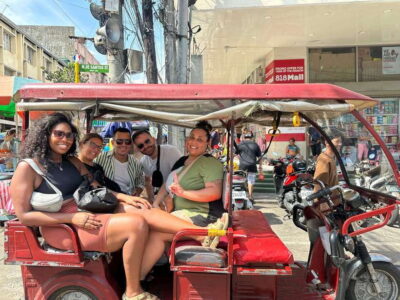

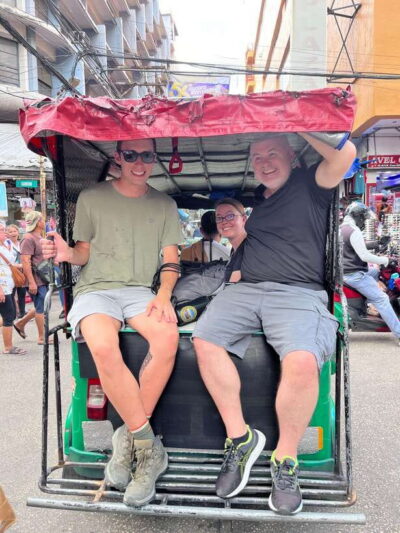
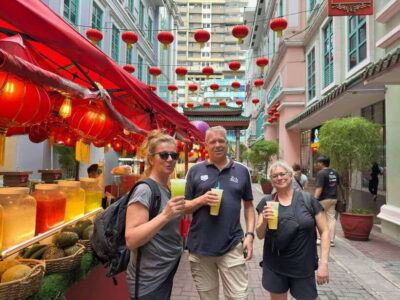
Manila Street Food and Drinks with Tuktuk Experience
Read the review →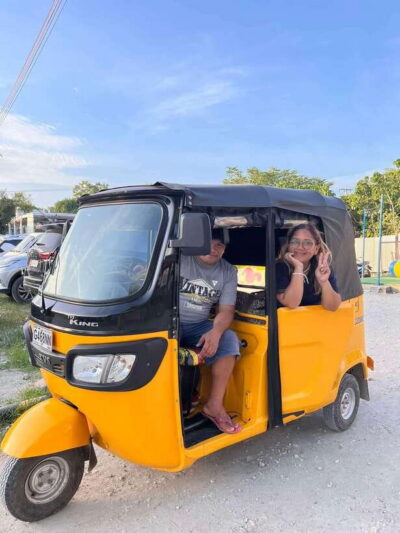
The Jeepney & Tuk Tuk Adventure ride with Local Guide
Read the review →Where else this one shows up