
Reviewed · HISTORICAL TOURS
The Original Cebu City Historical and Food Walking Tour
Cebu tastes better on foot. This four-hour evening outing combines Cebu’s major historic sights with local food stops, public transport, and street scenes that many visitors miss when they head straight for the beaches. I especially like the mix of history and eating, and I like that guides such as Kyle, Lorelie, Phillip, Lorilie, and Necian have helped guests feel comfortable in unfamiliar parts of the city. The main caution is price: at $69.99 per person, you need to value the guide, food, and entry fees to feel satisfied.
The 4 p.m. start gives you a cooler part of the day, and the route ends at Freedom Park in the Carbon area rather than returning you to your hotel. You may ride a jeepney, taste dishes such as lechon or tuslob buwa, and pass through Carbon Market, but the exact food lineup and access to some churches can vary.
In This Review
- Key things to know before you book
- Why this tour gives Cebu City a fair hearing
- Starting at Ayala Terraces at 4 p.m.
- Heritage of Cebu Monument: a quick history lesson in stone
- Yap-Sandiego Ancestral House and Cebu’s older domestic life
- Santo Niño Basilica and the center of Cebu’s faith
- Magellan’s Cross and the story behind the pavilion
- Cebu Metropolitan Cathedral and the cost of rebuilding
- Carbon Market: where the city becomes more immediate
- What you are likely to eat along the way
- Guides, group size, and the feel of the evening
- Is $69.99 a fair price?
- Who should book this Cebu City walk?
- Should you book the Original Cebu City Historical and Food Walking Tour?
- FAQ
- How long does the tour last?
- Where does the tour begin?
- What time does the tour start?
- Where does the tour finish?
- Is transportation back to my hotel included?
- What sights are included?
- Is food included in the price?
- What happens if the tour is canceled?
Key things to know before you book
- Six major Cebu landmarks: The route includes the Heritage of Cebu Monument, Yap-Sandiego Ancestral House, Santo Niño Basilica, Magellan’s Cross, Cebu Metropolitan Cathedral, and Carbon Market.
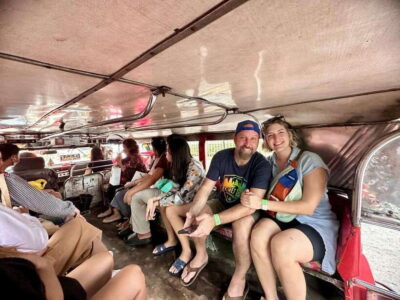
- A real local transport moment: Several outings include a jeepney ride, giving you a practical look at how people move around Cebu City.
- Street food is part of the lesson: Expect several small food stops, with local dishes that may include lechon, tuslob buwa, balut, drinks, or other Cebu specialties.
- A 4 p.m. city-to-market route: You begin at Ayala Terraces and finish at Freedom Park in Carbon, usually after about four hours.
- Small enough for conversation: The maximum group size is 20, and the strongest praise goes to guides who answer questions and make solo visitors feel at ease.
- Plan your ride home: Return transport is not included, and the non-refundable booking policy is strict except when the operator cancels for weather or low numbers.
Why this tour gives Cebu City a fair hearing
Cebu is often treated as a gateway to island trips, diving, and beaches. That is a shame if you have only one evening in the city. The historic core tells the story of Spanish colonial rule, Catholic devotion, Chinese-Filipino family life, trade, war, and modern street culture in a compact area.
I like this tour because it does not keep you inside a sightseeing bubble. The route connects famous sites with food shops, public streets, a market, and possibly a jeepney ride. You get the polished landmarks, but also the ordinary city around them.
The format is especially useful if Cebu is new to you. A guide handles the route while explaining what you are seeing, so you do not spend your first evening checking maps or trying to work out local transport. Several guides received warm praise for being friendly, patient, and easy to talk with. Kyle was singled out for clear English and a calm manner, while Lorelie and Lorilie were praised for their energy and care with food choices.
There is a tradeoff. This is not a private car tour, and the public transport is part of the experience rather than a flaw in the design. If you want air-conditioning, door-to-door transfers, and a polished restaurant meal, this is the wrong product. If you want a guided introduction to city life, the rough edges are part of the appeal.
More Historical Tours in Cebu
- Cebu: Exploring Cebu City’s rich history and Uphill Tour
★ 4.5 · 68 reviews - Cebu City: Historical Street and Food Tour
★ 4.9 · 31 reviews - CEBU: Cebu City Heritage and Uphill Guided Tour
★ 4.2 · 31 reviews
Starting at Ayala Terraces at 4 p.m.
The meeting point is Ayala Terraces on Biliran Road in Cebu City. The tour begins at 4 p.m., a useful time for avoiding the hottest part of the day while still leaving enough daylight for the early sights.
Arrive on time. One person who reached the meeting point late felt the tour was poor value after missing part of the experience, and the operator explained that a museum visit was an important element. Traffic can be difficult, and one guide did wait for a delayed group after a road accident, but you should not count on extra time being available.
The listed duration is about four hours. In practice, the pace matters. One outing ended after roughly two and a half hours, while another lasted around three and a half. That difference may reflect how quickly the group moves between stops, how long it spends eating, and whether churches or indoor sites are accessible at that time.
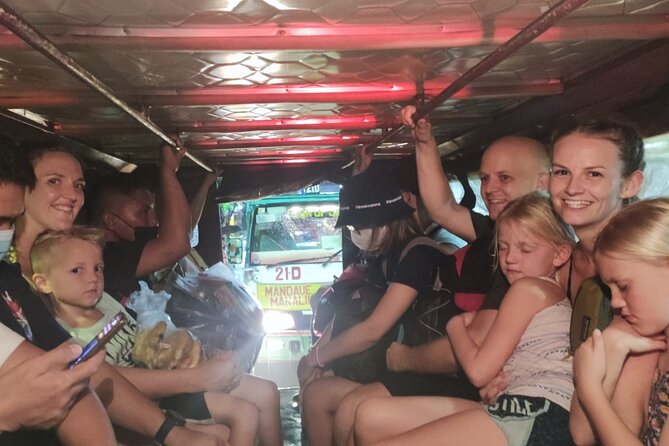
This is a walking tour, but not walking only. Public transport may be used between sections, including a jeepney. For some people, that is one of the most memorable parts. For others, it is an unexpected inconvenience. The description does not include a hotel transfer, and the finish at Freedom Park means you need to arrange your own ride back.
Heritage of Cebu Monument: a quick history lesson in stone
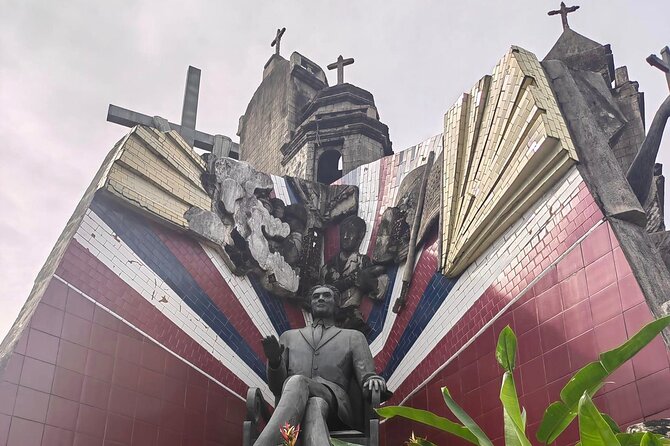
The Heritage of Cebu Monument is a sculptural tableau showing key scenes from Cebu and Philippine history. Its imagery includes the Battle of Mactan, the inauguration of Sergio Osmeña as president of the Philippines, and the canonization of Pedro Calungsod.
The stop is scheduled for about 30 minutes, which is enough for an explanation and photographs. It is not a museum visit with time for extended study. The value comes from having someone explain the figures and events rather than seeing a busy collection of statues without context.
This first landmark also sets up the rest of the route. Cebu’s story is not one simple colonial tale. It includes local leaders, Catholic traditions, Filipino presidents, and the long effects of Spanish and Chinese influence. A good guide can help you see those connections as you walk.
Yap-Sandiego Ancestral House and Cebu’s older domestic life
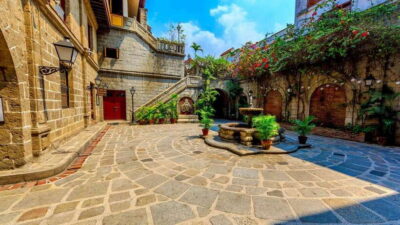
The Yap-Sandiego Ancestral House is one of the country’s oldest residential homes, built around 1680 from wood and coral stone. Its design reflects both Spanish and Chinese influence, a useful reminder that Cebu’s past was shaped by trade and families as much as by churches and battles.
This is one of the tour’s strongest indoor stops. The house offers a more personal view of history than a monument does. Instead of only hearing about rulers and religious events, you get a sense of how an old Cebu family home was built and furnished.
Entry is included, and the visit is planned for about 30 minutes. That said, access to historic interiors can affect the pace. If you care most about seeing inside the buildings, listen closely to your guide and ask what is included before the group moves on.
The house is also a welcome change of mood. After the open-air monument, its old materials and domestic setting give the route texture without requiring a long museum visit.
More food tours in Cebu:
- Cebu Steet food, historical and mountain tour
★ 5.0 · 15 reviews - The Ultimate Cebu Food Tour: Local Tastes & Cultural Journey
★ 4.5 · 10 reviews - Food, Historical and Mountain Tour in Cebu City
★ 4.5 · 8 reviews - Cebu: After Dark Private City Tour with Food Crawl and Guide
★ 4.7 · 3 reviews
Santo Niño Basilica and the center of Cebu’s faith
The Basilica Minore del Santo Niño de Cebu, commonly called the Santo Niño Basilica, was founded in 1565 by Fray Andrés de Urdaneta. It is one of Cebu’s central religious landmarks and a major stop for understanding the city’s Catholic identity.
The tour allows about 30 minutes here. The exterior and surrounding area are easy to appreciate as part of the route, but going inside is not guaranteed in every circumstance. One outing did enter the ancestral house but did not go into the basilica or cathedral, possibly because it was Sunday and the churches were crowded.
That distinction matters. The attraction list may make the tour sound like a series of full interior visits, but the actual experience can depend on worship services, crowds, and timing. If you want quiet church viewing, this evening group route may not deliver it.
Still, the basilica is important even when seen briefly. Your guide can place the building, the Santo Niño devotion, and the nearby Magellan’s Cross in the same historical frame.
Magellan’s Cross and the story behind the pavilion
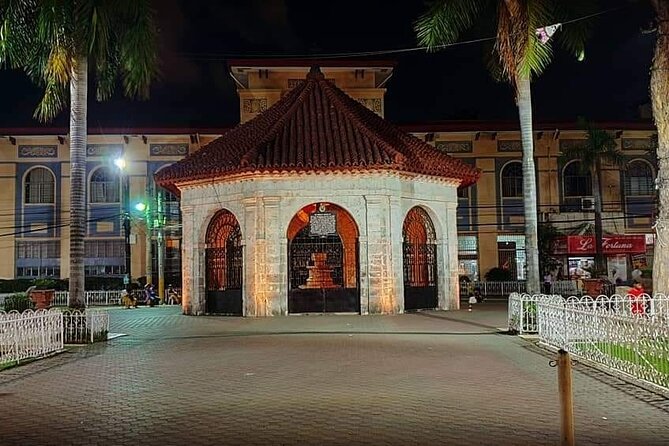
Magellan’s Cross is housed in a stone pavilion on Plaza Sugbo beside the Santo Niño Basilica. The cross is associated with the arrival of the explorers led by Ferdinand Magellan and the planting of Christianity in Cebu.
The site is compact, so the 30-minute allocation includes time for explanation and photos rather than a long visit. It is one of Cebu’s best-known places, but a guide can help you get more from it than a quick picture.
This is also a good point to ask questions. The meaning of the cross is tied to religion, colonial contact, and Philippine national memory. The stop works best when you treat it as a place with several layers rather than just a famous object.
Because the pavilion is near other major sights, the tour can cover a lot without long transfers. That efficiency helps explain why first-time visitors often find the route useful. It also means the experience may feel brisk if you prefer long, quiet visits.
Cebu Metropolitan Cathedral and the cost of rebuilding
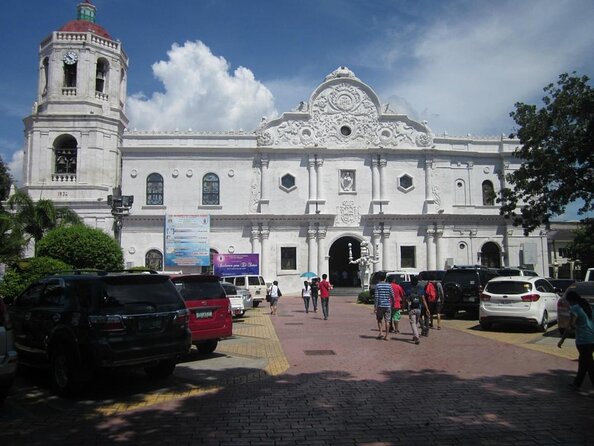
The Cebu Metropolitan Cathedral is officially dedicated to Saint Vitalis and the Immaculate Conception. Much of the structure was destroyed during World War II, and its history reflects the damage and rebuilding that shaped Cebu.
Again, the planned stop is about 30 minutes. You may see the building from outside or enter if conditions allow. Do not assume that a listed church stop means a guaranteed interior tour.
The cathedral adds a different historical note from the Santo Niño Basilica. Together, the churches show how religious buildings have been altered by time, war, worship, and repair. If you are interested in architecture, ask your guide to point out what belongs to the older structure and what reflects later rebuilding.
This part of the walk can feel less dramatic than the food stops or Carbon Market. Its value is cumulative. By the time you reach it, the guide has introduced several periods of Cebu’s past, and the cathedral becomes part of that larger picture.
Carbon Market: where the city becomes more immediate
Carbon Market takes its name from carbón, the Spanish word for coal. The area was said to be near a coal depot connected with the old Cebu Railway, which operated from the nineteenth century.
The market is the route’s most direct look at present-day commerce. It is a place to watch people buy food and goods, see how the city uses its public spaces, and understand why Cebu cannot be reduced to its historic churches.
I would give this stop your full attention. The market is one of the places you might not feel ready to visit alone, especially on a first evening in Cebu. With a local guide, you have someone to explain what you are seeing and help you move through the area.
One practical limitation is time. Some people wished they had longer in the market, while the overall tour can feel short if the group moves quickly. If Carbon Market is your main interest, ask early how much time the group will spend there.
The tour ends at Freedom Park in Carbon. That is a sensible finish for a food and market route, but it is not a hotel drop-off. Keep your phone charged and use a ride service or other transport plan after the tour.
What you are likely to eat along the way
The food element is best understood as a series of tastings rather than a long sit-down dinner. The operator describes three food stops, while individual outings have included food at four places. The exact selection can vary.
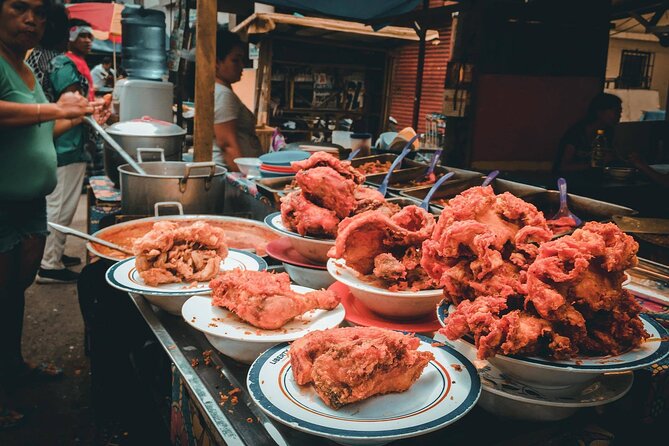
Reported examples include lechon, tuslob buwa, balut, local drinks, and other Filipino street foods. Lechon received especially warm praise, while tuslob buwa gave one visitor a chance to try something they would not have ordered alone. Balut was mentioned as a food some people expected but did not receive, so do not book with a fixed menu in mind.
I like the way this format lowers the barrier to trying unfamiliar dishes. You can sample small portions, ask what you are eating, and watch how locals enjoy it. Guides have sometimes encouraged the group to taste first and learn the food’s name afterward, adding a playful element to the meal.
The food will not suit every palate. This is local street food, not a carefully adjusted menu for international tastes. One person found most of the food mediocre, while many others enjoyed the unusual dishes and felt the choices were authentic. If you are adventurous with food, the experience has real appeal. If you are vegetarian, highly selective, or uneasy about unfamiliar ingredients, ask for details before booking.
The tour can also be filling. Small tastings at several stops add up, so you probably do not need a full dinner before starting. At the same time, you should not assume every dish or food stop will appear on every departure.
Guides, group size, and the feel of the evening
The group can include up to 20 people. That is large enough to create a social atmosphere but small enough for a guide to keep the route together. The strongest part of the experience is often the person leading it.
Kyle was repeatedly praised for his clear English, helpful manner, and enthusiasm. Phillip was described as kind and attentive, with a reassuring presence for a solo woman traveling alone. Lorelie and Lorilie were praised for their passion for Cebu food and culture, while Necian was described as conversational and informative.
That range matters because the tour depends heavily on the guide. A lively guide can turn a jeepney ride, market walk, or simple snack into a memorable lesson. A less engaging guide would leave you with a list of stops and little connection between them.
The group setting can be a plus. One small group enjoyed chatting with other participants and ended the evening singing together. If you prefer complete control over the pace, a private tour would suit you better, but this shared format can make a solo evening more enjoyable.
Is $69.99 a fair price?
At $69.99 per person, this is not a bargain-priced walking tour in Cebu. The price needs to cover the guide, several food tastings, and admission to included sites. It also buys convenience: someone else plans the route, explains the landmarks, and helps you handle the less familiar parts of the city.
I think the value is strongest when you are visiting Cebu for the first time, have only one evening, and would otherwise skip the historic center. The cost is harder to justify if you already know the city, can navigate independently, or mainly want a cheap meal and a short walk.
The tour’s 4.6 rating from 81 reviews and 90 percent recommendation rate point to a generally strong experience, but they do not remove the practical concerns. Duration can vary, some food items may be absent, church interiors may not be available, and transport home is extra.
For the best value, arrive early, wear comfortable walking shoes, bring water, and treat the food as a tasting adventure rather than a promised menu. Ask your guide what is included if a particular dish or indoor site matters to you.
Who should book this Cebu City walk?
I would recommend it to first-time visitors who want history, local food, and a guided introduction in one evening. It is also a good fit for solo visitors who want to explore beyond the hotel district without navigating the historic center alone.
Food-curious people will get the most from it. You should be willing to try dishes you may not recognize, ride local transport, and accept that the route is practical rather than polished.
I would hesitate if you need a guaranteed four-hour schedule, private transportation, a fixed food menu, or full access to every church interior. The tour is also less suitable for anyone who dislikes walking, public transport, crowds, or strong local flavors.
The experience is non-refundable and cannot normally be changed after booking. If the operator cancels because of poor weather or because too few people book, you can choose another date or receive a full refund.
Should you book the Original Cebu City Historical and Food Walking Tour?
Book it if you want a fast, guided introduction to Cebu City that combines the major historic sights with food and ordinary street life. The standout features are the guide quality, the chance to ride a jeepney, the Carbon Market visit, and the willingness to show dishes you might not try alone.
Skip it if $69.99 feels high for a group walk or if you expect a restaurant-focused food tour with a guaranteed list of dishes. The route can finish early, move quickly, and leave you to arrange your own ride home.
For most first visits, I think the tour makes sense as an orientation evening. You see where Cebu’s major stories happened, taste a few local specialties, and leave with better ideas for exploring the city on your own.
FAQ
How long does the tour last?
The advertised duration is approximately four hours. The actual length can vary depending on how quickly the group moves between stops and how much time is spent at each location.
Where does the tour begin?
The meeting point is Ayala Terraces, 8W94+H97, Biliran Road, Cebu City, Cebu, Philippines.
What time does the tour start?
The scheduled start time is 4 p.m.
Where does the tour finish?
The tour ends at Freedom Park in the Carbon area of Cebu City.
Is transportation back to my hotel included?
No. The tour ends at Freedom Park, and you need to arrange your own transportation afterward.
What sights are included?
The route includes the Heritage of Cebu Monument, Yap-Sandiego Ancestral House, Santo Niño Basilica, Carbon Market, Magellan’s Cross, and Cebu Metropolitan Cathedral.
Is food included in the price?
Food stops are included, with the operator describing three food stops. The precise dishes can vary, and reported examples include lechon, tuslob buwa, balut, and local drinks.
What happens if the tour is canceled?
If poor weather causes a cancellation, you can receive a full refund or choose another date. If the minimum number of participants is not reached, you can receive a refund or select another date or experience.
More Walking Tours
- Cebu City: Walking Tour
★ 5.0 · 6 reviews - Manila: Street Food and Drinks Walking Tour with Tastings
★ 4.8 · 114 reviews - Viva Old Manila: Intramuros Walking Tour
★ 4.9 · 104 reviews - Manila’s Walled City: Intramuros Walking Tour
★ 5.0 · 82 reviews
Just added around Cebu
- Cebu: Whale Shark Encounter and Kawasan Canyoneering★ 5.0 · 3 reviews
- Cebu: Oslob Whale Shark, Simala Church & Ka Treasure Argao★ 4.8 · 3 reviews
- Cebu: Oslob Whale Shark, Sumilon, Ruins, Simala Church★ 4.7 · 3 reviews
- Cebu: Moalboal Island Hopping & Kawasan Falls Adventure★ 4.3 · 3 reviews
- Cebu Half Day City Tour (Private Tour)★ 5.0 · 3 reviews
- Cebu City with Sirao Garden Half Day Tour★ 5.0 · 3 reviews
- Cebu Airport Transfer to / from Anywhere in Cebu★ 5.0 · 3 reviews
- Oslob Whale Shark Snorkeling & Kawasan Canyoning Tour★ 5.0 · 3 reviews
Historical Tours, side by side.

Intramuros, Manila: Historical Bamboo Bike Tour
Read the review →
Explore Intramuros: Introduction to Philippine History
Read the review →
Experience Manila’s Heritage: Intramuros & More in Half a Day!
Read the review →
Exploring Cebu City’s rich history and Uphill Tour
Read the review →
Tagaytay, Taal Volcano & Heritage Town: A Journey of Discovery
Read the review →Where else this one shows up