
Reviewed · HISTORICAL TOURS
Cebu and Mactan: Twin City Culture and History Half-Day Tour
History takes center stage here. This five-hour tour links Cebu’s oldest Spanish-era sights with Mactan’s churches, guitars, and battle memorials, giving you a useful first look at the two cities. I especially like the mix of major landmarks and smaller cultural stops, including Museo sa Sugbu and Casa Gorordo. The hotel pickup and included admission fees also make the day simple to manage.
The main drawback is the pace. You cover a lot of ground in half a day, and Cebu traffic can make the schedule feel tight. If you want long museum visits or quiet time at each church, you may find the itinerary rushed. Still, the tour offers a strong introduction, especially if you have limited time in the area.
In This Review
- Key points to know before booking
- Why this half-day route works
- Magellan’s Cross and the Basilica Minore
- Fort San Pedro, Cebu’s coral-stone stronghold
- Colon Street and Plaza Parian
- Casa Gorordo and the life of Cebu’s elite
- Museo sa Sugbu and Cebu’s wider story
- Crossing through Mandaue to Mactan
- Church of Our Lady of the Rule
- Inside a Mactan guitar factory
- Lapu-Lapu and the Liberty Shrine
- Guide quality, transport, and pace
- Who should book this experience?
- Should you book the Cebu and Mactan tour?
- FAQ
- How long does the Cebu and Mactan tour last?
- What language is the tour conducted in?
- What sights are included in Cebu City?
- What does the tour visit in Mactan?
- Is hotel pickup included?
- Which Mactan resorts have pickup?
- Which Cebu City hotels have pickup?
- Are meals and drinks included?
- Can I cancel for a full refund?
Key points to know before booking
- Magellan’s Cross begins the story of Spanish Cebu, linking the city’s Christian identity to the arrival of Ferdinand Magellan in 1521.
- Fort San Pedro is the oldest Spanish fort in the Philippines, built from coral stone and tied to Cebu’s role as Spain’s first settlement in Asia.
- Two Cebu museums add needed context, showing both Spanish influence and the lifestyle of the Spanish-Filipino elite.
- Mactan brings a different side of the story, with a national shrine, a guitar factory, and the Liberty Shrine honoring Datu Lapu-Lapu.
- Hotel pickup is available from named Cebu City hotels and Mactan resorts, which saves you the trouble of arranging transport between islands.
- The English-speaking guide matters here, since the tour covers religion, colonial rule, local identity, and a famous battle in only five hours.
Why this half-day route works
Cebu and Mactan are close neighbors, but they tell different parts of the Philippine story. Cebu City focuses on Spanish arrival, Christian conversion, old streets, forts, and elite homes. Mactan shifts the focus toward local resistance, religious devotion, manufacturing, and the memory of Lapu-Lapu.
I like this structure because the tour does not treat history as a string of unrelated photo stops. Magellan’s Cross leads naturally to the Basilica Minore, then to Fort San Pedro and the museums. After that, you cross toward Mactan and see how the story changed when local forces resisted Spanish expansion.
At $116 per person, the price is not a bargain for a short outing. The value comes from convenience: transportation, a guide, hotel pickup and drop-off, and entrance fees are included. If you arrange separate rides, admissions, and a guide, you may spend much of your morning managing details instead of looking at the sites.
The tour is best for a first visit, a cruise stop, or a short stay in Cebu. It also suits people who prefer a guided overview to figuring out the route on their own. I would not choose it for a slow, highly personal study of Cebu’s churches and museums.
More Historical Tours in Cebu
- The Original Cebu City Historical and Food Walking Tour
★ 4.5 · 81 reviews - Cebu: Exploring Cebu City’s rich history and Uphill Tour
★ 4.5 · 68 reviews - Cebu City: Historical Street and Food Tour
★ 4.9 · 31 reviews
Magellan’s Cross and the Basilica Minore
Magellan’s Cross is the natural opening stop. According to local tradition, Ferdinand Magellan placed the cross in Cebu in 1521, marking the beginning of the island’s Christianization and Spain’s growing influence.
The cross is not simply an old object to photograph. It represents a major shift in Cebu’s political and religious life, tied to Magellan’s meeting with local rulers and the conversion of Queen Juana, described as the first Christian Filipina. The tour connects this story to the Basilica Minore of the Child Jesus, where the image of the Santo Niño is kept.
The image is associated with Magellan’s gift to Queen Juana. That detail helps explain why the basilica is so important to Cebu. You are not just visiting a church with an attractive facade. You are seeing a place tied to the island’s religious identity and to the earliest Spanish contact.
Give yourself a moment to notice the contrast between the solemn religious setting and the busy city around it. This is one of the strongest parts of the tour for anyone interested in how faith and colonial power became linked.
The limitation is that these are major city sights, so the experience may feel more public and active than contemplative. The guide is especially useful here. Without context, the cross and church can seem like separate stops. With a good explanation, they become the opening chapter of Cebu’s story.
Fort San Pedro, Cebu’s coral-stone stronghold
Fort San Pedro is one of the tour’s clearest physical reminders of Spanish rule. The coral-stone fortress dates from 1565 and protected the settlement that became Spain’s first base in Asia.
I find forts useful because they make political history easier to picture. Instead of hearing only about Spanish expansion, you can look at the walls, enclosed spaces, and defensive design that helped secure the settlement. Fort San Pedro is also identified as the oldest Spanish fort in the Philippines, giving it unusual importance beyond Cebu.
The stop should appeal to anyone who likes military history, old stonework, or a clear sense of place. It also gives the itinerary some variety after the churches. You move from religious symbols to a structure built for defense and control.
Do not expect a sprawling fortress complex. The attraction is its age, setting, and place in Philippine history rather than an all-day visit. Since the tour includes several more stops, your time here will be limited. I would listen closely to the guide rather than trying to read every detail on your own.
Colon Street and Plaza Parian
The drive along Colon Street adds a useful city connection to the tour. It is described as the country’s oldest street, and passing along it helps place the historic sights within modern Cebu.
You then reach Plaza Parian, where Casa Gorordo and Museo sa Sugbu add social and cultural detail. This part of the route is important because forts and churches can tell you about institutions, but museums can show how people lived.
The drive itself is not a formal walking tour, so you will not get an exhaustive look at Colon Street. Still, it links the old center to the next stage of the visit. I appreciate that the tour does not simply shuttle you between isolated monuments. Even a short drive through the city helps you understand that Cebu’s colonial past remains part of an active urban center.
More historic sites near Cebu:
- CEBU: Cebu City Heritage and Uphill Guided Tour
★ 4.2 · 31 reviews - Cebu Historic and Views Tour Pickup Dropoff and Lunch (private)
★ 5.0 · 26 reviews - BEST OF CEBU: Cebu City Heritage with Uphill Tour | Joiners
★ 4.5 · 22 reviews - Cebu Steet food, historical and mountain tour
★ 5.0 · 15 reviews
Casa Gorordo and the life of Cebu’s elite
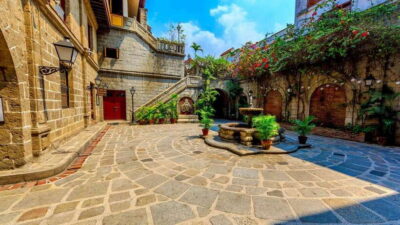
Casa Gorordo presents the elegant lifestyle of the Spanish-Filipino elite during the 18th century. This is a valuable counterpoint to the official story of forts, rulers, and religious conversion.
Here, the focus turns toward domestic life and social status. You get a sense of how Spanish and Filipino influences met inside an elite household. That makes the stop more personal than a military site. Instead of thinking only about who controlled Cebu, you can consider how colonial society shaped homes, customs, and daily life.
I would pay attention to the house as a social document. The point is not simply that the interior looks refined. It shows how a particular group lived and how culture can be expressed through a home.
The brief visit may leave you wanting more time. Casa Gorordo deserves careful attention, but it shares this half-day with several other sites. If historic houses are your main interest, you may prefer a longer standalone visit on another day. Within this itinerary, though, it gives the cultural story much-needed balance.
Museo sa Sugbu and Cebu’s wider story
Museo sa Sugbu completes the Cebu City heritage portion of the tour. Together with Casa Gorordo, it broadens the experience beyond the best-known landmarks.
The two museums serve different purposes. Casa Gorordo focuses on an elite Spanish-Filipino household, while Museo sa Sugbu helps present Cebu’s wider cultural and historical identity. The pairing is smart because it keeps the tour from reducing Cebu to Magellan, Spain, and the Santo Niño.
Museum visits can be difficult to handle in a packed half-day. You may only have time for a focused look rather than a full examination of every display. I suggest asking your guide which sections best fit the tour’s theme. An English-speaking guide can help you connect the objects and exhibits to the larger story without wasting time.
This is also where the quality of the guide makes the greatest difference. One highly praised private outing was led by Rosh, who brought the historic locations to life and even helped take photographs. That does not guarantee the same guide for every departure, but it shows the kind of personal attention that can make the difference between simply seeing a museum and understanding why it matters.
Crossing through Mandaue to Mactan
The route then crosses toward Mactan Island through Mandaue, an industrial city known for world-class furniture factories. This transition changes the feel of the tour.
Cebu City gives you churches, forts, museums, and colonial streets. Mandaue and Mactan show a more modern side of the region, with manufacturing and local businesses still shaping daily life. The drive is not presented as a separate sightseeing stop, but it helps you see the area as more than an old historic center.
The crossing also makes the hotel pickup arrangement valuable. If you are staying at a Mactan resort, you can join the tour without arranging your own ride into Cebu City. If you are staying in Cebu City, the reverse is true. Listed pickup hotels include Marco Polo Plaza Cebu, Waterfront Cebu City Hotel and Casino, Montebello Villa Hotel, Cebu Parklane Hotel, and Cebu City Marriott, along with several Mactan resorts.
Exact pickup details arrive by email, and you are asked to provide contact information so the local operator can confirm them. Check your spam folder if the message does not appear. That small step matters because the tour covers two connected but separate urban areas.
Church of Our Lady of the Rule
The Church of Our Lady of the Rule is the first featured stop in Mactan. It is also described as a national shrine, giving the religious side of the tour a second setting outside Cebu City.
Many people associate Mactan’s economic success with the church’s namesake. That belief adds a local perspective to the visit. It shows how religious devotion can influence the way a community understands its own prosperity and identity.
I like the decision to include this church after the Basilica Minore. You can compare two important religious sites rather than seeing only one grand church and assuming it represents the whole region. The pairing also reinforces a central idea of the tour: Spanish-era Christianity took root in different ways across Cebu and Mactan.
As with the basilica, this is a place where respectful behavior and attention to the guide will improve the visit. The tour information does not promise a long pause for worship or independent exploration, so expect a focused cultural stop within a busy route.
Inside a Mactan guitar factory
The guitar factory is one of the more distinctive stops. Instead of another monument, you see how Philippine guitars are made and learn about a craft associated with Mactan.
This is a welcome change of pace. After churches, a fort, and museums, a working factory gives you something practical to watch. You can connect local manufacturing with the region’s reputation for making guitars, rather than treating culture as something found only in old buildings.
I would see this as a demonstration of living culture. The stop helps answer a simple question that a museum cannot: how does a local craft become a finished product? It also gives the tour a more approachable moment for children and anyone who prefers seeing a process to reading historical panels.
The factory stop may not satisfy you if you want a detailed workshop visit or an extended shopping session. The available information only promises a look at how the guitars are made. Still, as part of a five-hour tour, it offers a useful and memorable contrast to the colonial sites.
Lapu-Lapu and the Liberty Shrine
The final stop is the Liberty Shrine, located on the battlefield where Magellan was defeated by Mactan chieftain Datu Lapu-Lapu. A large statue of Lapu-Lapu rises above the mangrove trees and the battlefield, giving the site a strong visual finish.
This is the point where the earlier stops come together. The tour began with Magellan’s arrival and the cross associated with Spanish influence. It ends with Magellan’s defeat and the local leader who resisted him. That structure gives you a clearer understanding of why Lapu-Lapu remains such an important figure in the Philippines.
The statue is larger than life, which fits the national importance of the story. At the same time, the site asks you to imagine a battle that took place centuries ago. The physical setting helps, but your guide’s explanation will shape how much you take from it.
I like ending here because it leaves you with a Filipino perspective on the encounter. The story is not only about the arrival of Spain. It is also about local authority, resistance, and the limits of foreign power.
Guide quality, transport, and pace
The tour is conducted in English with a live guide. That is important because the itinerary contains several layers of religious and political meaning, and the sites alone cannot explain all of them.
A past private visit was led by Rosh, with a driver named Rydel. The guide was praised for making the historical locations come alive and for taking photographs, while the driver was described as patient when extra time was needed. Since the experience may not always be private or use the same team, treat those names as useful evidence of the service standard rather than a promise.
Transportation is included, along with hotel pickup and drop-off from the specified Cebu City hotels and Mactan Island resorts. Meals and drinks are not included, so plan to eat before or after the tour. The five-hour duration is enough for a strong overview, but not enough for leisurely museum study.
I would keep your expectations realistic. Traffic, pickup arrangements, and the number of stops can affect how long you spend at each place. The strength of the tour is its range, not its slow pace.
Who should book this experience?
I would recommend it to you if:
- You have only half a day for sightseeing.
- You are staying at one of the listed Cebu City hotels or Mactan resorts.
- You want a guide to explain the Spanish, Filipino, and religious connections.
- You prefer a planned route with transportation and admissions handled.
- You want to see both Cebu and Mactan rather than focus on one city.
- You are interested in a mix of landmarks, museums, craft, and local memory.
I would think twice if you want a relaxed schedule, long museum visits, or a food-focused experience. Since meals and drinks are not included, this is a culture and history tour rather than a culinary outing.
The $116 cost is easiest to justify when you value convenience and interpretation. It is less appealing if you are comfortable arranging your own transport and visiting only the free or low-cost sights. Free cancellation up to 24 hours before departure and the option to reserve now and pay later make planning less risky, but the main question is still pace.
Should you book the Cebu and Mactan tour?
Book it if you want a well-organized first look at Cebu’s major heritage sites and Mactan’s most important historical stop. The combination of Magellan’s Cross, the Basilica Minore, Fort San Pedro, two museums, a guitar factory, and the Liberty Shrine gives you a lot of context in five hours.
I would choose it early in a Cebu visit, since it can help you decide which places deserve a longer return visit. Go in expecting a brisk schedule, listen closely to the English-speaking guide, and confirm your pickup email before the day begins. If that sounds like a fair trade for broad coverage and simple transport, this is a solid choice.
FAQ
How long does the Cebu and Mactan tour last?
The tour lasts five hours.
What language is the tour conducted in?
The tour has a live English-speaking guide.
What sights are included in Cebu City?
The Cebu City portion includes Magellan’s Cross, the Basilica Minore of the Child Jesus, Fort San Pedro, Casa Gorordo, and Museo sa Sugbu.
What does the tour visit in Mactan?
The Mactan portion includes the Church of Our Lady of the Rule, a guitar factory, and the Liberty Shrine.
Is hotel pickup included?
Yes. Pickup and drop-off are included from the named Cebu City hotels and Mactan Island resorts.
Which Mactan resorts have pickup?
Pickup is available from Plantation Bay, Maribago Bluewater Beach Resort, Costabella Tropical Beach Hotel, Tambuli East, Tambuli West, Shangri-La’s Mactan Island Resort and Spa, and Hilton Cebu Resort and Spa.
Which Cebu City hotels have pickup?
Pickup is available from Marco Polo Plaza Cebu, Waterfront Cebu City Hotel and Casino, Montebello Villa Hotel, Cebu Parklane Hotel, and Cebu City Marriott.
Are meals and drinks included?
No. Meals and drinks are not included in the tour price.
Can I cancel for a full refund?
Yes. You can cancel up to 24 hours in advance for a full refund. You can also reserve now and pay later.
More Half-Day
- Cebu Highlands: Half-Day Escape with Optional Lunch
★ 4.5 · 63 reviews - Cebu City: Half-Day Tour with Shopping
★ 4.8 · 36 reviews - Half-Day Cebu City Tour
★ 4.5 · 29 reviews - Cebu City with Sirao Garden Half Day Tour
★ 5.0 · 14 reviews
Just added around Cebu
- Cebu: Oslob Whale Shark, Simala Church & Ka Treasure Argao★ 4.8 · 3 reviews
- Cebu: Oslob Whale Shark, Sumilon, Ruins, Simala Church★ 4.7 · 3 reviews
- Cebu: Whale Shark Encounter and Kawasan Canyoneering★ 5.0 · 3 reviews
- Cebu: Moalboal Island Hopping & Kawasan Falls Adventure★ 4.3 · 3 reviews
- Cebu Half Day City Tour (Private Tour)★ 5.0 · 3 reviews
- Cebu City with Sirao Garden Half Day Tour★ 5.0 · 3 reviews
- Cebu Airport Transfer to / from Anywhere in Cebu★ 5.0 · 3 reviews
- Oslob Whale Shark Snorkeling & Kawasan Canyoning Tour★ 5.0 · 3 reviews
Historical Tours, side by side.

Intramuros, Manila: Historical Bamboo Bike Tour
Read the review →
The Original Cebu City Historical and Food Walking Tour
Read the review →
Explore Intramuros: Introduction to Philippine History
Read the review →
Experience Manila’s Heritage: Intramuros & More in Half a Day!
Read the review →
Exploring Cebu City’s rich history and Uphill Tour
Read the review →
Where else this one shows up