
Reviewed · HISTORICAL TOURS
BEST OF CEBU: Cebu City Heritage with Uphill Tour | Joiners
Cebu reveals itself in layers. This 4 to 5-hour tour links old churches, Spanish-era defenses, Chinese traditions, and hilltop sights into one practical outing. I like the wide range of stops and the chance to see both central Cebu and the upland viewpoints without arranging several rides yourself.
I also like the small group size, capped at 10 people, plus the air-conditioned vehicle and bottled water. Guides such as Rix and Tyler have made the day lively and informative, with Rix especially praised for his humor, historical explanations, and flexibility. The main drawback is traffic: this is a full route, and road delays can shorten time at some stops.
A second consideration is that Sirao Flower Garden and Temple of Leah are highly staged attractions, not essential historical sites. I would book this for a first look at Cebu, but I would not expect every stop to have equal depth or charm.
In This Review
- Key points to know before booking
- Why this route works for a first day in Cebu
- Cebu Heritage Monument and the Yap-Sandiego house
- Fort San Pedro and Cebu’s colonial center
- Basilica Minore del Santo Niño and proper dress
- The Taoist Temple above the city
- Sirao Flower Garden and its Little Amsterdam look
- Temple of Leah, grand design and mixed appeal
- Guides, driving, and the pace of the day
- Who gets the best value from $63.50
- Practical tips for a smoother visit
- Should you book the Cebu heritage and uphill tour?
- FAQ
- How long does the Cebu heritage and uphill tour last?
- How much does the tour cost?
- How many people can join the tour?
- Is pickup available?
- Is transportation included?
- Which admissions are included?
- Do I need to follow a dress code?
- Can I cancel for a refund?
Key points to know before booking
- Nine-part Cebu route: You visit the Heritage Monument, Yap-Sandiego Ancestral House, Fort San Pedro, Magellan’s Cross, Basilica Minore del Santo Niño, Fuente Osmeña, the Taoist Temple, Sirao Flower Garden, and Temple of Leah.
- City history plus hill country: The tour begins with Cebu’s older center, then climbs toward the Taoist Temple, Sirao, and Temple of Leah for city and mountain views.
- Small joiner group: The vehicle carries a maximum of 10 people, making this more personal than a large coach tour.
- Traffic affects the schedule: Cebu’s roads can be slow, especially when heading uphill, so treat the timing as approximate rather than fixed.
- Dress properly for the basilica: Respectful clothing is required, and improper dress can prevent you from entering Basilica Minore del Santo Niño.
- One attraction can be unavailable: The Taoist Temple has been closed to visitors at times, so ask about current access if that stop is especially important to you.
Why this route works for a first day in Cebu
At $63.50 per person, this is not the cheapest way to see Cebu, but it covers a lot in a short period. You get transportation, entrance charges for the Yap-Sandiego house, Fort San Pedro, Sirao Flower Garden, and Temple of Leah, bottled water, a guide, taxes, and a Cebu souvenir.
The value depends on what you want from a city tour. If you prefer to explore one neighborhood slowly, this route moves too quickly. If you have only half a day and want a broad introduction, the combination is useful. You avoid piecing together separate taxis or ride-hailing trips to the central sights and hill attractions.
The tour is also easier on your energy than handling Cebu’s traffic yourself. You can rest in the air-conditioned vehicle during the uphill drive, while the driver handles busy roads. One guide and driver team was praised for safe driving and careful navigation around crowded areas, which matters on a route with several stops.
The group limit of 10 is another plus. It does not guarantee a private tour, but it should feel less impersonal than a bus filled with dozens of people. Guides can usually answer questions more easily, and solo visitors may find the format comfortable.
More Historical Tours in Cebu
- The Original Cebu City Historical and Food Walking Tour
★ 4.5 · 81 reviews - Cebu: Exploring Cebu City’s rich history and Uphill Tour
★ 4.5 · 68 reviews - Cebu City: Historical Street and Food Tour
★ 4.9 · 31 reviews
Cebu Heritage Monument and the Yap-Sandiego house
The Cebu Heritage Monument is a fast but useful introduction to the city. Its sculpted tableau presents major events and figures connected with Cebu, including the island’s Spanish colonial past and religious traditions. Artist Eduardo Castrillo designed the monument, which gives the stop an artistic edge rather than making it just another plaque-and-statue visit.
You have about 30 minutes here, admission is free, and the stop works best when your guide provides context. Look closely at the scenes and figures instead of treating it as a quick photo stop. This is where a good guide can correct misunderstandings about Cebu’s past, something Rix was particularly praised for doing.
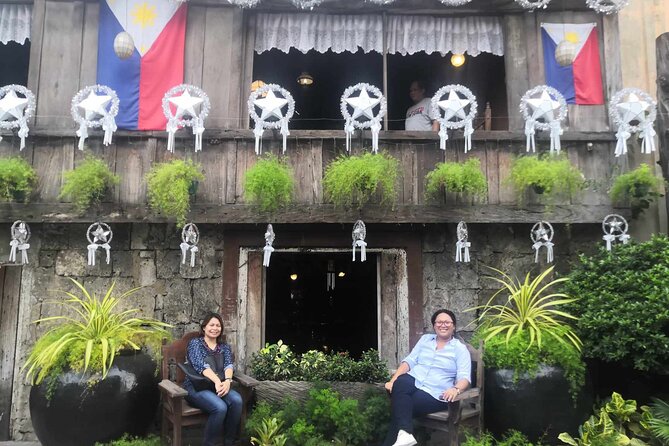
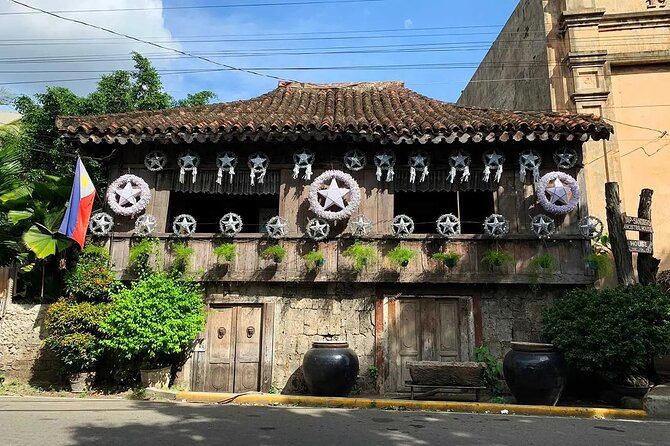
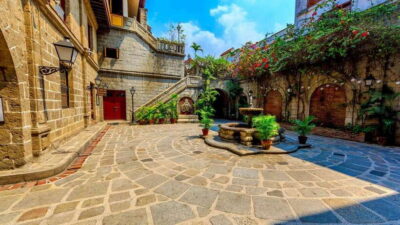
A short ride brings you to the Yap-Sandiego Ancestral House, one of the oldest preserved homes in the Philippines. Built in the 17th century, it shows a blend of Spanish and Chinese influences. The house offers a more intimate look at the past than the monument, with its age and domestic character doing much of the work.
You get about 30 minutes here, with admission included. I would pay attention to the building itself and the way its cultural influences meet. The stop is small, so 30 minutes is usually enough, but visitors interested in architecture or old homes may wish for more time.
Fort San Pedro and Cebu’s colonial center
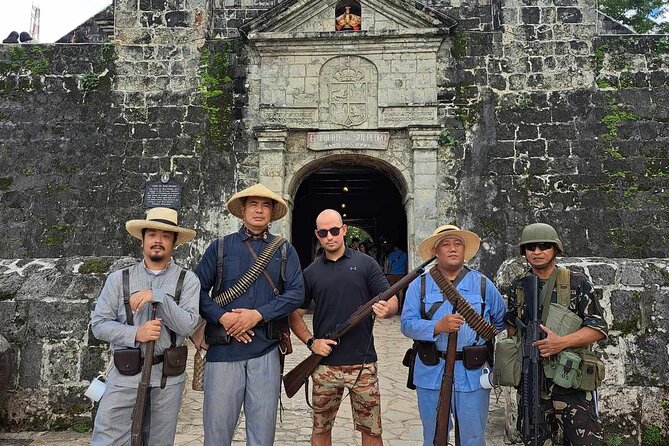
Fort San Pedro gives the tour a clear military chapter. Built in 1738 under Spanish colonial rule, this triangular fort is described as the oldest and smallest fort in the Philippines. Its stone walls and compact layout make it easy to grasp in a short visit.
The allotted 30 minutes is enough for a walk around the main areas and some photographs. Do not expect a vast fortress complex. Its appeal comes from the solid stone structure, the sense of strategic defense, and its place in Cebu’s colonial story.
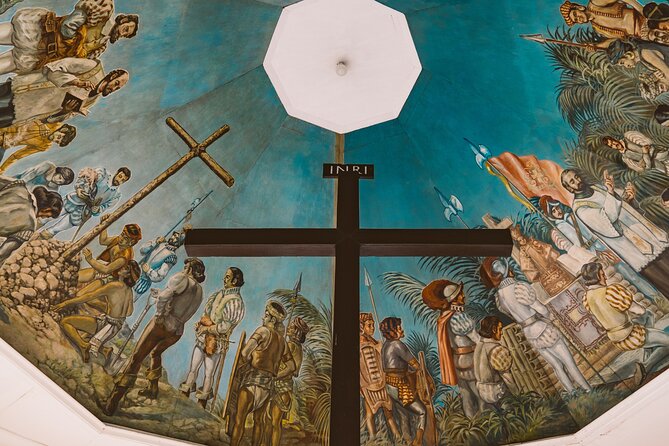
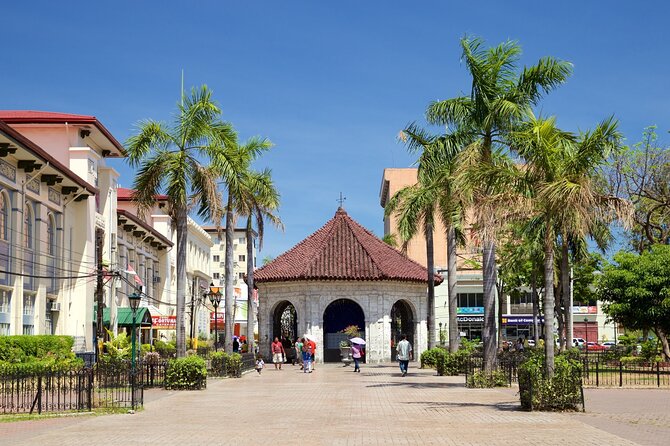
The route then moves to Magellan’s Cross, where a 20-minute stop is planned. The cross marks Ferdinand Magellan’s arrival in 1521 and the introduction of Christianity to the Philippines. It is protected inside a small chapel, and the visit is brief because the site itself is compact.
Magellan’s Cross can feel crowded and quick, but it is still important to Cebu’s identity. Listen carefully to the explanation, since this is one of those places where a little historical context adds more value than a long photo session.
Basilica Minore del Santo Niño and proper dress
The Basilica Minore del Santo Niño is one of the most important religious sites on the route. Established in 1565, it is recognized as the oldest Roman Catholic church in the Philippines and houses the Santo Niño de Cebu statue.
You have roughly 30 minutes. That is enough to see the church and understand its importance, but not enough for a long period of quiet reflection if services or crowds are present. Treat this as an active place of worship, not simply a sightseeing stop.
Dress respectfully before you leave for the tour. The operator specifically warns that visitors may not be allowed inside if they do not follow the church’s dress code. This is an easy detail to overlook, and it can turn an otherwise well-planned route into a missed stop.
The itinerary also passes Fuente Osmeña and the Cebu Capitol Building. Fuente Osmeña is a public park centered on a historic fountain and named for President Sergio Osmeña. The Cebu Capitol Building, inaugurated in 1938, has a neoclassical design with grand columns and a dome. These are primarily passing or orientation points rather than long visits, but they help you see how Cebu’s civic center fits together.
More historic sites near Cebu:
- CEBU: Cebu City Heritage and Uphill Guided Tour
★ 4.2 · 31 reviews - Cebu Historic and Views Tour Pickup Dropoff and Lunch (private)
★ 5.0 · 26 reviews - Cebu Steet food, historical and mountain tour
★ 5.0 · 15 reviews - Cebu City: Historical, Local Cuisine & Mountain Guided Tour
★ 3.8 · 12 reviews
The Taoist Temple above the city
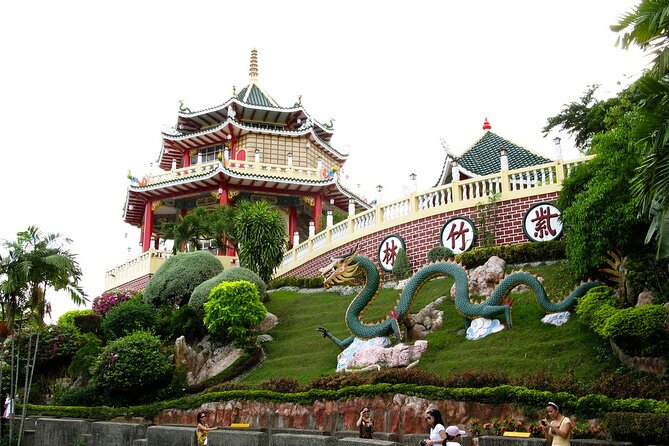
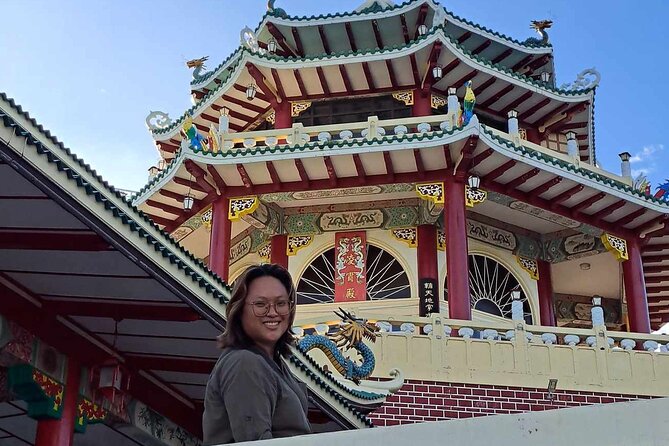
The Cebu Taoist Temple changes the mood completely. Built in 1972 on a hillside, it features Chinese architectural details, gardens, and a replica of the Great Wall. The elevated setting gives you a different view of Cebu from the older city sites.
The planned visit lasts about 45 minutes, making it one of the longer stops. Take time to notice the colors, rooflines, quiet spaces, and city views. This is not just a lookout point. It also introduces the Chinese cultural influence present in Cebu.
There is one practical warning. The temple has been closed to visitors at times, so access is not guaranteed. One past tour had to deal with that problem, while another described the temple as especially impressive. If this is the stop you most want to see, confirm its status before you book or as soon as your tour is confirmed.
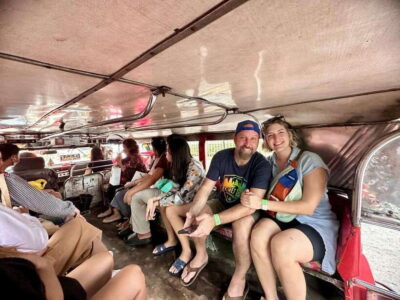
The uphill roads can also be slow. You may spend a good portion of the schedule riding rather than walking, but the air-conditioned vehicle makes that less tiring. One useful feature of this tour is that the drive becomes part of the experience, giving you a break between the denser city stops and the hill attractions.
Sirao Flower Garden and its Little Amsterdam look
Sirao Flower Garden, sometimes called Little Amsterdam, is one of the route’s most photogenic stops. It sits in the mountainous Sirao area and is known for celosia and other flowers, along with decorative structures such as a windmill.
You have about 30 minutes and admission is included. That is enough for photos and a quick walk, but not for a slow garden visit. The attraction is designed for pictures, so the experience is more about colorful displays and viewpoints than botanical detail.
I would set your expectations correctly. The gardens can feel touristy, and some decorative features may look dated. If you enjoy playful photo settings, you will probably have fun here. If you prefer formal gardens, native plants, or quiet countryside, this may be the least satisfying stop.
The mountain setting is still worthwhile. You get a change from the city streets, and the views toward Cebu and the surrounding mountains are among the strongest parts of the uphill section. Construction and repairs have affected parts of Cebu at times, so the condition of roads and attractions can vary.
Temple of Leah, grand design and mixed appeal
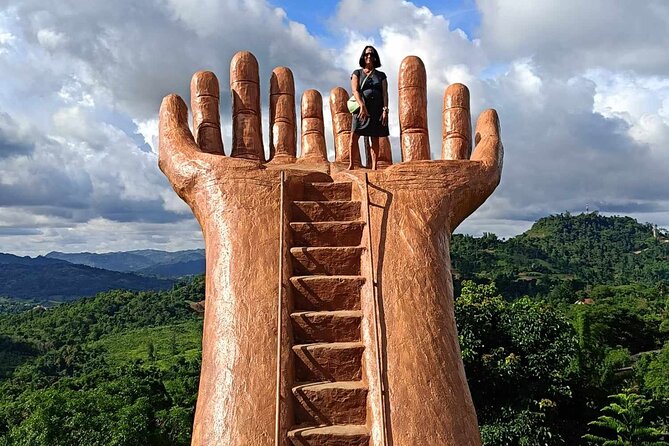
Temple of Leah is the tour’s grand finale. Built in 2012, it was designed as a tribute to love and devotion, with architecture inspired by ancient Roman buildings. Sculptures, art, and personal mementos fill the site, giving it a ceremonial, theatrical feel.
The 30-minute stop is enough to see the main structure, take photographs, and enjoy the hilltop setting. The scale is striking, especially after the smaller heritage buildings in central Cebu. You get another broad view over the city and mountains, which helps explain why the uphill sites are paired with the city route.
Still, this attraction will not appeal to everyone. It is modern, ornate, and purpose-built as a memorial. One past visitor felt it could have been skipped, while another enjoyed the unexpected contrast between the old city and the hill sites. I would place Temple of Leah in the interesting if you like architecture and views category, rather than calling it essential Cebu.
The same advice applies to Sirao. These two stops add variety, but they also make the tour less focused on traditional history. That mix is the point of the experience, yet it is worth knowing before you spend the money.
Guides, driving, and the pace of the day
The guide can make or break a fast-moving itinerary. Rix has been praised for being friendly, funny, informative, and flexible, especially for solo visitors. Tyler was also described as witty and well informed, while Olivier brought plenty of conversation and even singing to the ride.
Those details matter because the schedule leaves little room for independent research at each stop. A strong guide connects the monument, church, fort, ancestral house, and hill temples into one story. You should expect a conversational tour rather than a formal academic lecture.
The driver matters just as much. Cebu traffic can be heavy, and the route includes busy central roads plus uphill sections. A careful driver who knows how to handle crowded areas adds real value, even though you may still face delays.
The duration is listed as approximately 4 to 5 hours, but do not plan a tight appointment immediately afterward. Traffic, construction, attraction access, and time spent at photo stops can change the finish time. The tour has been praised as a relaxed way to see a lot, but relaxed does not mean slow. You cover nine points in half a day.
Who gets the best value from $63.50
I think the price makes the most sense for a first-time visitor, a solo visitor, or anyone staying in Cebu for a short period. Pickup, an air-conditioned vehicle, a guide, entrance charges, water, taxes, and a souvenir reduce the small decisions that can consume a day.
It is also a good match if you want both culture and views. You see churches and colonial structures, then switch to Chinese religious architecture, flower displays, and a modern memorial. That range gives you a useful overview of Cebu rather than one narrow theme.
You may find better value elsewhere if you have several days and enjoy arranging your own transport. Independent sightseeing could give you longer at the Basilica, Fort San Pedro, or Yap-Sandiego house. You could also skip the more decorative attractions if they do not interest you.
The 95 percent recommendation rate and 4.7 rating from 22 ratings suggest strong overall satisfaction, but the sample is not large. The same-day cancellation complaint is worth noting, even though free cancellation is available up to 24 hours before departure. If you book, avoid scheduling an important flight or ferry too close to the tour.
Practical tips for a smoother visit
Wear respectful clothing from the start, especially if you want to enter the Basilica Minore del Santo Niño. Do not count on changing later.
Keep your phone charged. Several stops reward photographs, particularly the Taoist Temple, Sirao Flower Garden, and Temple of Leah. At the heritage sites, use some of your time to listen rather than only taking pictures.
Allow extra time for traffic. The uphill section may feel slow, but it is also your chance to rest in the van and see a different side of Cebu.
Ask about Taoist Temple access when you receive confirmation. Conditions can change, and a closed stop may affect how you judge the tour’s value.
The tour includes a mobile ticket, pickup, bottled water, and a Cebu souvenir. Free cancellation is offered when you cancel at least 24 hours before the local start time. Within 24 hours, the payment is not refunded, and late changes are not accepted.
Should you book the Cebu heritage and uphill tour?
Book it if you want a well-organized first look at Cebu in half a day, especially if you value a guide, air-conditioning, and transport to the hill attractions. The strongest reasons are the variety of stops, the small group limit, and guides such as Rix and Tyler, who can make a quick route feel personal and useful.
Skip it if you want a slow historical walk, dislike staged photo attractions, or already know Cebu’s central sights. Sirao Flower Garden and Temple of Leah are the most subjective stops, while traffic can make the schedule feel compressed.
For most first-time visitors, I would call this a good orientation tour rather than a definitive study of Cebu. It gives you the basic story, several memorable views, and a practical sense of how the old city and hill country fit together.
FAQ
How long does the Cebu heritage and uphill tour last?
The experience lasts approximately 4 to 5 hours. Traffic and conditions at individual attractions can affect the exact timing.
How much does the tour cost?
The listed price is $63.50 per person.
How many people can join the tour?
The tour has a maximum group size of 10 travelers.
Is pickup available?
Yes. Pickup is offered as part of the experience.
Is transportation included?
Yes. Transportation is provided in an air-conditioned vehicle.
Which admissions are included?
Admission is included for the Yap-Sandiego Ancestral House, Fort San Pedro, Sirao Pictorial Garden, and Temple of Leah. The Heritage Monument, Magellan’s Cross, Basilica Minore del Santo Niño, and Taoist Temple are listed with no admission charge.
Do I need to follow a dress code?
Yes. You should follow the proper dress code for the Basilica Minore del Santo Niño. Visitors may not be allowed inside the church if they are dressed improperly.
Can I cancel for a refund?
You can cancel at least 24 hours before the experience start time for a full refund. Cancellations or changes made within 24 hours are not refunded or accepted.
Just added around Cebu
- Cebu: Oslob Whale Shark, Simala Church & Ka Treasure Argao★ 4.8 · 3 reviews
- Cebu: Oslob Whale Shark, Sumilon, Ruins, Simala Church★ 4.7 · 3 reviews
- Cebu: Whale Shark Encounter and Kawasan Canyoneering★ 5.0 · 3 reviews
- Cebu: Moalboal Island Hopping & Kawasan Falls Adventure★ 4.3 · 3 reviews
- Cebu Half Day City Tour (Private Tour)★ 5.0 · 3 reviews
- Cebu City with Sirao Garden Half Day Tour★ 5.0 · 3 reviews
- Cebu Airport Transfer to / from Anywhere in Cebu★ 5.0 · 3 reviews
- Oslob Whale Shark Snorkeling & Kawasan Canyoning Tour★ 5.0 · 3 reviews
Historical Tours, side by side.

Intramuros, Manila: Historical Bamboo Bike Tour
Read the review →
The Original Cebu City Historical and Food Walking Tour
Read the review →
Explore Intramuros: Introduction to Philippine History
Read the review →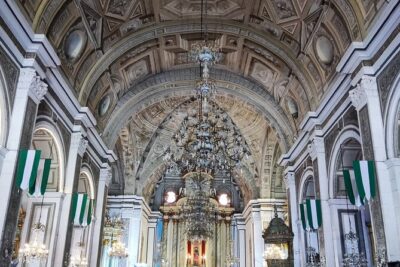
Experience Manila’s Heritage: Intramuros & More in Half a Day!
Read the review →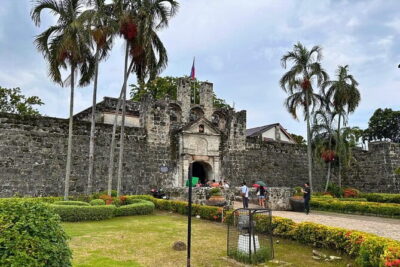
Exploring Cebu City’s rich history and Uphill Tour
Read the review →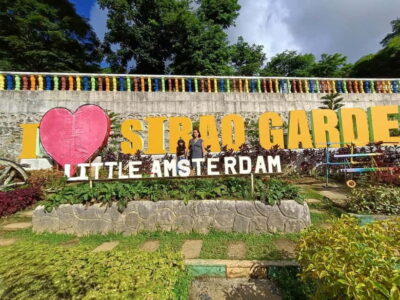
Where else this one shows up