
Reviewed · SHOPPING TOURS
Cebu City: Half-Day Tour with Shopping
Cebu’s past fits into four busy hours. This private city tour links Magellan’s Cross, Fort San Pedro, and Santo Niño Church with an ancestral house, a hilltop temple stop, and handicraft shopping. I like the compact route and the cool, air-conditioned vehicle, especially in a city where road traffic can quickly eat into your sightseeing time.
I also like the strong guiding. Belle, Liz, LizAnn, Stuart, and Mr. Oanio are praised for clear English, local pride, and useful background stories. The main caution is that the day moves quickly, and shopping has not always been included in practice. You will also need to manage heat, steps, and uneven surfaces, since this tour is not suitable for wheelchair users.
In This Review
- Key points at a glance
- Why this four-hour Cebu route works
- Magellan’s Cross and the story of 1521
- Santo Niño Church and Cebu’s Catholic heart
- Fort San Pedro and the first Spanish settlement
- The Heritage Monument and old Cebu in one view
- Yap-San Diego Ancestral House: a domestic look at the 1600s
- Beverly Hills and the Taoist Temple change
- Handicraft shopping, with one important warning
- Air-conditioning is more than a small comfort
- The guides make the difference
- Timing, traffic, and who should book
- Is $65 per person fair value?
- Final verdict: book it for a focused first look
- FAQ
- How long does the Cebu City tour last?
- Is hotel pickup included?
- Is the tour private?
- What language does the guide speak?
- Are entrance fees included?
- Is the Taoist Temple open during the tour?
Key points at a glance
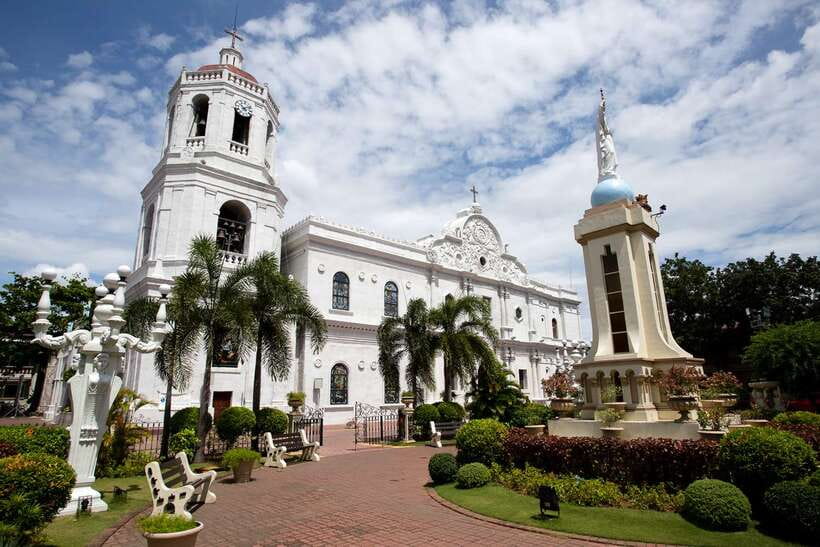
- Magellan’s Cross marks a turning point in Cebu’s story: Learn why the cross is linked to the first Filipino baptisms into the Catholic faith in 1521.
- Six central Cebu sights fit into four hours: The route covers major landmarks without asking you to arrange separate taxis or transfers.
- Fort San Pedro adds a museum stop: The small fort was the center of the first Spanish settlement in the Philippines.
- The Yap-San Diego house feels different from the grand churches: Its old domestic setting gives you a glimpse of Cebu life in the 1600s.
- Private transport makes traffic less painful: An air-conditioned vehicle takes you between stops, with hotel pickup in Cebu City.
- Shopping needs a quick check before booking: Handicraft stores are part of the advertised plan, but one recent account found that this portion did not happen.
Why this four-hour Cebu route works
Cebu City can feel confusing on a first visit. Important places sit close together on a map, but traffic, heat, and busy streets make walking between them less appealing than the distances suggest.
This tour solves that problem with a private group, an English-speaking guide, and air-conditioned transport. You are picked up at your Cebu City hotel, then driven between the central sights rather than spending your limited morning or afternoon finding rides.
The total price is $65 per person. That is not the cheapest way to see Cebu, but it includes transport, entrance fees, and a guide. For two or more people, the value improves because you are paying for a private outing rather than joining a large shared coach.
The schedule is tight. One account describes six places in the inner city, with roughly 10 to 15 minutes between stops. That means less time lost in traffic, but also less time to linger. I would choose this tour for orientation and major sights, not for a slow, detailed study of every church, fort, or museum display.
The transport earns special praise. Drivers such as Julius, Erikson, Ellie, and the driver paired with Stuart are described as safe, friendly, and skilled at handling Cebu’s difficult streets. That matters here. A good driver can leave you at the right entrance, wait while you look around, and keep the route moving.
More markets and shopping:
- Manila: Guided Night Market Experience
★ 5.0 · 54 reviews - Manila’s Culinary Expedition: The Ultimate Food and Market Tour
★ 5.0 · 42 reviews - Explore Manila Slums and Hidden Market
★ 4.9 · 41 reviews
Magellan’s Cross and the story of 1521
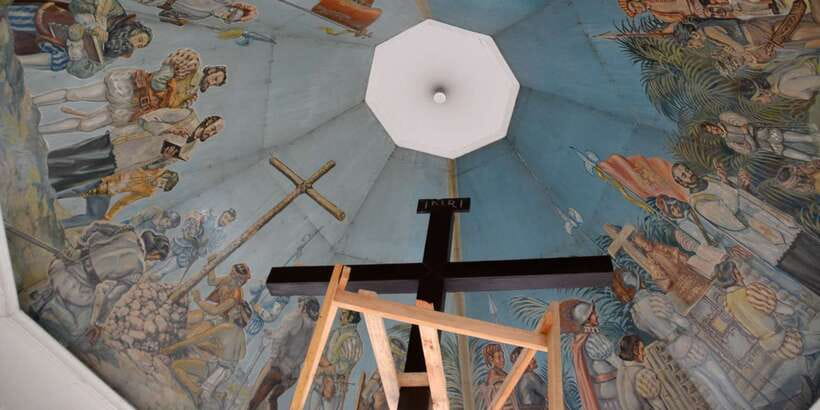
Magellan’s Cross is the natural starting point for understanding Spanish influence in Cebu. The cross was planted in 1521 to mark the site where local Filipinos were baptized into the Catholic faith.
The Magellan’s Cross Pavilion protects this famous landmark. Your guide explains why the cross matters, rather than leaving you with a quick photo and a name. That extra context is useful because the site is small, and the meaning behind it is far more important than the physical object itself.
Expect a short visit rather than a long museum session. The pavilion can be crowded, and you may be standing in an open, sunny area before or after entering. Sunglasses, a hat, and a small umbrella or handheld fan are sensible additions, especially during a hot part of the day.
I like this stop because it gives the rest of the route a clear starting point. Cebu’s churches, fort, and old houses are easier to place once you understand that this is the area associated with the first Spanish arrival and the spread of Catholic worship.
Santo Niño Church and Cebu’s Catholic heart
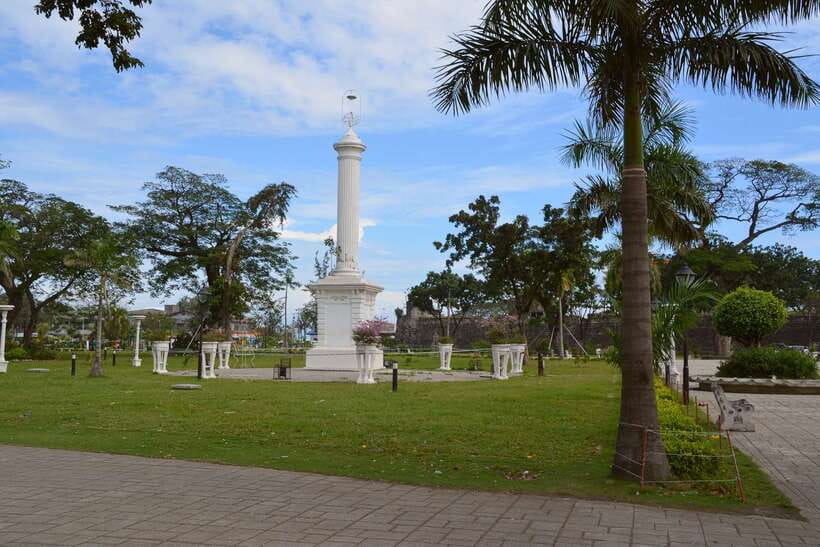
The next major stop is the Basilica Minore del Santo Niño, also called the St. Niño Church. It is described as the oldest Catholic church in Cebu, and it remains one of the city’s most important religious sites.
Your guide provides the background to the church and its place in Cebu life. The visit is not simply an architectural stop. You are seeing a place where history, devotion, and daily religious practice meet.
Dress and behavior should be respectful. The tour information does not specify a formal dress code, but churches are active places of worship, not just sightseeing venues. Keep your voice low, follow any instructions at the entrance, and allow worshippers space.
The church visit also pairs well with Magellan’s Cross. The cross explains the beginning of Catholic influence in Cebu, while Santo Niño shows how that faith became part of the city’s identity. I would pay close attention to your guide here, since the value of the stop comes from the explanation as much as the building.
Fort San Pedro and the first Spanish settlement
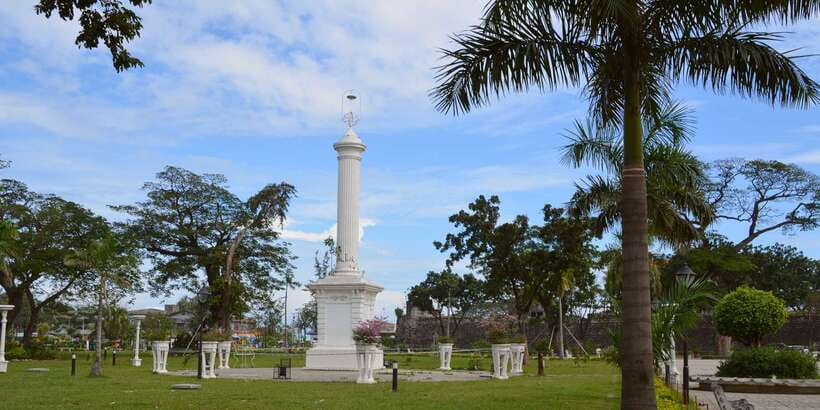
Fort San Pedro gives the tour a change of pace. Instead of a church or devotional landmark, you enter a military site that became the nucleus of the first Spanish settlement in the Philippines.
The fort has been turned into a museum park. You can expect the guide to point out its role and share facts at the adjacent museum. This is one of the more useful stops for understanding why Cebu became such an important base during the Spanish period.
Do not expect a huge complex. The appeal is the compact setting and the way it brings the early colonial period into view. The museum adds more than a quick walk around the walls, but four hours for the entire tour means your visit here will be measured rather than leisurely.
Fort San Pedro is also a good place to notice the contrast between old Cebu and modern Cebu City. The tour does not ask you to stay in one historic building all day. It moves between religious, military, domestic, and commercial parts of the city, giving you a broad first look.
A few more trips and experiences worth a look
- Cebu Highlands: Half-Day Escape with Optional Lunch
★ 4.5 · 63 reviews - Half-Day Cebu City Tour
★ 4.5 · 29 reviews - Cebu City with Sirao Garden Half Day Tour
★ 5.0 · 14 reviews - Cebu and Mactan: Twin City Culture and History Half-Day Tour
★ 4.8 · 4 reviews
The Heritage Monument and old Cebu in one view
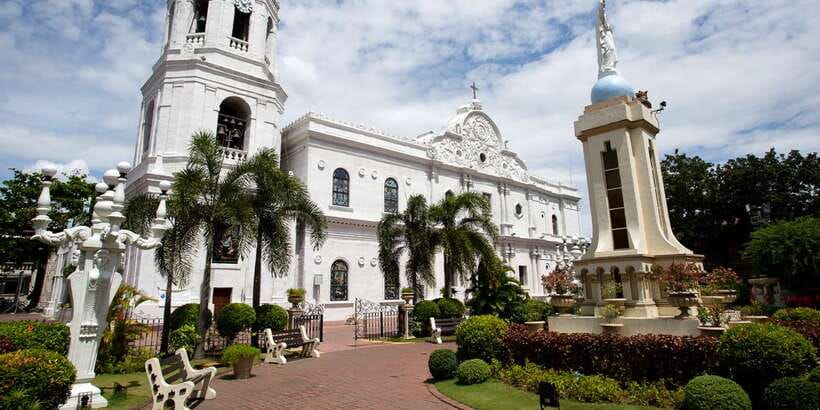
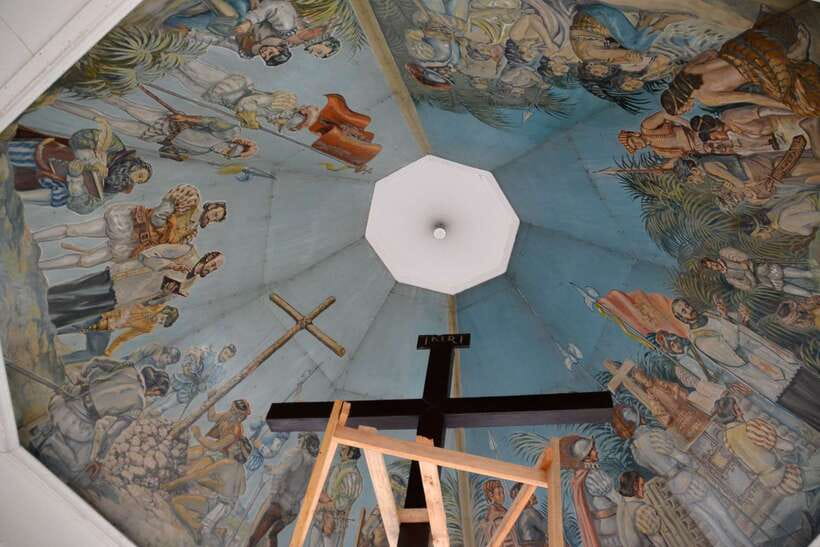
The Heritage Monument is included among the central stops. It helps connect the individual places on the itinerary by presenting important episodes and figures from Cebu’s past in a single public artwork.
Your guide is especially useful here. Without local explanation, a monument can become a quick photograph with little meaning. With background, you can better understand how Cebu’s religious beginnings, Spanish period, and local identity fit together.
This stop is likely brief, which suits the tour’s overall design. You are not getting a specialist art tour, but you are getting another piece of the city’s story before moving on to the ancestral house.
Yap-San Diego Ancestral House: a domestic look at the 1600s
The Yap-San Diego Ancestral House is one of the most distinctive stops on the route. The tour describes it as a chance to travel back to 1600s Spain, but its real value is the domestic setting. Churches and forts show public power. An old house shows how people arranged daily life.
The house offers a different mood from Magellan’s Cross, Santo Niño Church, and Fort San Pedro. Instead of focusing on major political or religious events, you get a glimpse of older interiors and household life.
I would take your time with the guide’s explanation here. The building is likely to mean more when you hear how it connects to Cebu’s Spanish-era past. This is also the kind of stop that benefits from a small private group, since you can stay close to your guide and ask questions without trying to hear across a large crowd.
The tour description places the house in a 1600s Spanish setting, so expect historical interpretation rather than a modern attraction with rides or performances. You are visiting to look at the building, objects, and atmosphere, not to fill a large block of entertainment time.
Beverly Hills and the Taoist Temple change
The planned route continues to the Taoist Temple at Beverly Hills. At the time of the supplied tour information, this temple is temporarily closed.
That detail matters. You should not book this experience assuming the temple visit is guaranteed. The route may still include a drive through or stop in the Beverly Hills area, but the available information does not promise access while the temple remains closed.
The temple would otherwise provide a useful contrast to the Catholic landmarks in the older center. Since it is temporarily unavailable, the tour becomes more focused on Cebu’s Spanish and Catholic past, with the ancestral house adding a domestic perspective.
I would confirm the current operating status before paying if this stop is important to you. A closure does not erase the value of the rest of the tour, but it can change your expectations.
Handicraft shopping, with one important warning
Shopping is intended to be the final stop. The plan is to visit handicraft stores so you can look for local souvenirs after the historical sights.
This is a sensible ending. You can spend the first part of the tour learning about Cebu, then use the last section for practical browsing rather than carrying purchases from one historic site to the next.
Still, treat the shopping stop as a possibility to verify, not the main reason to book. One recent experience found that shopping did not take place even though it was part of the advertised program. That may reflect timing, traffic, store availability, or a change in the route, but the result is the same: you should not rely on this tour alone for a dedicated shopping session.
If handicrafts are important to your plans, ask about the intended stores and how much time is normally allowed. The provided information does not name the shops or promise a particular product. Bring your own spending budget, since food, drinks, and gratuities are not included.
Air-conditioning is more than a small comfort
The air-conditioned vehicle is one of the tour’s best practical features. Cebu’s heat can make a short walk feel longer, and the itinerary involves several outdoor or partly outdoor stops.
One account describes the drives between attractions as taking about 10 to 15 minutes. Those short stretches give you a chance to cool down, sit, and reset before the next visit. That is especially useful if you are touring before an airport transfer or fitting Cebu City into a busy holiday schedule.
You should still prepare for sun. Bring sunglasses and a sun hat, as requested in the tour information. An umbrella or fan can also help create shade at exposed sites. Wear sturdy, comfortable shoes because the tour moves quickly and includes historic properties where surfaces may not be perfectly smooth.
The tour is not suitable for wheelchair users. The supplied information does not give a detailed mobility assessment for each stop, so anyone with limited walking ability should ask the provider for a current site-by-site answer before booking.
The guides make the difference
A sightseeing route can be ordinary if the guide simply names each building. This experience gets much of its value from the people leading it.
Belle is praised for her history knowledge and her ability to point out interesting places. Liz is described as friendly and well-informed. LizAnn is credited with making the past of each place clear while keeping the mood relaxed.
Stuart is praised for fluent English, punctuality, flexibility, and detailed explanations. Mr. Oanio is remembered for his pride in Cebu and his ability to make a four-hour visit feel full without making it feel rushed.
Those details tell you what to expect from the strongest version of this tour: a guide who links the stops together, explains why they matter, and adjusts the pace when possible. The private format should also make it easier to ask questions or request a little more time at a favorite place.
The guide cannot remove every problem. Traffic remains traffic, and four hours remains four hours. But the repeated praise for guiding and driving suggests that the human side of the tour is a major reason the experience works.
Timing, traffic, and who should book
I would book this tour early in a Cebu stay. One past account specifically recommends it as a first-day activity because it helps you understand the city’s layout and covers the main sightseeing stops before you move on to other plans.
It also suits a departure day. A four-hour tour can fit before checking out and heading to the airport, provided your hotel, luggage, and flight timing allow enough margin. Do not schedule it so tightly that a traffic delay becomes a crisis.
This is a good choice for:
- First-time visitors with only half a day
- Couples or families who prefer private transport
- People who want history explained in English
- Visitors who dislike arranging several short taxi rides
- Anyone looking for a broad introduction rather than a specialist tour
I would choose something else if you want long museum visits, a slow food-focused day, or a guaranteed shopping itinerary. The route covers a lot, but it does so at a brisk pace.
Is $65 per person fair value?
At $65 per person, the tour earns its price through convenience. You receive hotel pickup in Cebu City, air-conditioned transport, an English guide, and entrance fees. Food, drinks, and gratuities are extra.
For a private group, that package can be worthwhile. You are paying for someone else to handle the route, traffic, parking, and entry arrangements. The value is strongest when your time is limited or when you would otherwise need to hire separate transport and find each site yourself.
The price is less compelling if you are staying close to the historic center and are happy to move slowly on your own. In that case, you may prefer to spend your money on a longer museum visit, food, or a separate shopping trip.
The 4.8 rating from 36 reviews and the 94 percent perfect score for transport support the idea that the basic service is dependable. I would still keep expectations realistic: this is a practical orientation tour, not an all-day cultural program.
Free cancellation is available up to 24 hours before the start for a full refund, and you can reserve now and pay later. Those terms are useful if your Cebu schedule may change, but they do not solve the temple closure or guarantee that shopping will happen.
Final verdict: book it for a focused first look
I would book the Cebu City half-day tour if you want the city’s main historic sights explained clearly, with hotel pickup and a comfortable vehicle taking the strain out of local traffic.
The strongest parts are the guides, private transport, and well-chosen central route. You will see Magellan’s Cross, Santo Niño Church, Fort San Pedro, the Heritage Monument, and Yap-San Diego Ancestral House in one compact outing. The tour also gives you a useful first sense of how Cebu’s religious, Spanish, military, and domestic past fit together.
Book with two conditions in mind: the Taoist Temple is temporarily closed, and the shopping stop has not always taken place. If you accept those limits, $65 is a fair price for a short, well-organized introduction to old Cebu.
FAQ
How long does the Cebu City tour last?
The tour lasts four hours. Starting times depend on availability.
Is hotel pickup included?
Yes. Pickup is included from hotels in Cebu City.
Is the tour private?
Yes. It is offered as a private group experience.
What language does the guide speak?
The live tour guide speaks English.
Are entrance fees included?
Yes. Entrance fees and air-conditioned transportation are included. Food, drinks, and gratuities are not included.
Is the Taoist Temple open during the tour?
The Taoist Temple at Beverly Hills is temporarily closed according to the available tour information. Check its current status before booking if this stop is important to you.
Just added around Cebu
- Cebu: Whale Shark Encounter and Kawasan Canyoneering★ 5.0 · 3 reviews
- Cebu: Oslob Whale Shark, Simala Church & Ka Treasure Argao★ 4.8 · 3 reviews
- Cebu: Oslob Whale Shark, Sumilon, Ruins, Simala Church★ 4.7 · 3 reviews
- Cebu: Moalboal Island Hopping & Kawasan Falls Adventure★ 4.3 · 3 reviews
- Cebu Half Day City Tour (Private Tour)★ 5.0 · 3 reviews
- Cebu City with Sirao Garden Half Day Tour★ 5.0 · 3 reviews
- Cebu Airport Transfer to / from Anywhere in Cebu★ 5.0 · 3 reviews
- Oslob Whale Shark Snorkeling & Kawasan Canyoning Tour★ 5.0 · 3 reviews
Shopping Tours, side by side.
Manila’s Culinary Expedition: The Ultimate Food and Market Tour
Read the review →

Private Market Tour and Filipino Cooking Class in Manila with Isi
Read the review →
Tagaytay Adventure: Volcano Views, Countryside, Market & Cruise!
Read the review →
Where else this one shows up