
Reviewed · MANILA TOURS
Shared Old Manila Tour
Old Manila rewards curious eyes. This four-hour tour gives you a compact look at the city’s Spanish-era core, with Fort Santiago, San Agustin Church, Casa Manila, and Chinatown’s Binondo district all packed into one outing. I like the small maximum of six people and the choice of morning or afternoon departure. I also like that hotel pickup, admissions, lunch, and a professional guide are included. The main catch is the price: at $142.31 per person, it is not a cheap city tour, and Manila traffic can make the four-hour schedule feel tight.
The strongest part is the guide. Jonas, Joan, Richard, and Amy are each praised for clear storytelling and a warm manner, with Jonas adding Chinatown food stops to one visit. You should also expect some walking on old streets, a short horse-drawn carriage ride, and a schedule shaped by traffic and weather.
In This Review
- Key details before you book
- Why this small-group Manila tour works
- Rizal Park: a brief introduction to Manila
- Fort Santiago and the Pasig River
- San Agustin Church and its old stone interior
- Casa Manila: colonial life indoors
- A calesa ride toward Binondo
- Binondo and the food bonus
- What the $142.31 price really buys
- Which guide style suits you best
- Timing, comfort, and practical cautions
- Who should book this Manila experience?
- Should you book the Shared Old Manila Tour?
- FAQ
- How long does the Shared Old Manila Tour last?
- What time does the tour start?
- Is hotel pickup included?
- What attractions are included?
- Is lunch included?
- How many people can join the tour?
- Can children join the tour?
- Can I cancel for a full refund?
Key details before you book
- A six-person maximum keeps the tour personal: You are not being herded through Intramuros in a large coach group.
- Four major historic stops fit into about four hours: Fort Santiago, San Agustin Church, Casa Manila, and Binondo form the backbone of the day.
- The calesa ride adds local character: You travel by horse-drawn carriage toward Binondo after seeing Intramuros.
- Guides bring the past to life: Jonas, Joan, Richard, and Amy are praised for explaining history, food, and Filipino culture in clear, engaging terms.
- Lunch and selected hotel pickup are included: This adds value, though extra food and drinks are not covered.
- Traffic is the wild card: Manila’s roads can stretch transfer times, so keep later plans flexible.
Why this small-group Manila tour works
This is a useful introduction to Manila because it does not try to cover every district. Instead, it focuses on places that explain how the city developed under Spanish rule and how those old quarters connect with present-day Manila.
The group size matters. With no more than six people, you have a better chance of hearing the guide, asking questions, and adjusting the conversation around your interests. Amy, for example, is praised for being flexible, while Joan is singled out for explaining food and Filipino culture along with landmarks. That kind of guide can turn a short stop into a meaningful one.
The schedule is also sensible for a first visit. You see a national memorial, a fortress, a church, a reconstructed colonial home, and Chinatown. Those are different kinds of places, so the tour avoids becoming four versions of the same old building.
At the same time, four hours is a brisk window. Each stop has a set time, and Manila traffic can affect the pace. I would treat this as an orientation tour, not a slow historical study. You will get the framework, the main sights, and useful context, then decide where you want to return on your own.
A few more trips and experiences worth a look
- Intramuros, Manila: Historical Bamboo Bike Tour
★ 4.8 · 583 reviews - Experience Intramuros with Bamboo Bicycle – Ecotours
★ 5.0 · 508 reviews - Manila: Intramuros, Chinatown, and Old Manila Half-Day Tour
★ 4.8 · 475 reviews
Rizal Park: a brief introduction to Manila
The day begins at Rizal Park, named for Dr. Jose Rizal, the Philippines’ national hero. The stop is brief and intended mainly for pictures, so you should not expect a long guided walk through the park.
That short pause still has value. It introduces one of the country’s most important national figures before you enter Intramuros, where the tour turns toward Manila’s Spanish colonial past. A guide can help connect the public memorial space with the historical places that follow.
If photography matters to you, have your camera ready before the vehicle stops. Since this is a quick picture stop, lingering may not be possible. It is best viewed as a scene-setter rather than a major attraction in its own right.
Fort Santiago and the Pasig River
Fort Santiago is the first substantial stop. The old Spanish fortress sits at the mouth of the Pasig River, a location that helped make it important in Manila’s story. You have about 30 minutes here, with admission included.
That half-hour gives you enough time to see the main areas and listen to the guide, but not enough for a slow examination of every corner. The fort is best approached as a place of memory and power, not just a collection of walls. Its location helps you understand why this part of Manila mattered to Spanish authorities.
I like that Fort Santiago comes early. It gives the tour a strong historical anchor before the smaller interiors of San Agustin Church and Casa Manila. Guides such as Jonas and Richard are especially valuable here because the site needs explanation. Without context, a fortress can look like old stone and little else. With a good guide, its role in Philippine history becomes easier to follow.
You should wear comfortable shoes. The tour moves through several historic areas, and the old-city setting includes hard surfaces and cobbled streets. The schedule does not leave room for a long break at the fort, so bring water unless you plan to rely on the included lunch later.
San Agustin Church and its old stone interior
The tour continues through Intramuros to San Agustin Church, described as the oldest stone church in the country. You have about 15 minutes here, and admission is included.
Fifteen minutes is short, but the church offers a different experience from Fort Santiago. Instead of military history, you are looking at religious art and the long role of Catholicism in the Philippines. The church contains ecclesiastical icons, vestments, and other religious objects, giving you a glimpse of the visual world that shaped Spanish-era Manila.
This is one stop where a guide’s pacing matters. You will want enough time to look around, but the schedule must also keep Casa Manila and Binondo on track. Listen closely while the guide points out the important items. You may not have time to inspect every display at leisure.
Remember that this is an active religious site, not only a museum. A respectful manner and suitable clothing are wise. The tour description does not specify a dress code, so the safest approach is to dress modestly and follow any instructions given at the church.
Something different, still within reach of Manila:
- Manila: Old & New 4-Hour City Tour
★ 4.5 · 458 reviews - Manila Food Tour: Introduction to Philippine Street Food
★ 5.0 · 417 reviews - Manila Old and New: Sightseeing Tour Including Intramuros and Fort Santiago
★ 4.5 · 377 reviews - Spectacular Manila to Tagaytay: Full-Day Sightseeing Tour
★ 5.0 · 349 reviews
Casa Manila: colonial life indoors
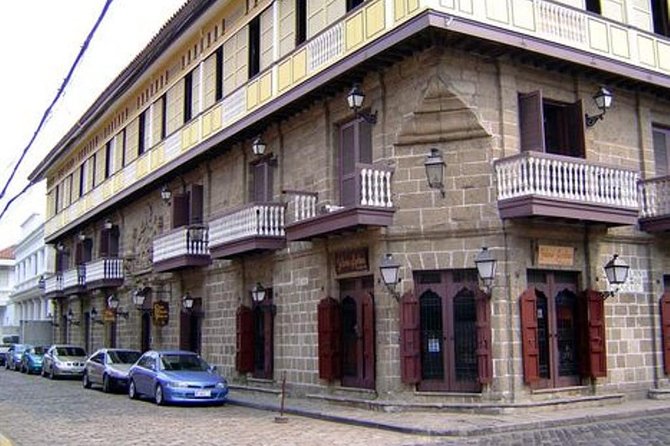
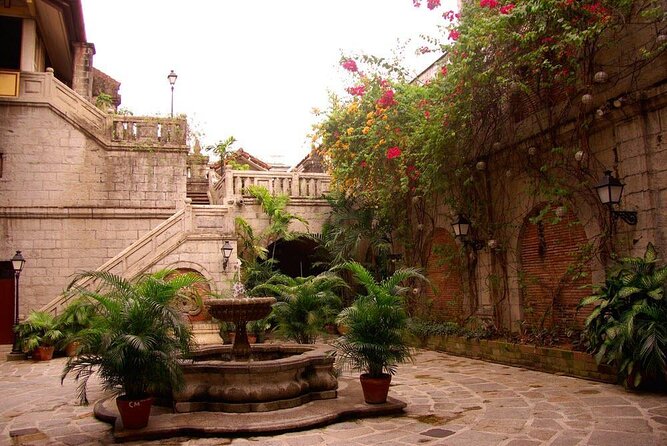
Across the street, Casa Manila presents a reproduction of a 19th-century house. The interior combines oriental and European décor with Philippine antique furniture, and the tour allows about 30 minutes.
This stop helps balance the grand public story of Manila with domestic life. Fort Santiago shows authority and defense. San Agustin Church shows faith. Casa Manila gives you an idea of how an affluent home might have been arranged, furnished, and decorated during the colonial period.
Because it is a reproduction, you should not confuse it with an untouched original residence. Its value comes from the way it presents a period setting in one place. The mix of European and Philippine influences also makes it useful for understanding that colonial life was not a simple copy of Spain.
Thirty minutes is a reasonable amount of time here. You can take in the rooms, furnishings, and decorative details without getting bogged down. If you enjoy architecture and interiors, this may be the stop that deserves your closest attention. If you prefer outdoor sights, it may feel slower than the fort, but the contrast is important.
A calesa ride toward Binondo
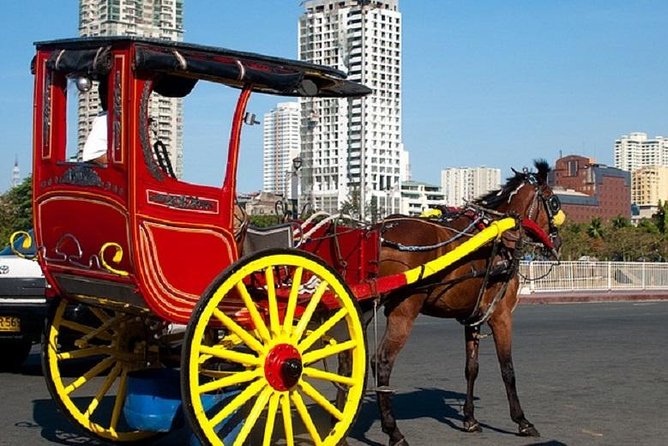
After Intramuros, you board a calesa, a horse-drawn carriage, and travel toward Binondo. The ride crosses the Pasig River and leads into an alley toward Binondo Church, another historic landmark built by the Spaniards.
This is the tour’s most distinctive transport element. A short carriage ride gives you a physical sense of moving from the old Spanish walled city toward Manila’s Chinatown. It is not simply another transfer in a van. You are changing the pace and the setting, even if the ride itself is brief.
The description gives 15 minutes for the Binondo Church portion, so do not expect a long Chinatown walking tour from this schedule alone. The carriage is part of the experience, but traffic, road conditions, and timing may affect the exact sequence.
I would pay attention to the transition. The tour is strongest when you notice how Manila’s districts sit beside one another rather than treating Intramuros as an isolated historic park. The move from the fortress area to Binondo adds a wider view of the city’s past.
Binondo and the food bonus
Binondo brings the tour into Chinatown, where history and food meet. The planned visit includes Binondo Church, and one guide, Jonas, also stopped at two food stalls for traditional spring rolls and bao buns. Those tastings were described as a delicious bonus, but you should not assume that every departure includes the same extra stops.
That point is important. The official inclusions list lunch, while food and drinks are also listed as not included. The wording is unclear, so I would confirm exactly what lunch covers before booking or at the start of the tour. Extra snacks, drinks, or food-stall purchases should be treated as your own expense.
Binondo is a strong finish because it shifts the focus from colonial monuments to everyday food culture. You get a chance to connect history with something immediate and practical. If your guide offers a food stop, try it if you are comfortable doing so, but keep in mind that the itinerary only promises the listed visits and lunch.
This part can also feel rushed. Fifteen minutes is not much time for a church, an alley, food, and orientation in Chinatown. The experience is best for a first taste, not for a full food crawl. If Binondo is high on your list, plan a separate visit with more time.
What the $142.31 price really buys
At $142.31 per person, this tour asks more than a simple sightseeing circuit. The value rests in what is bundled together: a professional guide, selected hotel pickup and drop-off, admission fees, lunch, taxes, fuel surcharges, and service charges.
The small group is the strongest reason to consider the price. A maximum of six means you are paying for a more personal format rather than a large public tour. The guide’s explanations are also central to the experience. If you only want quick photos outside each landmark, the cost may feel high. If you want the sites explained and prefer not to arrange several transfers yourself, the price becomes easier to defend.
The included admissions help too. Fort Santiago, San Agustin Church, and Casa Manila are all listed with admission included. That reduces the need to manage small payments during a short day.
Hotel pickup and drop-off apply only to selected hotels, so check this before you rely on door-to-door service. The starting time is 8:00 a.m., and you should allow flexibility after the tour because traffic can change transfer times. The tour is usually booked about 10 days ahead, which suggests that reserving early is sensible if your Manila schedule is fixed.
Which guide style suits you best
The guide can shape this experience more than any single building. Jonas is praised for explaining Philippine history and culture and for adding food stops in Binondo. Joan is described as engaging and strong on landmarks, food, and Filipino culture.
Richard and the driver are praised for their grasp of Manila’s past, while Amy is noted for her charm, clear explanations, and willingness to adapt around personal interests. These names give you a useful sense of the guiding style to expect: history is not treated as a dry list of dates, and the better guides connect buildings with food, culture, and daily life.
You cannot choose a particular guide based on the information provided, so book this for the format and route rather than for one named person. Still, the repeated praise for the guiding is the clearest sign that the human side of the tour is its main asset.
Timing, comfort, and practical cautions
The advertised duration is about four hours. Transfer times are approximate and depend on the time of day and traffic. Manila can make short distances unpredictable, so I would avoid scheduling a flight, cruise departure, or tightly timed attraction immediately afterward.
The tour is subject to favorable weather. Since parts of the experience involve walking through Intramuros and using a horse-drawn carriage, light clothing, comfortable shoes, and protection from sun or rain are sensible choices. The provided information does not list a special equipment requirement.
Most people can participate, and children must be accompanied by an adult. A child rate applies only when the child shares with two paying adults. If your ship arrival is delayed, refunds are not provided for missing the tour because of a late or non-arriving cruise ship. That is a key warning for cruise passengers.
Free cancellation is available up to 24 hours before the start time for a full refund. Changes or cancellations made less than 24 hours ahead are not accepted for a refund.
Who should book this Manila experience?
I would recommend it to a first-time Manila visitor who wants the main old-city sights without arranging every admission, transfer, and guide separately. It also suits couples, families with older children, and small groups who value a quiet format and direct access to a guide.
It is a good match if you want history with a little local flavor. The calesa ride and possible Binondo food stops keep the day from feeling like a museum circuit. The included lunch is useful, though I would clarify the food policy because the inclusions and exclusions are not perfectly clear.
I would hesitate if you want a slow, detailed visit to each site, a full Chinatown food tour, or the lowest possible price. Four hours is enough for an overview, but not enough to linger everywhere. Manila traffic can also eat into sightseeing time.
Should you book the Shared Old Manila Tour?
Book it if you want a well-organized introduction to Intramuros and Binondo, especially if a small group and strong guide matter more to you than saving money. The route covers the city’s key old landmarks, and the guide-led storytelling appears to be the part that makes the schedule worthwhile.
Skip it if you already know Intramuros, need a completely flexible day, or plan to explore Chinatown at length. For a first visit, though, the combination of Fort Santiago, San Agustin Church, Casa Manila, a calesa ride, and Binondo gives you a useful first look at Manila’s past and present.
FAQ
How long does the Shared Old Manila Tour last?
The tour lasts approximately four hours. Transfer times can vary depending on traffic and the time of day.
What time does the tour start?
The listed start time is 8:00 a.m.
Is hotel pickup included?
Hotel pickup and drop-off are included for selected hotels only. You should confirm that your hotel is covered before booking.
What attractions are included?
The route includes a brief stop at Rizal Park, Fort Santiago, San Agustin Church, Casa Manila, and Binondo, including Binondo Church.
Is lunch included?
Lunch is listed as included. Food and drinks are also listed as not included, so you should confirm what the lunch provision covers and budget for any extra purchases.
How many people can join the tour?
The activity has a maximum of six participants.
Can children join the tour?
Most people can participate, but children must be accompanied by an adult. A child rate applies only when sharing with two paying adults.
Can I cancel for a full refund?
Yes. You can cancel at least 24 hours before the local start time for a full refund. Cancellations or changes made less than 24 hours before the start time are not refunded.
Just added around Manila
- Philippines Intro 3 days 2 nights Tour Best of Manila and Beyond★ 5.0 · 3 reviews
- Embark on a 7-Day Banaue-Sagada Adventure of a Lifetime★ 5.0 · 3 reviews
- Pagsanjan Falls Adventure with Lunch and Rapids Experience★ 4.5 · 3 reviews
- Manila: Intramuros Tour ( Dark)★ 4.7 · 3 reviews
- Manila: Intramuros Heritage Tour★ 4.2 · 3 reviews
- From Manila: Philippines Private Tour Guide★ 4.1 · 3 reviews
- Discover the Real Manila with a Local Guide★ 5.0 · 3 reviews
- MANILA: HISTORICAL KALESA RIDE TOUR EXPERIENCE IN INTRAMUROS★ 4.0 · 3 reviews
Manila Tours, side by side.

Intramuros, Manila: Historical Bamboo Bike Tour
Read the review →
Experience Intramuros with Bamboo Bicycle – Ecotours
Read the review →
Intramuros, Chinatown, and Old Manila Half-Day Tour
Read the review →
Manila Food Tour: Introduction to Philippine Street Food
Read the review →Manila Old and New: Sightseeing Tour Including Intramuros and Fort Santiago
Read the review →Spectacular Manila to Tagaytay: Full-Day Sightseeing Tour
Read the review →
Makati Nightlife: VIP Access to Clubs, Rooftops & Go-Go Bars
Read the review →Where else this one shows up