
Reviewed · MANILA TOURS
Revolutionary Tour of Manila
History gets personal inside Intramuros. This three-hour walking tour connects Fort Santiago, Manila Cathedral, and San Agustin Church while explaining how Filipinos pushed back against Spanish, American, and Japanese rule. I like the focus on overlooked patriots, and I like that the tour reaches beyond grand buildings to prison cells, wartime deaths, and the political fight between church and government.
The main caution is timing. If Mass blocks entry to one or both churches, the tour can become much shorter than planned. The meeting information also labels the location as Nueva Vizcaya even though every listed stop is in Manila, so I would confirm the exact pickup point before booking.
In This Review
- Key points to know before booking
- Why this Intramuros tour is worth your time
- Starting at Fort Santiago and Dr. Rizal’s cell
- Manila Cathedral and the church-government power struggle
- General Luna Street and stories of the Philippine-American War
- San Agustin Church and survival through changing eras
- Calle Real and the changing face of old Manila
- Guide quality, languages, and pace
- Is $60 a fair price?
- Who should book this Manila history tour?
- Should you book the Revolutionary Tour of Manila?
- FAQ
- Where does the Revolutionary Tour of Manila meet?
- How long does the tour last?
- Which places are included?
- Is transportation included?
- What languages are available?
- Can I cancel for a full refund?
- Is the tour wheelchair accessible?
Key points to know before booking
- Fort Santiago begins the story: You spend about an hour at the old fortress, including Dr. Jose Rizal’s last prison cell and wartime dungeons.
- The tour remembers ordinary patriots: The guide covers figures and movements from the pre-Hispanic era through the Japanese occupation, not only the country’s best-known leaders.
- Church and government share the spotlight: Manila Cathedral helps explain the long power struggle between religious and political authorities.
- San Agustin Church has survived repeated upheaval: Its history reflects the many periods Manila has passed through.
- The route ends at Calle Real: You see how Intramuros’ former downtown has changed from its earlier role.
- Jerome earns special praise: One English-speaking visitor found Jerome’s English and German guiding especially strong and later booked his Chinatown tour too.
Why this Intramuros tour is worth your time
Intramuros can look like a compact old quarter of stone walls and churches. That view misses the point. Its buildings are useful only when you connect them to the people who lived, fought, prayed, suffered, and died here.
This tour gives you that connection in a tight three-hour format. You move through the core of old Manila while hearing about reformism, revolution, colonial rule, wartime imprisonment, and the struggle to shape an independent nation. I especially like that the experience does not treat Philippine history as a simple handoff from Spain to the United States. It follows a longer trail, beginning before Spanish rule and continuing through the Japanese occupation.
The historical focus is serious, but the route is not only a lecture. You enter Fort Santiago, visit Manila Cathedral, see San Agustin Church, stroll along General Luna Street, and finish at Calle Real. Transportation is included, though the supplied details do not explain what type of vehicle is used or how much of the route is driven.
The price is $60 per person. That is not the cheapest way to see Intramuros, but it can be fair value if you want a guide to explain the political and human stories behind the sites. Entrance fees and transportation are included, so you are paying for more than admission alone. Meals and drinks are not included, and three hours is a brisk schedule for a place with this much to absorb.
A few more trips and experiences worth a look
- Intramuros, Manila: Historical Bamboo Bike Tour
★ 4.8 · 583 reviews - Experience Intramuros with Bamboo Bicycle – Ecotours
★ 5.0 · 508 reviews - Manila: Intramuros, Chinatown, and Old Manila Half-Day Tour
★ 4.8 · 475 reviews
Starting at Fort Santiago and Dr. Rizal’s cell
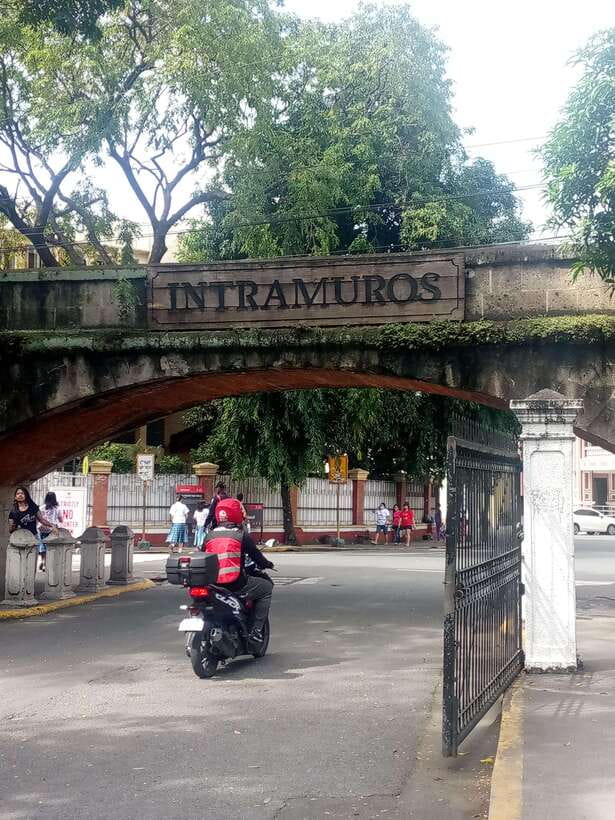
The tour meets at the Fort Santiago Gate, at 18 Sta. Clara Street. Look for the guide holding a tour poster. There are two listed starting options, but the practical meeting instruction points you to Fort Santiago Gate, so I would use that as your main reference and confirm any alternate arrangement before the day begins.
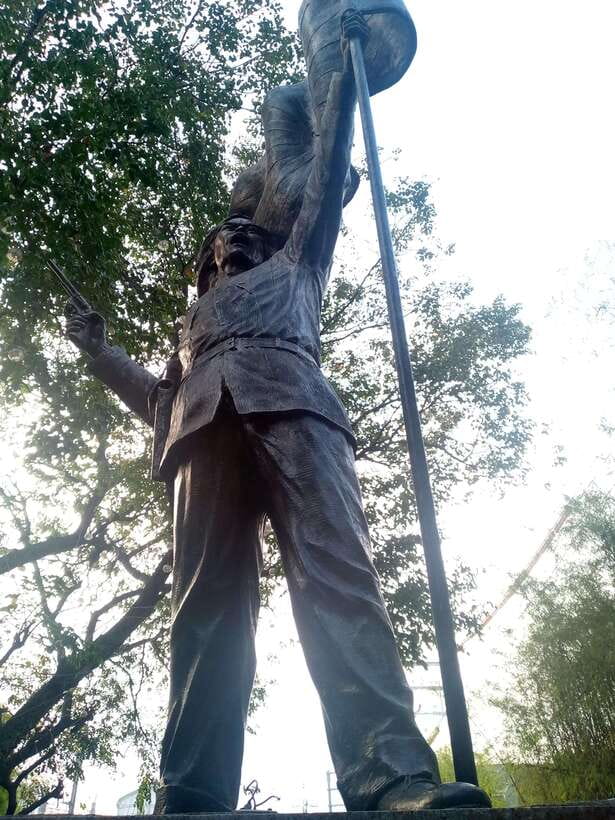
Fort Santiago is the right place to start because it introduces both Manila’s military power and the personal cost of resistance. You spend roughly an hour here, moving through a site connected with colonial control, revolution, and the final imprisonment of Dr. Jose Rizal.
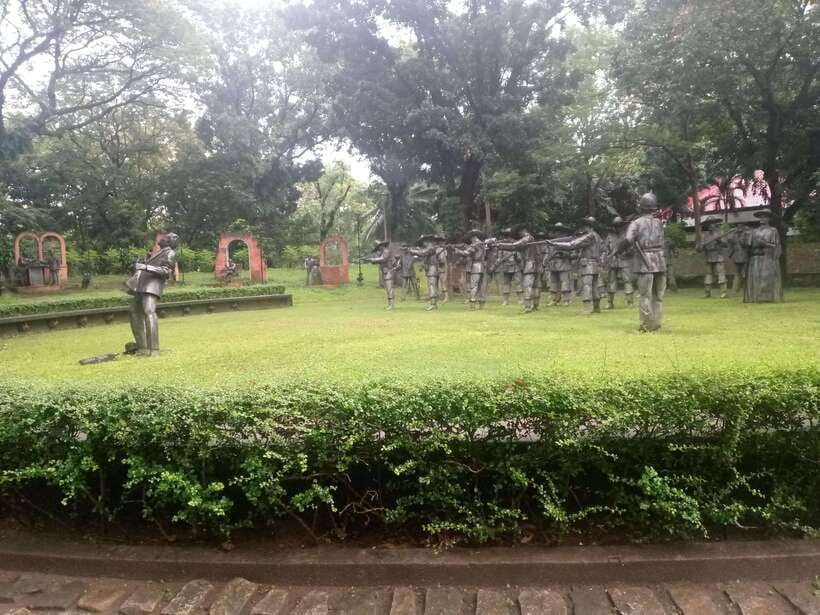
Rizal’s last prison cell is one of the most important stops. He was a reformist, writer, and national figure whose ideas helped shape the movement that led toward independence. The guide’s explanation should help you understand the difference between reformism and armed revolution, and why both mattered in the formation of the Philippine nation.
I appreciate that the tour also looks for unsung patriots. That wording matters. A history tour can easily become a procession of famous names, dates, and battles. Here, the stated aim is to bring forward people whose work and sacrifice did not receive the same attention. Ask your guide for names and stories you can remember after you leave.
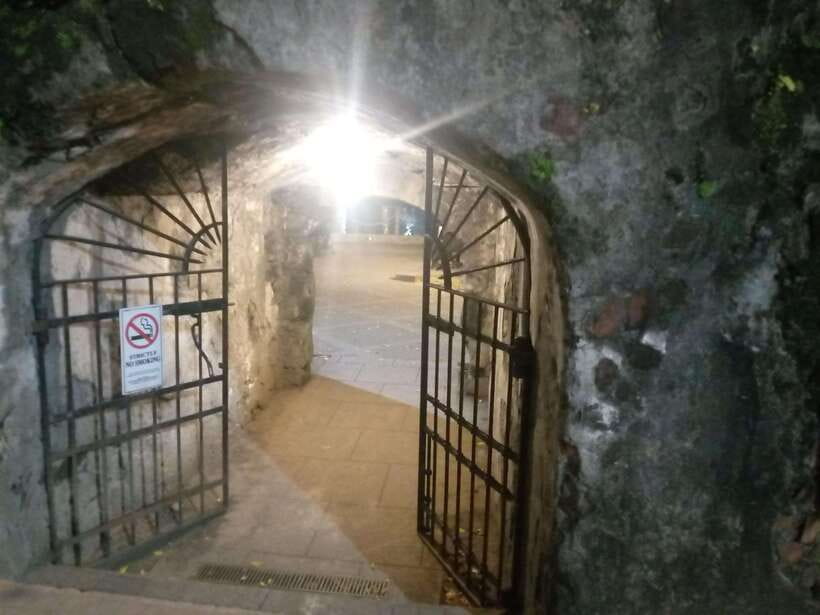
The fort’s dungeons provide the tour’s most difficult moment. You hear about the cramped conditions and the limited oxygen available below ground, then walk through chambers connected with the deaths of 600 Filipino and American civilian prisoners of war. A mass grave offers a place to pause and pay respect.
This section may be uncomfortable, and it should be. The point is not to turn suffering into spectacle. It is to give the wartime story a physical setting and to make clear that occupation affected civilians as well as soldiers. If enclosed spaces or grim historical sites are hard for you, be prepared for a sober visit.
The fort portion is listed at one hour. That is enough for a guided introduction, but not enough for every plaque, room, and story. Listen closely to the guide, since the value here depends heavily on the explanation that links each place to the larger struggle.
Manila Cathedral and the church-government power struggle
From Fort Santiago, the tour continues to Manila Cathedral for a guided visit of about 30 minutes. The cathedral is not presented simply as an attractive religious building. Its purpose on this route is to explain the tension between church authority and government power.
That theme gives the tour a useful political edge. Spanish rule in the Philippines involved both colonial administration and the Catholic Church, and the two institutions did not always fit neatly together. The cathedral stop helps you consider how religion shaped public life, authority, and resistance.
Thirty minutes is a short visit, so expect a focused explanation rather than a long architectural study. If the cathedral is open for the tour, you should have time to look around while hearing the main historical points. The route’s strength is its connections: Fort Santiago shows military detention and resistance, while the cathedral introduces the institutional power behind much of colonial society.
There is an important practical warning here. A scheduled church visit is not guaranteed to be available during Mass. One booking in January 2026 reported that the churches could not be entered because services were taking place, making the whole experience much shorter than expected.
That issue may be outside the guide’s control, but it affects the value of a $60 booking. If entering the churches matters to you, ask about service schedules before you reserve, or confirm conditions on the morning of the tour. Even if you cannot go inside, the guide may still explain the sites from outside, but that is not the same experience.
General Luna Street and stories of the Philippine-American War
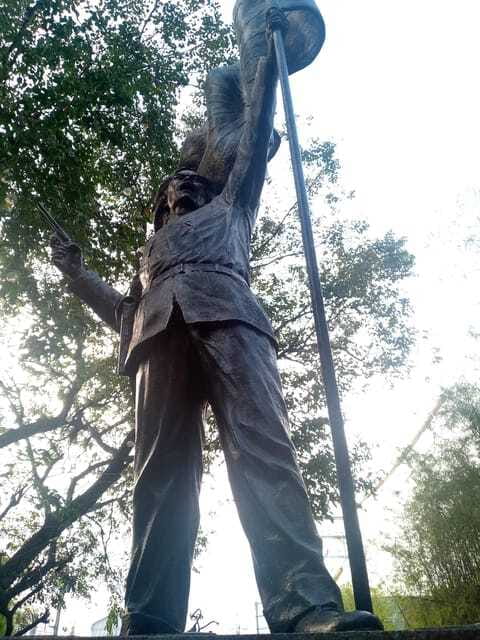
The walk along General Luna Street shifts the focus toward the Philippine-American War. This part of the route is useful because it places the independence struggle after Spain’s defeat rather than treating independence as a finished goal.
You hear stories of Filipino courage and sacrifice as you move through the old center. The route helps show that the end of Spanish rule did not instantly produce full self-rule. Filipinos continued to fight over who would control the country and what freedom would mean.
I like this section because it complicates a familiar colonial timeline. It asks you to think about independence from the Filipino point of view, not only through the policies of foreign powers. The tour’s title, Revolutionary Tour of Manila, makes more sense here: revolution was not one isolated event, but a continuing effort shaped by changing rulers and local resistance.
The provided details do not give a precise walking distance or group size. You should expect some time on foot, and Manila’s heat can make that more tiring than the map suggests. Apply sunscreen before you go, and mosquito repellent is also recommended. Comfortable shoes and water would be sensible, although drinks are not included.
Something different, still within reach of Manila:
- Manila: Old & New 4-Hour City Tour
★ 4.5 · 458 reviews - Manila Food Tour: Introduction to Philippine Street Food
★ 5.0 · 417 reviews - Manila Old and New: Sightseeing Tour Including Intramuros and Fort Santiago
★ 4.5 · 377 reviews - Spectacular Manila to Tagaytay: Full-Day Sightseeing Tour
★ 5.0 · 349 reviews
San Agustin Church and survival through changing eras
San Agustin Church is the next guided stop, with about 30 minutes set aside for the visit. The tour presents the church through its ability to endure different periods of Philippine history.
That approach is more useful than a quick architectural photo stop. You learn how the building connects with the changing city around it and with the pressures that affected religious institutions over time. After the fort’s prisons and the cathedral’s political story, San Agustin gives the route another angle: survival.
Again, access can depend on religious services. The church may not be available for an interior visit if Mass is underway. That makes the tour schedule somewhat vulnerable to events beyond the operator’s control, especially since two church stops together account for one hour of the planned itinerary.
If you do enter, the 30-minute guided visit should give you a clear introduction without taking over the entire afternoon. If you cannot enter, you will need to decide how much value you place on the guide’s outside explanation and the overall historical route.
Calle Real and the changing face of old Manila
The tour finishes at Calle Real, once the downtown center of Intramuros. This is a smart ending because it moves you away from heroic monuments and toward urban change.
Calle Real lets you consider how a place can lose its former role and take on a very different identity. The tour describes the street as having changed into almost the opposite of what it once was. That contrast helps you read Intramuros as a living part of Manila, not a sealed historical display.
The ending may feel less dramatic than Fort Santiago, but it gives the route a needed final question: what happens to historic places after the wars, revolutions, and political struggles have passed? You finish with change still in view, rather than with the impression that Philippine history ended at independence.
The listed drop-off points are Fort Santiago at 18 Sta. Clara Street. Since the meeting and drop-off details are tied to the fort, the tour should return you close to where it began. The separate location label mentioning Nueva Vizcaya does not match the Intramuros route, so confirm this detail before payment.
Guide quality, languages, and pace
The tour is offered with a live guide in English or German. One especially positive account names Jerome and praises his English and German. That same person later booked a Chinatown tour with him, which suggests the guide’s ability to make the subject engaging was a major part of the experience.
Another assessment called the tour excellent and especially valued the amount of historical explanation and detail. That matches what this route needs. The buildings alone cannot explain the revolution, the church-government conflict, or the wartime dungeons. Your experience will depend on the guide giving the sites a clear order and explaining why each stop matters.
The schedule is compact:
- Fort Santiago: about 1 hour
- Manila Cathedral: about 30 minutes
- San Agustin Church: about 30 minutes
- Remaining time: walking, transportation, explanations, and the Calle Real finish
That leaves little room for delays. A late start, a crowded entrance, or a church service can reduce time at the planned stops. I would choose this tour if you want a strong introduction and a clear route, not if you want to study every room at leisure.
The experience is listed as wheelchair accessible. Since the route includes historic buildings and underground spaces, it is still worth confirming which parts can be reached comfortably on your chosen date. The supplied information does not provide details about ramps, dungeon access, or surface conditions.
Is $60 a fair price?
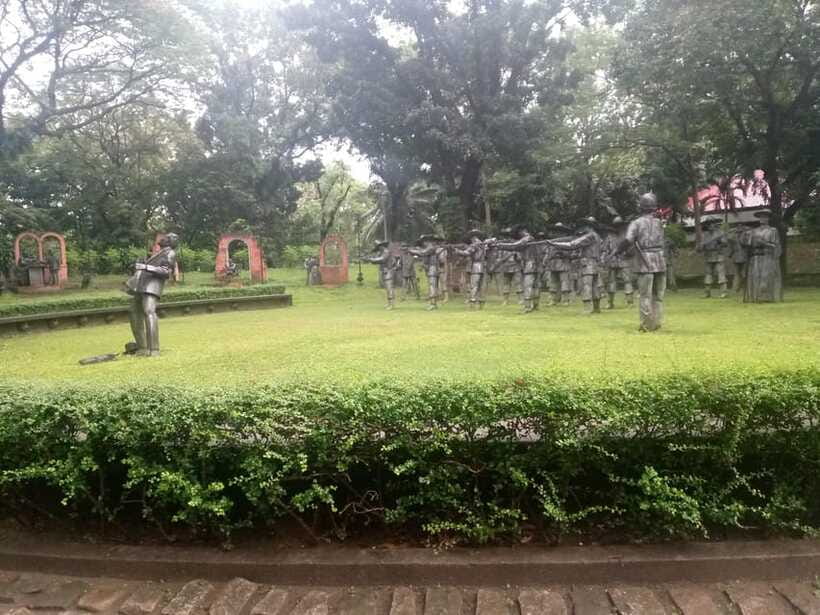
At $60 per person, the value rests on three things: the guide, access to the sites, and the amount of transportation included. Entrance fees, a professional guide, and transportation are part of the price. Food and drinks are not.
For a visitor who would otherwise walk through Intramuros without understanding its political history, the guide can make the difference between a pleasant old-town stroll and a meaningful history lesson. The inclusion of Fort Santiago, the cathedral, San Agustin Church, General Luna Street, and Calle Real gives you a broad introduction in three hours.
The price feels less convincing if the church interiors are closed and the tour ends early. Because that possibility has already affected at least one booking, I would make church access a pre-booking question. If the answer is uncertain, you may prefer to visit independently and pay site fees as available, though you would lose the connected storytelling and included transport.
Free cancellation up to 24 hours before the start gives you some protection, and you can reserve now and pay later. Those terms help if your Manila plans are still shifting, but they do not solve the church-access issue on the day itself.
Who should book this Manila history tour?
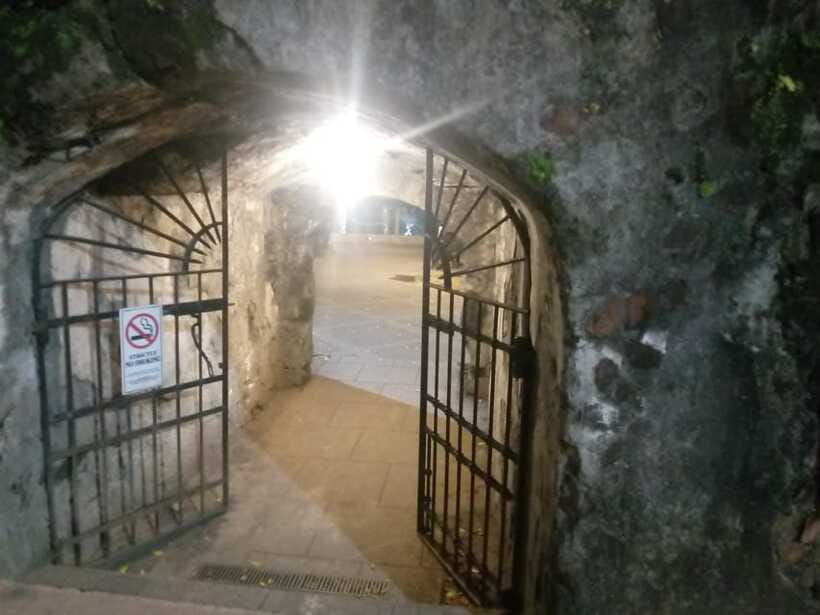
I would recommend it to you if you want:
- A guided first look at Intramuros
- Clear context for the Philippine Revolution and later conflicts
- A serious visit to Fort Santiago’s prison and wartime areas
- Stories about lesser-known patriots
- English or German guiding
- A planned route with admission and transportation included
It suits history-minded visitors who prefer interpretation to wandering alone. It also works well for someone with only a few hours in Manila and a desire to see several major sites without planning every stop.
I would be more cautious if you need a slow, flexible visit. The three-hour schedule is tight, and church access can be interrupted by Mass. It may also disappoint you if you mainly want architecture, photographs, or free time rather than political and wartime history.
Wear shoes suitable for walking, apply sunscreen, and use mosquito repellent. Bare feet, alcohol, and drugs are not allowed. Bring water since meals and drinks are not part of the booking.
Should you book the Revolutionary Tour of Manila?
Book it if the guide’s historical storytelling matters more to you than having unlimited time inside each site. Fort Santiago is the strongest part of the route, especially for its connection to Jose Rizal, the dungeons, and the civilian prisoners who died there. The church stops add useful context, but they need to be open for the full $60 value to make sense.
Before paying, confirm three details: that the meeting point is Fort Santiago in Intramuros rather than Nueva Vizcaya, that the churches are expected to admit tour visitors, and whether the tour will adjust if Mass prevents entry. If those answers are clear, this is a focused and worthwhile introduction to Manila’s struggle for freedom.
FAQ
Where does the Revolutionary Tour of Manila meet?
The meeting point is the Fort Santiago Gate at 18 Sta. Clara Street. The guide carries the tour poster.
How long does the tour last?
The scheduled duration is three hours. Fort Santiago takes about one hour, while Manila Cathedral and San Agustin Church each receive about 30 minutes.
Which places are included?
The route includes Fort Santiago, Manila Cathedral, San Agustin Church, General Luna Street, and Calle Real in Intramuros.
Is transportation included?
Yes. Transportation is included along with a professional guide and entrance fees.
What languages are available?
The live tour guide is available in English or German.
Can I cancel for a full refund?
Yes. You can cancel up to 24 hours before the activity for a full refund.
Is the tour wheelchair accessible?
Yes, the activity is listed as wheelchair accessible. The supplied details do not specify access conditions for every individual room or dungeon.
Just added around Manila
- Philippines Intro 3 days 2 nights Tour Best of Manila and Beyond★ 5.0 · 3 reviews
- Embark on a 7-Day Banaue-Sagada Adventure of a Lifetime★ 5.0 · 3 reviews
- Pagsanjan Falls Adventure with Lunch and Rapids Experience★ 4.5 · 3 reviews
- Manila: Intramuros Tour ( Dark)★ 4.7 · 3 reviews
- Manila: Intramuros Heritage Tour★ 4.2 · 3 reviews
- From Manila: Philippines Private Tour Guide★ 4.1 · 3 reviews
- Discover the Real Manila with a Local Guide★ 5.0 · 3 reviews
- MANILA: HISTORICAL KALESA RIDE TOUR EXPERIENCE IN INTRAMUROS★ 4.0 · 3 reviews
Manila Tours, side by side.

Intramuros, Manila: Historical Bamboo Bike Tour
Read the review →
Experience Intramuros with Bamboo Bicycle – Ecotours
Read the review →
Intramuros, Chinatown, and Old Manila Half-Day Tour
Read the review →
Manila Food Tour: Introduction to Philippine Street Food
Read the review →Manila Old and New: Sightseeing Tour Including Intramuros and Fort Santiago
Read the review →Spectacular Manila to Tagaytay: Full-Day Sightseeing Tour
Read the review →
Makati Nightlife: VIP Access to Clubs, Rooftops & Go-Go Bars
Read the review →Where else this one shows up