
Reviewed · MANILA TOURS
indigenous Forest experience Manila 2023
The forest teaches more than a museum. This full-day trip from Manila takes you to the Aeta community in Subic Bay, where an Aeta guide introduces you to medicinal plants, practical jungle skills, and a traditional meal cooked with bamboo. The setting is the Pamulaklakin Forest Trail in the Binictican Hills of Subic Bay Olongapo, one of the few remaining rainforest areas in the Philippines associated with an Indigenous community.
I like the small maximum group of 15 and the included air-conditioned transport, since the journey from Manila is long and the early 6:30 a.m. start makes comfort useful. I also like that the meal is part of the experience rather than an unrelated restaurant stop. The main drawback is the time and walking involved: this is a 10 to 12-hour day, with about three hours on the forest trail, so it is not a quick outing from Manila.
In This Review
- Key points to know before booking
- Why this Aeta experience is different from a standard Manila day trip
- The early start from Manila
- Entering the Pamulaklakin Forest Trail
- Learning jungle skills from an Aeta guide
- Bamboo cooking and the traditional lunch
- What the 10 to 12-hour schedule means for value
- Comfort, walking, and weather considerations
- The best parts of the cultural exchange
- Who should book this experience?
- Booking, cancellation, and practical details
- Should you book the Aeta forest experience?
- FAQ
- Where does the Indigenous forest experience take place?
- How long does the tour last?
- What time does the experience start?
- Is pickup available from Manila?
- What is included in the cultural experience?
- How many people can join the group?
- Can I cancel for a refund?
Key points to know before booking
- The Aeta guides are the heart of the visit: You learn how local plants are used for medicine and daily life, rather than simply walking through trees.
- Lunch is prepared in a traditional way: Food is cooked inside bamboo, and bamboo cups may be made during the visit.
- The trail portion lasts about three hours: Expect a proper forest walk, not just a roadside community stop.
- The day begins at 6:30 a.m.: Pickup is offered from select areas of Manila, with exact coverage worth checking before payment.
- The group is capped at 15 people: That gives you a better chance to ask questions and hear demonstrations.
- The price is $160 per person: Group discounts may improve the value, especially when transport, guiding, lunch, and a full day away from Manila are included.
Why this Aeta experience is different from a standard Manila day trip
Many excursions from Manila are built around viewpoints, churches, beaches, or food stops. This one is built around people and practical knowledge. You are not simply taken to a forest and left to admire the trees. The purpose is to see how the Aetas use their surroundings in daily life and how traditional skills still make sense in a rainforest setting.
The Aetas are Indigenous people associated with the Binictican Hills around Subic Bay Olongapo. The information provided for this experience describes them as a small-statured community with tightly curled hair, distinct from most other Filipino groups. That description is part of the cultural context, but the stronger reason to visit is the chance to listen to an Aeta guide explain local plants, food preparation, and survival methods directly.
I would approach the day with respect and curiosity. This is a community visit, not a performance staged only for a passing audience. The most worthwhile moments are likely to come when you ask sensible questions and pay attention to the connection between the forest and everyday life.
A few more trips and experiences worth a look
- Intramuros, Manila: Historical Bamboo Bike Tour
★ 4.8 · 583 reviews - Experience Intramuros with Bamboo Bicycle – Ecotours
★ 5.0 · 508 reviews - Manila: Intramuros, Chinatown, and Old Manila Half-Day Tour
★ 4.8 · 475 reviews
The early start from Manila
The meeting time is 6:30 a.m., and that shapes the entire day. You will need to plan for an early morning, but the start is practical if you want enough daylight for the forest portion and the long return journey.
Pickup is offered from select areas of Manila. That is useful, but it does not mean every hotel or neighborhood is automatically covered. Confirm your pickup point before the day of departure. If your location is not included, you may need to reach an agreed meeting point.
The transport is air-conditioned, a welcome feature on a full-day excursion in the Philippines. The ride to Subic Bay takes time, and a comfortable vehicle matters more here than it would on a short city tour. The air-conditioning also gives you a cool place to recover before and after the walk.
The trip is advertised at 10 to 12 hours, although the forest visit itself is listed at about three hours. The remaining time covers transfers and the other parts of the day. Do not book an evening dinner reservation in Manila unless it is flexible. Traffic and weather can affect the return.
Entering the Pamulaklakin Forest Trail
The Pamulaklakin Forest Trail is in the Binictican Hills area of Subic Bay Olongapo. It is described as one of the few remaining untouched rainforest areas in the Philippines, and the setting gives the experience its real character.
The trail portion lasts approximately three hours, with admission included. You should expect walking over a natural forest route rather than a paved urban attraction. The available information does not give a difficulty grade, so anyone with concerns about walking should ask the provider for current trail conditions before booking.
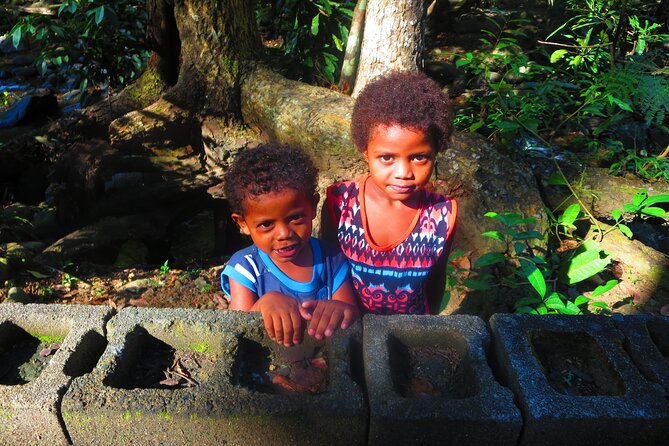
The best part of this section is the focus on useful knowledge. Guides point out plants with medicinal value and explain how the Aetas use what grows around them. That changes the way you see the forest. A leaf or vine is no longer just part of the scenery. It may have a purpose, a story, or a place in local practice.
Eddie and Ricky are named as guides associated with especially lively days on the trail. Their approach is described as involved, friendly, and willing to answer questions. That matters because a forest walk can feel flat when the guide only points from a distance. Here, the appeal comes from conversation and demonstration.
Learning jungle skills from an Aeta guide
The experience includes demonstrations of jungle survival skills. The supplied details do not list every skill, so you should not arrive expecting a fixed menu of activities. Instead, think of this as a practical introduction to the ways the Aeta community reads and uses the forest.
An Aeta guide is described as showing medicinal trees and explaining their use. That direct connection is important. You are learning from someone tied to the community and the place, rather than receiving a generic lesson that could happen in any tropical forest.
I would keep your questions focused on daily use. Ask how a plant is identified, what part is used, and how knowledge is passed on. You may also see forest materials used for simple objects or food preparation. The experience is most rewarding when you give the demonstrations your full attention instead of treating them as quick photo stops.
The small-group format helps here. With a maximum of 15 people, the guide has a better chance to answer individual questions. It also reduces the risk of being at the back of a large crowd while a demonstration takes place.
Something different, still within reach of Manila:
- Manila: Old & New 4-Hour City Tour
★ 4.5 · 458 reviews - Manila Food Tour: Introduction to Philippine Street Food
★ 5.0 · 417 reviews - Manila Old and New: Sightseeing Tour Including Intramuros and Fort Santiago
★ 4.5 · 377 reviews - Spectacular Manila to Tagaytay: Full-Day Sightseeing Tour
★ 5.0 · 349 reviews
Bamboo cooking and the traditional lunch
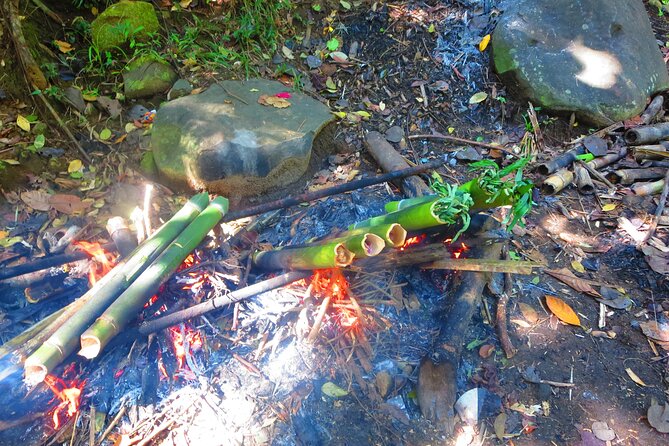
Lunch is one of the most memorable parts of the day because it connects the forest lesson with something practical and social. The meal is traditionally prepared inside bamboo, giving you a direct look at how natural materials can be used in cooking.
This is not simply lunch included for convenience. The preparation itself is part of the cultural experience. You can see how bamboo functions as a cooking container and how food can be prepared with materials gathered from the surrounding area.
The food has been described as delicious, but the larger value is the setting and method. Eating a meal prepared by the community gives the visit a human rhythm. You have time to pause, talk, and enjoy something made for you rather than eating from a standard roadside menu.
Bamboo cups may also be made on the spot as souvenirs. That is a charming detail, but take care when bringing bamboo items home. Customs rules vary by country, so check your own border requirements before packing plant-based souvenirs.
The supplied information does not identify the exact dishes or provide a vegetarian menu. If you have food allergies or dietary restrictions, contact Yolo Travel Philippines before departure rather than assuming the meal can be changed.
What the 10 to 12-hour schedule means for value
At $160 per person, this is not a bargain-priced Manila excursion. The price needs to be judged against what is included: a full day away from the city, air-conditioned transport, pickup from select areas, a guided forest visit, an Indigenous cultural experience, and lunch.
If you tried to arrange transport to Subic Bay, find the trail, hire an appropriate local guide, and organize a community meal independently, the convenience could be worth a fair part of the cost. The small group also adds value because the guide can interact with you more directly.
The price makes less sense if you mainly want a short nature walk or a quick look at local culture. In that case, the long road time may feel out of proportion to the three-hour forest section. You are paying for the complete day, not only the time spent walking.
Group discounts may help if two or more people are booking together. Ask how the discount works before finalizing your reservation. Since the usual booking point is about 56 days ahead, advance planning seems sensible, particularly if your Manila stay is short.
Comfort, walking, and weather considerations
The air-conditioned vehicle is a clear comfort advantage, but the forest trail still requires suitable clothing and footwear. Wear shoes you can walk in for several hours and clothing appropriate for a warm, outdoor setting. The information does not specify restrooms, trail surfaces, or the exact walking difficulty, so ask for current conditions if those details affect your decision.
Most people can participate, according to the activity information. That is broad guidance rather than a promise that every section will suit every physical ability. If you have difficulty walking, ask the provider how much uneven ground, climbing, or standing is involved before booking.
Weather matters. The activity requires good conditions, and poor weather can lead to a different date or a full refund. This is sensible for a forest visit, where rain can affect the trail and outdoor demonstrations. Build some flexibility into your Manila schedule if possible.
One past day was changed because of a typhoon, but the guides still worked to provide a worthwhile experience and lead the group to available sights. That suggests the team can adapt, though a weather change may mean you do not receive the exact day originally planned.
The best parts of the cultural exchange
The strongest element is the chance to meet the Aetas in a setting connected to their daily knowledge. You see more than a formal presentation. Plants, cooking, bamboo craft, and forest skills all show how culture is tied to place.
The guides are another major strength. Eddie and Ricky are described as friendly, involved, and ready to answer questions. An Aeta guide is also described as showing medicinal trees and preparing lunch. Those details point to a visit with real human contact rather than a silent walk behind a guide holding a flag.
I also appreciate the lack of pressure in the descriptions of the day. The experience is presented as friendly and informal, with some visitors feeling as if they were exploring with friends. That does not mean the tour lacks structure. It means the personal side appears to matter as much as the schedule.
Still, you should keep expectations realistic. A one-day visit cannot explain every part of Aeta culture or the wider pressures facing Indigenous communities. You will receive an introduction, not a complete education. Treat it as a chance to listen and learn, not as a way to claim an inside view of an entire people.
Who should book this experience?
I would recommend it most strongly to you if you want a cultural experience with an outdoor component and are willing to give up a full day from Manila. It suits people who enjoy asking questions, walking through natural areas, and learning how food and useful plants connect to local life.
It is also a good fit if you prefer a small group to a large coach excursion. A maximum of 15 people gives the day a more personal feel, especially during plant demonstrations and lunch preparation.
Families and mixed-age groups may find it appealing, but the walking conditions should be confirmed first. The information says most people can participate, yet it does not provide enough detail to promise that the trail will work for someone with limited mobility.
I would think twice if you have only one or two days in Manila and want to focus on the city. The 6:30 a.m. start, long transport time, and possible weather changes make this a serious time commitment. I would also skip it if your main goal is a polished resort-style outing. The appeal here is the forest, the people, and the practical traditions.
Booking, cancellation, and practical details
The activity is offered by Yolo Travel Philippines and accepts mobile tickets. Confirmation is normally received at booking, although reservations made within eight hours of departure are confirmed as soon as possible and remain subject to availability.
You can cancel for a full refund up to 24 hours before the start time. Changes or cancellations inside that 24-hour window are not accepted for a refund. If bad weather cancels the outing, you can receive another date or a full refund. The same applies if the minimum number of participants is not met.
Because the day starts early and pickup only covers select parts of Manila, confirm the meeting arrangements carefully. Bring the booking details on your phone, wear practical walking clothes, and leave room in your schedule for a late return.
Should you book the Aeta forest experience?
Book it if you want your Manila side trip to include direct contact with an Indigenous community, a forest walk, medicinal plant knowledge, and a meal prepared with traditional methods. The bamboo cooking and friendly guide-led demonstrations give the day more substance than a basic sightseeing transfer.
Skip it if you want a short, easy excursion or if your schedule cannot handle a 10 to 12-hour day. At $160, the value depends on using the transport and cultural access. For the right person, it is a thoughtful and unusual day outside Manila. For someone seeking only scenery, it is probably too long and too expensive.
FAQ
Where does the Indigenous forest experience take place?
It takes place at the Pamulaklakin Forest Trail in the Binictican Hills of Subic Bay Olongapo, outside Manila.
How long does the tour last?
The full experience lasts approximately 10 to 12 hours. The forest trail portion is listed at about three hours.
What time does the experience start?
The stated start time is 6:30 a.m.
Is pickup available from Manila?
Yes. Free transfers are offered from select areas of Manila. You should confirm whether your accommodation or meeting point is included.
What is included in the cultural experience?
You visit the Aeta community, learn about the use of local plants, see jungle survival demonstrations, and eat a traditional lunch prepared inside bamboo.
How many people can join the group?
The activity has a maximum of 15 participants.
Can I cancel for a refund?
Yes. You can receive a full refund if you cancel at least 24 hours before the experience starts. Poor weather or failure to meet the minimum number of participants may also result in an alternative date or a full refund.
Just added around Manila
- Embark on a 7-Day Banaue-Sagada Adventure of a Lifetime★ 5.0 · 3 reviews
- Philippines Intro 3 days 2 nights Tour Best of Manila and Beyond★ 5.0 · 3 reviews
- Pagsanjan Falls Adventure with Lunch and Rapids Experience★ 4.5 · 3 reviews
- Manila: Intramuros Tour ( Dark)★ 4.7 · 3 reviews
- Manila: Intramuros Heritage Tour★ 4.2 · 3 reviews
- From Manila: Philippines Private Tour Guide★ 4.1 · 3 reviews
- Discover the Real Manila with a Local Guide★ 5.0 · 3 reviews
- MANILA: HISTORICAL KALESA RIDE TOUR EXPERIENCE IN INTRAMUROS★ 4.0 · 3 reviews
Manila Tours, side by side.

Intramuros, Manila: Historical Bamboo Bike Tour
Read the review →
Experience Intramuros with Bamboo Bicycle – Ecotours
Read the review →
Intramuros, Chinatown, and Old Manila Half-Day Tour
Read the review →
Manila Food Tour: Introduction to Philippine Street Food
Read the review →Manila Old and New: Sightseeing Tour Including Intramuros and Fort Santiago
Read the review →Spectacular Manila to Tagaytay: Full-Day Sightseeing Tour
Read the review →
Makati Nightlife: VIP Access to Clubs, Rooftops & Go-Go Bars
Read the review →Where else this one shows up