
Reviewed · MANILA TOURS
Bataan Death March memorial tour
History can make a long drive worthwhile. This private Bataan Death March tour connects battle sites, museums, and memorials across Central Luzon, giving you a fuller picture than a quick museum visit in Manila. I especially like the private guide and driver, plus the chance to hear World War II stories tied to a guide’s own grandfather. The tour also includes hotel transfers, which matters when your day begins at 7:00 in the morning.
The main drawback is distance. This is a ten-hour day with plenty of time in the vehicle, and the route may run in reverse from the order shown here. I also like that the tour can be adjusted for your group, but you should confirm the stops and route before departure, since one past booking became disappointing when expectations about the plan did not match the actual day.
In This Review
- Key points to know before booking
- Why this tour matters
- The long road from Manila
- Mount Samat and the Shrine of Valor
- The surrender remembered at the Bataan World War II Museum
- Capas National Shrine and Camp O’Donnell
- Bamban Museum of History: the most personal stop
- What the guides add to the day
- The cost: good value for four people
- The real drawback: ten hours and imperfect expectations
- Who should book this experience?
- Should you book the Bataan Death March memorial tour?
- FAQ
- How much does the Bataan Death March memorial tour cost?
- How long does the tour last?
- What time does the tour start?
- Is hotel pickup available?
- Is this a private tour?
- Which sites are included?
- Is Mount Samat National Shrine open every day?
- Are admission tickets included?
- Can I cancel for a full refund?
Key points to know before booking
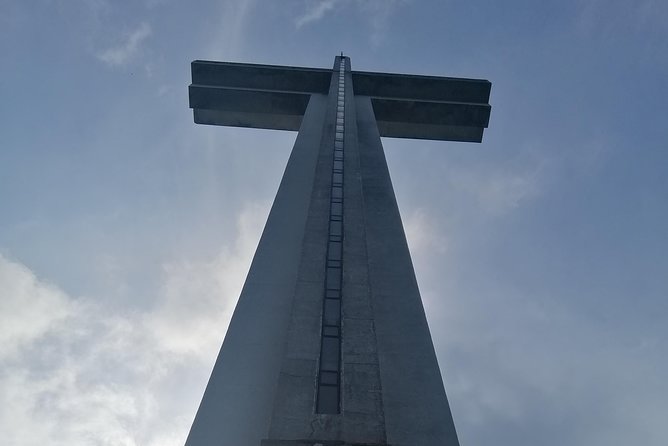
- Mount Samat gives the day its grandest memorial setting, with the Shrine of Valor honoring those who fought in World War II.
- The Bataan World War II Museum marks the 1942 surrender of USAFFE forces, making it an important stop for understanding the campaign.
- Capas National Shrine recalls Camp O’Donnell, where Filipino prisoners of war were held after the march.
- Bamban Museum of History is privately run and highly personal, with local relics and stories connected to the area.
- Guides JB Quemado and Ferdinand Contreras have received especially strong praise, including for family connections to the Death March.
- The $350 group price covers up to four people, so the value improves sharply when shared by a small family or group of friends.
Why this tour matters
The Bataan Death March was not one isolated event. It followed the surrender of Filipino and American forces in Bataan in 1942, when prisoners were forced to move under brutal conditions toward confinement camps. The sites on this day help you connect surrender, imprisonment, memorial, and memory.
That connection is the real reason to book this outing. A monument alone can feel distant. A museum alone can leave you with dates but little sense of place. Here, you move between memorial grounds, surrender sites, and collections of wartime objects while a guide explains how the pieces fit together.
I would choose this tour for someone who wants a serious history day rather than a light sightseeing trip. It is also a useful choice if you prefer asking questions as you go. Since the activity is private, your guide can spend more time on the parts that matter most to you, within the limits of a long day and a fixed route.
The strongest part of the experience appears to be the human connection. JB Quemado has spoken about his grandfather’s participation in the march and prisoner-of-war experience. Another guide, Ferdinand Contreras, was praised for giving a clear account of the campaign. Those family links can turn a list of events into something immediate and painful.
A few more trips and experiences worth a look
- Intramuros, Manila: Historical Bamboo Bike Tour
★ 4.8 · 583 reviews - Experience Intramuros with Bamboo Bicycle – Ecotours
★ 5.0 · 508 reviews - Manila: Intramuros, Chinatown, and Old Manila Half-Day Tour
★ 4.8 · 475 reviews
The long road from Manila
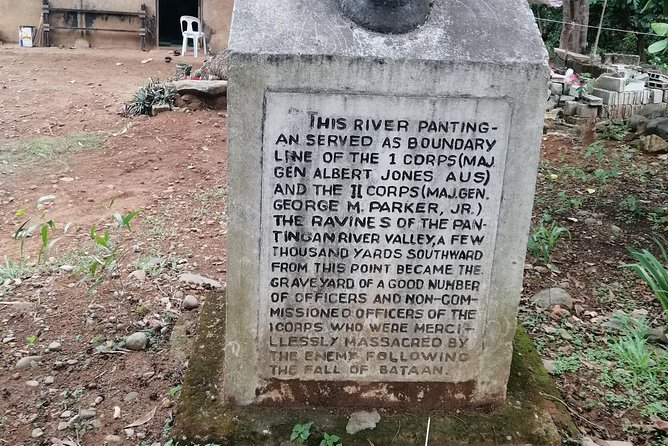
The day begins at 7:00 a.m., with pickup offered from hotels in the Manila area. The early start is practical, not decorative. Bataan and the other sites are spread across Central Luzon, and the drive can take up much of the day.
You should arrive ready for a full schedule. The listed duration is about ten hours, but the total feel depends on traffic, the time spent at each museum, and the order used on the day. One important planning note: the route may begin at Capas National Shrine and work toward Bataan, rather than following the order listed below. That reverse routing is used because reaching Mariveles or Bagac can take about four hours.
This is a private outing for only your group, up to four people. That gives you more control than a large coach tour. You can ask for more explanation at a memorial, move at a comfortable pace, or focus on American, Filipino, or military history. Still, do not assume every requested change can fit into the day. Ask about the exact sequence before setting out.
Mount Samat and the Shrine of Valor
Mount Samat National Shrine, also called Dambana ng Kagitingan, is the day’s most imposing memorial stop. Its purpose is to honor those who fought during World War II, and the mountain setting gives the visit a strong sense of scale.
You have about an hour here, with admission included. The shrine is not just a place to take a photograph. It gives your guide room to explain the fighting in Bataan and the sacrifice remembered by Filipino and American families.
The site is closed on Mondays, so check the operating day carefully before you reserve. Since the tour depends on several stops across a large area, a closure can affect the shape of the day.
The Mount Samat visit also provides a needed pause from the vehicle. After long stretches on the road, an hour at a memorial with broad views can help you absorb what you have been hearing. I would give this stop your full attention rather than rushing through it for the next museum.
The surrender remembered at the Bataan World War II Museum
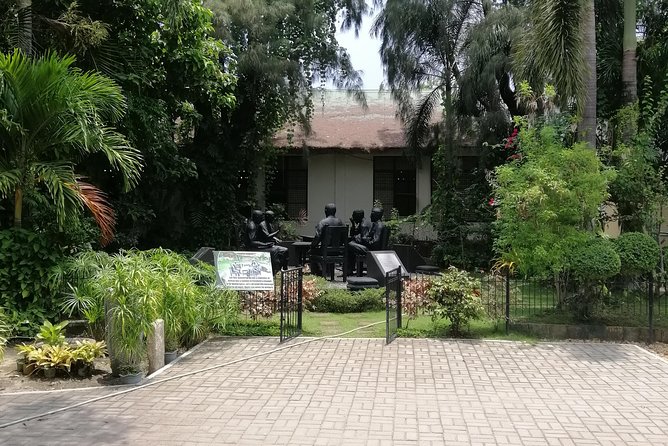
The Bataan World War II Museum is listed as the surrender site of USAFFE forces in 1942. USAFFE refers to the United States Army Forces in the Far East, which included Filipino and American forces.
The stop lasts about 30 minutes, and admission is included. That may sound brief, but it can work if your guide provides the surrounding context. The value here comes from standing at a place tied directly to the surrender, not simply reading about it in Manila.
Because the visit is short, prepare a few questions in advance. You might ask how this surrender led to the Death March, how Filipino and American forces were treated, or how this site connects with Camp O’Donnell. A private guide can make a short stop more useful by keeping the explanation focused.
This is also one reason I would not treat the tour as a simple monument checklist. The individual stops vary in size and depth. Some offer a large memorial setting, while others provide a compact historical marker or museum visit. Together they form the fuller picture.
Something different, still within reach of Manila:
- Manila: Old & New 4-Hour City Tour
★ 4.5 · 458 reviews - Manila Food Tour: Introduction to Philippine Street Food
★ 5.0 · 417 reviews - Manila Old and New: Sightseeing Tour Including Intramuros and Fort Santiago
★ 4.5 · 377 reviews - Spectacular Manila to Tagaytay: Full-Day Sightseeing Tour
★ 5.0 · 349 reviews
Capas National Shrine and Camp O’Donnell
Capas National Shrine recalls the former Camp O’Donnell, a confinement camp for Filipino prisoners of war in 1942. It is a crucial stop because it shifts the story from battle and surrender to imprisonment.
You have about 30 minutes here, with admission included. The short visit carries heavy subject matter, so the guide’s explanation matters. This is where the consequences of the surrender become harder to keep at a distance.
If the route begins here, as it may, you will encounter the prison-camp story before reaching the Bataan memorials. That order can actually work well. You first learn what followed the surrender, then visit the places linked to the campaign and remembrance. If you expect the Mount Samat stop to come first, confirm the plan before the morning begins.
The tour information uses the phrase concentration camp for Camp O’Donnell. The site is presented as a place where Filipino POWs were held. Your guide can help clarify the chronology and the relationship between the march, surrender, and detention.
Bamban Museum of History: the most personal stop
Bamban Museum of History is a private museum with relics from the local area. Its curator shares stories about the places and people connected to World War II there. You have about an hour, and admission is free.
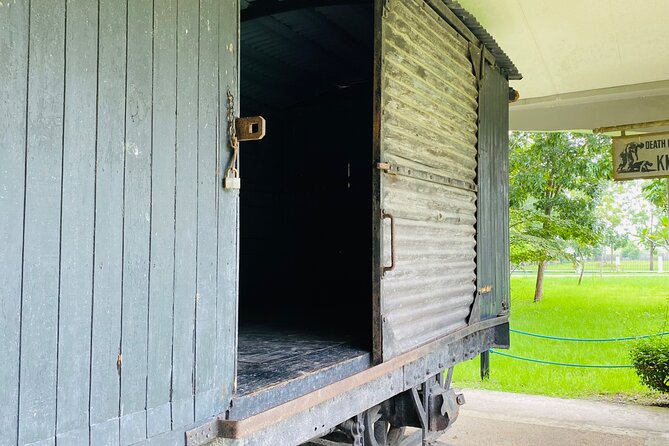
This may be the most distinctive stop of the day. Large official memorials give you national memory. A private collection can offer the smaller objects and local accounts that official sites sometimes lack. One particularly memorable object noted by visitors is a replica cart used to transport American prisoners during the march.
The museum’s strength is its local focus. Instead of only hearing about generals and major battles, you may learn how specific places and personalities shaped the story. The curator’s role adds a personal voice, and the collection can make the history easier to picture.
The drawback is that private museums can vary in presentation. Do not expect the same polish at every stop. That is part of the tradeoff. The Bamban museum may feel more direct and personal, while a government memorial may feel more formal and spacious.
What the guides add to the day
A guide can make or break a history tour, especially when the subject is painful and the driving time is long. The strongest accounts from this experience point to JB Quemado and Ferdinand Contreras as guides who explain the events clearly and connect them to Filipino family memory.
JB Quemado’s connection to his grandfather is especially important. His grandfather took part in the Death March and experienced imprisonment as a POW. Hearing that family story can give the day a human scale that dates and military labels cannot provide.
Ferdinand Contreras has also been praised for giving a strong overview of the march and the war sites. The key benefit of a private guide is not simply having someone read signs aloud. It is being able to ask why a site matters, what happened before and after it, and how Filipino and American experiences differed.
There is a limit, however. One poor experience included complaints about unanswered detailed questions and important locations not being clearly pointed out. That makes it sensible to share your interests early. Tell the guide if you want military detail, family history, Filipino perspectives, American POW accounts, or a focus on the physical route.
The cost: good value for four people
The price is $350 per group of up to four people. That is not a small amount for one person, but it becomes more reasonable when divided among a full group. At four people, the base cost works out to $87.50 each before any separate personal expenses.
The price includes hotel transfers from the Manila area, a private vehicle arrangement, a guide, and admission to Mount Samat National Shrine and the Bataan World War II Museum. Admission to Bamban Museum of History is free. The supplied details do not state that meals are included, so you should plan for food separately.
For a small family, the private format is the main value. You avoid being tied to strangers and can discuss difficult material at your own pace. You also gain a guide who can respond to your questions rather than delivering only a fixed speech.
The value drops if you are alone and mainly want a short museum visit. In that case, the long drive and full-day commitment may feel heavy. This is best treated as a specialized day trip, not as a quick add-on to a Manila vacation.
The real drawback: ten hours and imperfect expectations
The biggest challenge is the amount of road time. One account described the travel as long but worthwhile, while another found the day poorly planned and incomplete. Both reactions are possible, depending on your expectations and how clearly the route is explained.
The tour is not a compact circuit. Sites are separated by significant distances, and the route may be reversed to reduce the longest transfer. You should ask which stop comes first, how long the drive between areas may be, and which locations are included that day.
San Fernando station is not included because it has been under construction since December 2022. A former booking also involved a question about visiting 0 Kilometer, but the group declined that extra area. These details show why you should confirm the exact plan rather than rely only on a general description.
The tour also requires decent weather. If poor weather causes cancellation, you are offered another date or a full refund. For your own comfort, bring patience for the road and approach the day as a memorial visit rather than a fast-moving sightseeing loop.
Who should book this experience?
I would recommend it to you if you have a strong interest in World War II, Filipino history, military campaigns, prisoner-of-war stories, or family memory. It also suits grandparents and older children who can handle difficult subject matter and a full day in the vehicle.
The private setup is helpful for families. A grandparent may want more time at a memorial, while a younger person may ask basic questions without feeling out of place. The group limit of four keeps the experience small and allows the guide to adjust the discussion.
I would be more cautious if you dislike long drives or want a relaxed day with plenty of free time. The schedule is built around several historic sites, not cafés, shopping, or general sightseeing. The subject is also grim. The tour honors courage, but it does not soften the suffering of prisoners and civilians.
The current rating is 4.7 from 35 ratings, with 91 percent recommending it. That is a strong sign, but the mixed experience also gives you useful advice: clarify the route, confirm the stops, and tell the guide what kind of history you want to hear.
Should you book the Bataan Death March memorial tour?
Book it if you want to understand this chapter of Philippine and American history through actual places, memorials, museums, and personal accounts. Mount Samat, Capas National Shrine, and Bamban Museum of History give the day range, while the guide’s family connection can make it deeply personal.
I would book for a group of two to four, confirm that your date does not fall on a Monday, and ask for the planned order before pickup. If you can accept ten hours of travel for a serious historical purpose, this is a worthwhile Manila day trip. If you need a short, polished, easygoing excursion, choose something closer to the city.
FAQ
How much does the Bataan Death March memorial tour cost?
The tour costs $350 per private group of up to four people.
How long does the tour last?
The experience lasts approximately 10 hours.
What time does the tour start?
The start time is 7:00 a.m.
Is hotel pickup available?
Yes. Pickup is offered from hotels in the Manila area.
Is this a private tour?
Yes. Only your group participates, with a maximum of four people.
Which sites are included?
The listed stops are Mount Samat National Shrine, Bataan World War II Museum, Capas National Shrine, and Bamban Museum of History.
Is Mount Samat National Shrine open every day?
Mount Samat National Shrine is closed on Mondays.
Are admission tickets included?
Admission is included for Mount Samat National Shrine and the Bataan World War II Museum. Admission to Bamban Museum of History is free.
Can I cancel for a full refund?
Yes, if you cancel at least 24 hours before the experience begins. Cancellations made less than 24 hours before the start time are not refunded. If poor weather causes the tour to be canceled, you are offered another date or a full refund.
Just added around Manila
- Embark on a 7-Day Banaue-Sagada Adventure of a Lifetime★ 5.0 · 3 reviews
- Philippines Intro 3 days 2 nights Tour Best of Manila and Beyond★ 5.0 · 3 reviews
- Pagsanjan Falls Adventure with Lunch and Rapids Experience★ 4.5 · 3 reviews
- Manila: Intramuros Tour ( Dark)★ 4.7 · 3 reviews
- Manila: Intramuros Heritage Tour★ 4.2 · 3 reviews
- From Manila: Philippines Private Tour Guide★ 4.1 · 3 reviews
- Discover the Real Manila with a Local Guide★ 5.0 · 3 reviews
- MANILA: HISTORICAL KALESA RIDE TOUR EXPERIENCE IN INTRAMUROS★ 4.0 · 3 reviews
Manila Tours, side by side.

Intramuros, Manila: Historical Bamboo Bike Tour
Read the review →
Experience Intramuros with Bamboo Bicycle – Ecotours
Read the review →
Intramuros, Chinatown, and Old Manila Half-Day Tour
Read the review →

Manila Food Tour: Introduction to Philippine Street Food
Read the review →Manila Old and New: Sightseeing Tour Including Intramuros and Fort Santiago
Read the review →Spectacular Manila to Tagaytay: Full-Day Sightseeing Tour
Read the review →
Makati Nightlife: VIP Access to Clubs, Rooftops & Go-Go Bars
Read the review →Where else this one shows up