
Reviewed · MARKETS
Explore Manila Slums and Hidden Market
Look beyond Manila’s postcard sights. This two-hour tour through Tondo offers an honest look at local life, from narrow residential lanes and a wet market to Chinatown streets, jeepney rides, and small food stops. I like the local transport, which turns a simple walk into a proper Manila experience, and I like the personal touch of guides such as Venus and Floyd, who connect the streets with their own lives.
The tour also handles a difficult subject with care. Tondo is home to hardworking communities, not a display for tourists, and the best guides keep the focus on people, history, and daily problem-solving rather than poverty alone. The main consideration is comfort: conditions can be crowded, noisy, hot, and confronting, so this is not the right outing if you want a polished sightseeing route.
In This Review
- Key points to know before you go
- What this Tondo experience is really about
- Meeting your guide near Tutuban Center
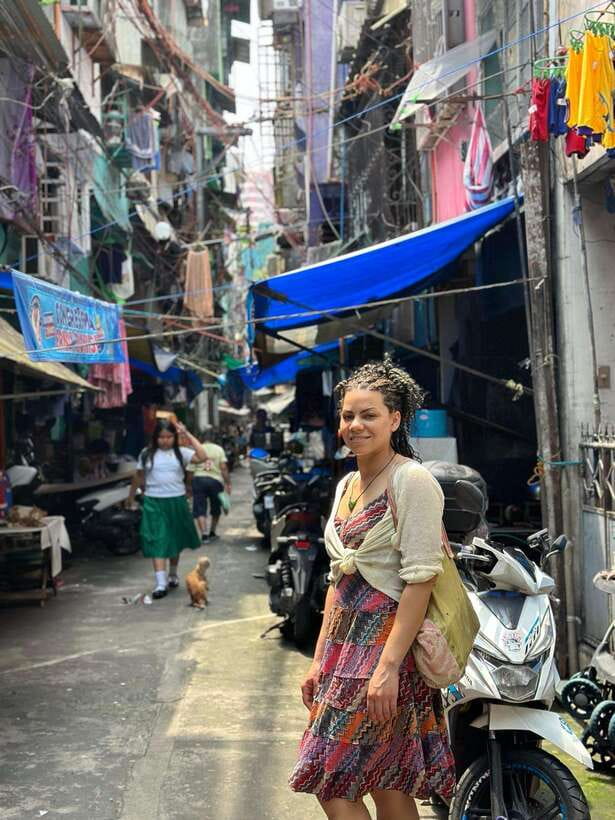
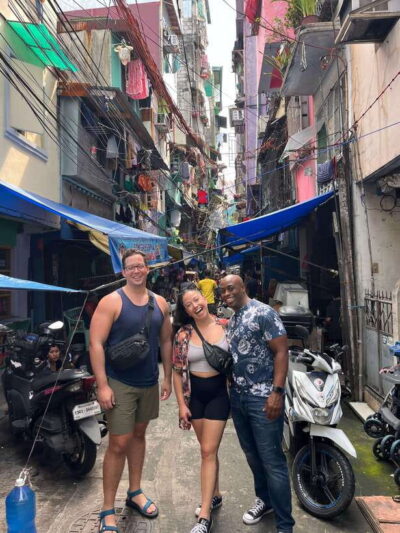
- Walking through residential Tondo
- The wet market and everyday shopping
- Riding a tricycle through local streets
- Jeepney travel and the old Manila connection
- From Divisoria-style markets to Chinatown
- Why the guide makes or breaks the visit
- Is $65 a fair price for two hours?
- Who should book this tour?
- Booking details worth knowing
- Should you book Explore Manila Slums and Hidden Market?
- FAQ
- Where does the tour meet?
- How long does the tour last?
- How much does the experience cost?
- What transportation is included?
- Is a guide included?
- How large is the group?
- Does the tour visit a wet market?
- Does the tour visit Chinatown?
- Can I cancel for a refund?
- Can I reserve now and pay later?
Key points to know before you go
- Tondo with local guidance: Walk through residential areas with a guide who understands the neighborhood and its people.
- Three ways to move: The price includes a tricycle ride and a jeepney ride, along with the walking sections.
- Market life up close: Expect a wet market and a local food market with produce, groceries, and prepared dishes.
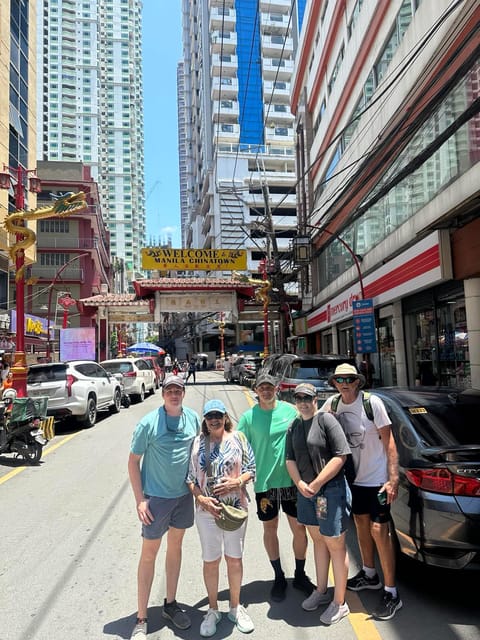
- Chinatown connection: The route also reaches Manila’s Chinatown and may include local food stops such as bao or egg tarts.
- Small group setting: Groups are limited to 10 people, which makes questions and conversation easier.
- Good booking flexibility: The $65 price can be reserved with payment later, and cancellation is free up to 24 hours before the tour.
What this Tondo experience is really about
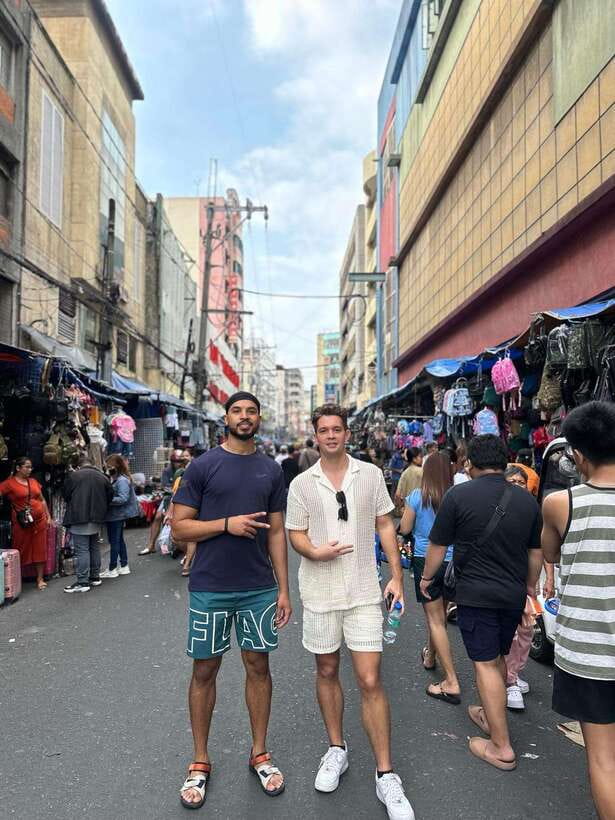
This is not a standard Manila highlights tour. You will not spend two hours moving between grand churches, museums, and major monuments. Instead, you will see how people shop, travel, work, and socialize in one of Manila’s oldest districts.
The word slum can make a place sound like a spectacle. That is the danger with this kind of outing. The better approach is to treat Tondo as a lived-in neighborhood with serious challenges, strong social ties, small businesses, and its own rhythms. The guide matters enormously here. A local guide can explain what you are seeing and help you behave with respect.
Floyd has been described as born and raised in the area, with police service and medical training. Venus is praised for her warm manner, local knowledge, and easy conversation. You may be assigned one of them or another English-speaking guide, so it is best not to book solely for a particular person unless the operator confirms who will lead your departure.
The tour has a rating of 4.9 out of 5 from 41 bookings, with praise focused on guide quality, safety, transport, food tastings, and the chance to understand Filipino life beyond the usual tourist route. Those are the areas where the experience appears to offer its strongest value.
A few more trips and experiences worth a look
- Manila: Guided Night Market Experience
★ 5.0 · 54 reviews - Manila’s Culinary Expedition: The Ultimate Food and Market Tour
★ 5.0 · 42 reviews - Manila Street food and Night Market Tour
★ 4.7 · 21 reviews
Meeting your guide near Tutuban Center
The stated meeting point is at Tutuban Center Mall, near the Bonifacio Monument and Lawson Convenience Store. This places you close to the old commercial core of Manila, an area associated with markets, trade, Chinatown, and Divisoria.
Give yourself time to find the exact spot. The meeting instructions include several recognizable names, but malls and market districts can be busy and confusing. Keep the guide’s contact details available, and confirm the precise meeting landmark before setting out.
One practical detail needs checking when you book: the experience information lists Nueva Vizcaya as the location, while the meeting point and route descriptions clearly refer to Tondo and central Manila. Ask the operator to confirm the city and meeting place before paying or traveling to the start.
Walking through residential Tondo
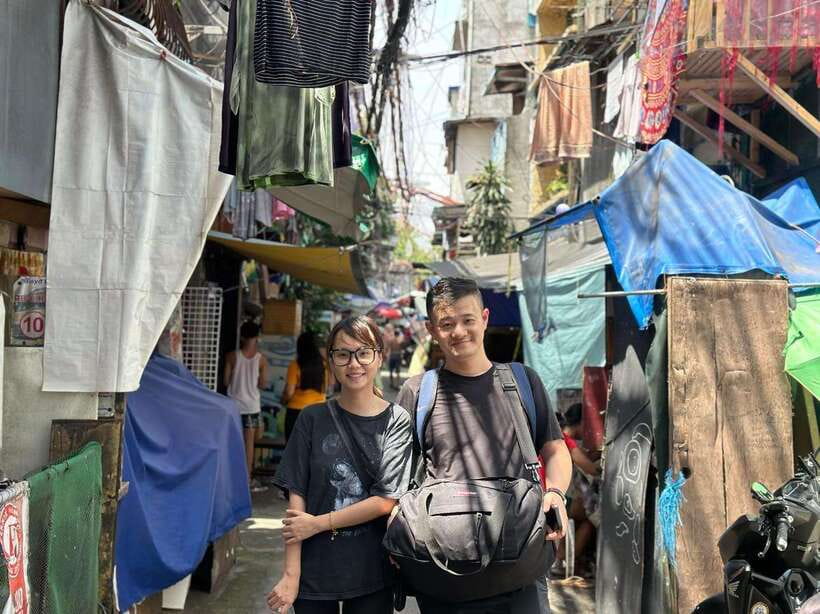
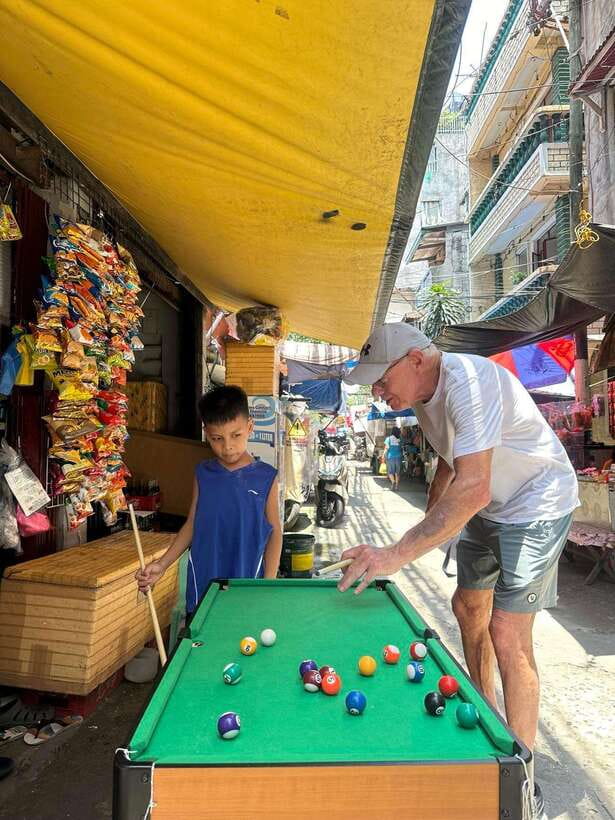
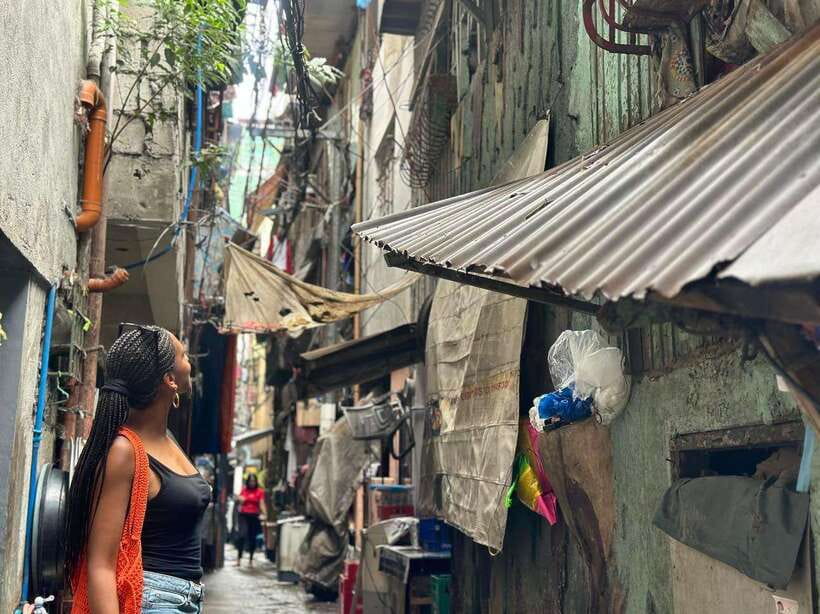
The first major part of the tour takes you into Tondo’s residential lanes. You might see a side of Manila that is absent from a conventional city tour: compact housing, people handling daily chores, children playing, and neighbors moving through tight shared spaces.
This is where your guide’s manner becomes more important than the route itself. You are entering someone’s home area, not an open-air museum. Follow instructions about photography, avoid pointing cameras at people without permission, and let residents go about their day.
The strongest accounts of this tour describe the community as friendly and the visit as safe under local guidance. That does not mean you should stop paying attention. Stay with the group, listen carefully, and remember that a welcoming response is not an invitation to photograph every person or room you see.
Floyd’s connection to the neighborhood is especially useful here. His local standing helps explain why a visitor can enter areas that would be difficult to understand alone. The value is not simply access. It is context: why lanes are arranged as they are, how residents deal with limited space and resources, and how local networks help people manage everyday problems.
You may find the visit emotionally demanding. Some people appreciate the direct look at inequality and community strength. Others feel uneasy about seeing hardship as part of a paid activity. I think the tour works best when you approach it as a lesson in urban life, not as entertainment.
The wet market and everyday shopping
The wet market is one of the tour’s most vivid stops. You can expect close-packed stalls, fresh produce, groceries, and the sounds and smells of ordinary shopping. For many people, this is the part that makes Manila suddenly make sense as a working city rather than a collection of tourist sights.
Markets reward attention. Look at what is being sold, how goods are arranged, and how quickly vendors serve local customers. Your guide can help explain unfamiliar food and local habits, which gives the visit more meaning than simply walking past stalls with a camera.
The market can also be intense. Floors may be wet, aisles tight, and the air heavy with food smells. Wear shoes with a secure grip and clothing suited to heat. Keep your bag close, not because the tour is presented as unsafe, but because crowded markets require the same common sense you would use anywhere.
Some departures include small food tastings. Bao, local snacks, and drinks have been part of the experience described by past participants, with the bao receiving particular praise. Food offerings can vary, so treat them as a welcome extra rather than the central reason to book.
More markets and shopping in Manila:
- Private Market Tour and Filipino Cooking Class in Manila with Isi
★ 4.5 · 15 reviews - Tagaytay Adventure: Volcano Views, Countryside, Market & Cruise!
★ 4.5 · 14 reviews - Manila Night Market with Local Guide
★ 4.7 · 12 reviews - Manila Night Market Experience with Local Guide
★ 5.0 · 10 reviews
Riding a tricycle through local streets
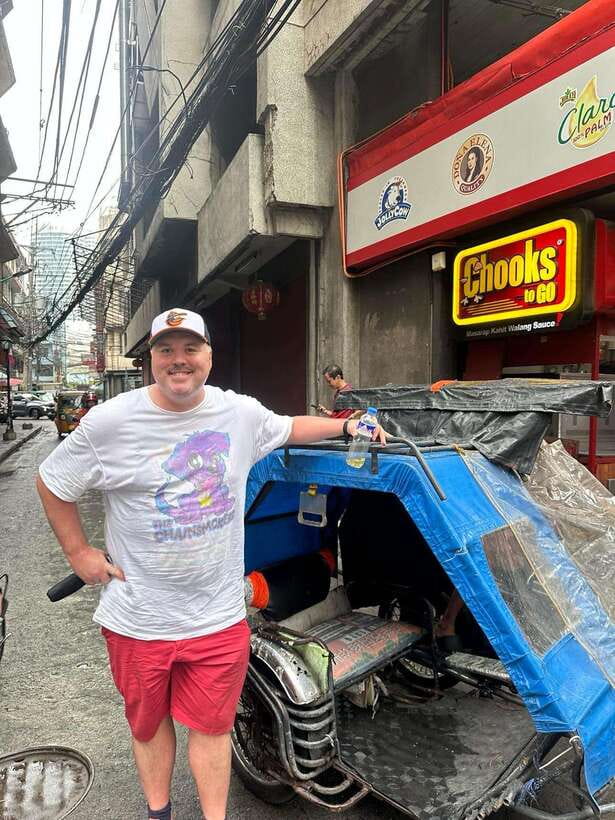
The included tricycle ride adds a practical slice of Manila transport. These small vehicles are part of daily life, and riding one gives you a quick sense of how people move through narrow or crowded streets.
The ride is not a sightseeing cruise. It is short, functional transport, and that is precisely why it feels useful. You are not being placed behind glass or moved in a private vehicle. You are using the sort of local connection that residents use.
Space may be limited, and the route can feel lively and close to the street. If you dislike cramped transport, keep that in mind. For most people, the tricycle is a fun part of the tour, especially because the guide can explain what you are seeing between stops.
Jeepney travel and the old Manila connection
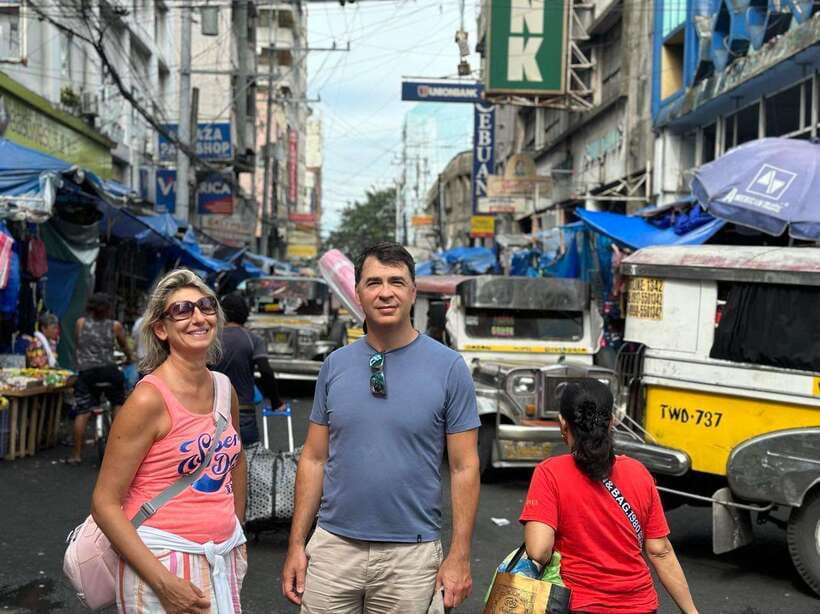
The jeepney ride is another major feature. Jeepneys are one of the defining forms of public transport in the Philippines, and even a short journey gives you a more direct feel for Manila’s movement and street culture.
You will likely share the vehicle rather than ride privately. That means the experience may include noise, close seating, and an ordinary commute rather than a scenic route. I see this as a strength, as long as you understand that the transport is part of the lesson, not just a novelty.
The route links Tondo’s residential streets with the older commercial districts around Chinatown and Divisoria. That connection matters. Manila’s neighborhoods are not isolated attractions. People cross between them for work, shopping, food, and family life, and the tour lets you make part of that journey yourself.
One participant called the jeepney ride especially fun, while another described the entire route as a useful way to understand the city after already spending several days in Manila. That is a good sign for repeat visitors who have already seen Intramuros, Makati, or the major churches.
From Divisoria-style markets to Chinatown
The route may continue by tuk-tuk or tricycle toward a market selling fruit, vegetables, groceries, and local food. This section gives you another view of commerce, less focused on formal attractions and more on the work of feeding a city.
From there, the experience reaches Chinatown, often described as the oldest Chinatown in the world. The tour does not treat Chinatown as a separate history lecture. Instead, it shows how food, trade, migration, and street life overlap in this part of Manila.
The food stops are a pleasant addition. Bao and egg tarts have been singled out as memorable treats, and some outings include a drink or beer. If you are interested in Filipino and Chinese-Filipino food, ask your guide to explain what you are eating rather than simply rushing through the tasting.
With only two hours, do not expect a complete tour of Chinatown. You will get a quick local introduction, not a full historical walk. That limited time is both a benefit and a weakness: it keeps the outing lively, but it leaves little room for long conversations at each stop.
Why the guide makes or breaks the visit
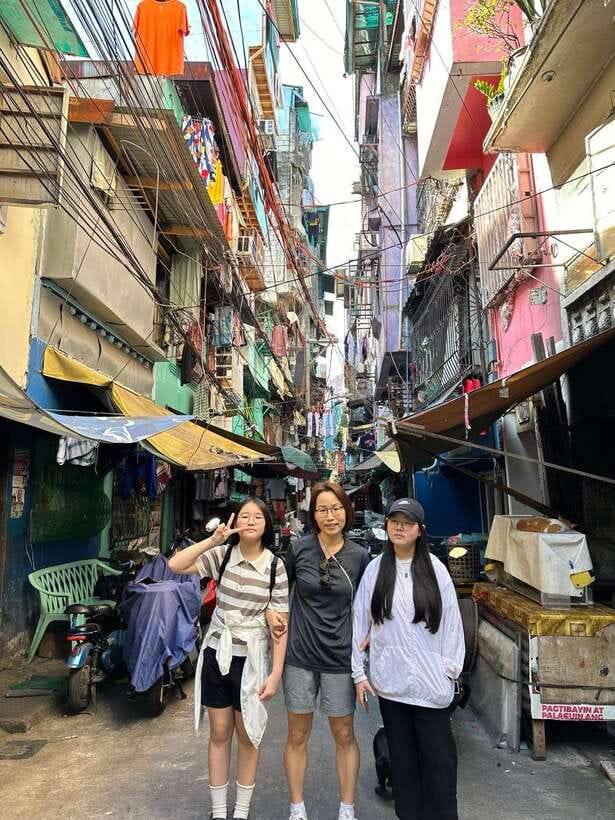
On a route like this, the guide is not a minor detail. The guide controls the pace, explains local customs, reads the mood of the area, and helps you avoid turning someone’s home into a photo backdrop.
Venus is praised for being energetic, friendly, and generous with explanations. Her approach appears to make the outing feel like walking around with a local friend, with food stops added along the way. Floyd brings a different strength: his local roots, service background, and relationships in the community give him authority in an area where outside access could otherwise feel awkward.
The experience is offered in English, and the group is limited to 10. That is a useful size for a walking tour through narrow lanes. You can ask questions without holding up a large crowd, and the guide has a better chance of keeping everyone together.
The guide may also offer extra options. One account describes an invitation to see a chicken fighting match, while another mentions the guide giving money to people in need. These details should not be treated as guaranteed parts of the two-hour program. If an extra activity is offered, you can decide for yourself if it fits your interests and comfort level.
Is $65 a fair price for two hours?
At $65 per person, this is not the cheapest way to walk around Manila. A self-guided market visit and public transport would cost far less. The question is what you are paying for.
You are paying for a local guide, neighborhood access, explanation, and included tricycle and jeepney rides. You may also receive food tastings or drinks, depending on the departure. Most important, you are paying for a structured way to enter a place where going alone might feel uncertain or intrusive.
For a small group of up to 10, the price is easier to justify than it would be for a large coach tour. The guide can respond to your questions and manage the pace. If you value cultural context and personal contact, the cost is reasonable.
It is less appealing if you mainly want food or transport. The tour is short, and the market and Chinatown sections are introductions rather than full culinary or historical programs. You should book it for the human stories and local perspective first, with snacks and rides as bonuses.
Who should book this tour?
I would recommend it to you if you have already seen Manila’s main sights and want to understand how the city works at street level. It also suits first-time visitors who are curious, respectful, and comfortable with an unscripted setting.
The tour is a good match for:
- Curious adults who want local context
- Visitors interested in markets and public transport
- People who prefer small groups
- Repeat visitors looking beyond formal attractions
- Anyone willing to listen before taking photographs
I would think twice if you need a quiet, air-conditioned outing or if you are uncomfortable around poverty. Families should also consider how children will respond to crowded lanes and difficult social conditions. The tour may be educational, but it is not light sightseeing from start to finish.
Wear practical shoes, bring water, and carry only what you need. Dress simply and respectfully. Ask before photographing people, especially children. These choices help keep the encounter polite and reduce the feeling that residents are being watched for entertainment.
Booking details worth knowing
The experience lasts two hours and is led in English. The group limit is 10 people. The $65 price includes the guide, a tricycle ride, and a jeepney ride.
You can reserve now and pay later, which helps if your Manila schedule is still changing. Free cancellation is available up to 24 hours before the tour for a full refund. Starting times depend on availability, so check the schedule when booking.
Because the supplied location information says Nueva Vizcaya while the meeting point is in Tondo, Manila, confirm this detail directly with V.S Tour Services. It may be a location-label error, but it is too important to ignore.
Should you book Explore Manila Slums and Hidden Market?
Book it if you want a direct, local look at Manila and are ready to treat Tondo as a real neighborhood rather than a spectacle. The combination of residential streets, market life, Chinatown, a jeepney, and a tricycle gives you a lot of texture in two hours.
The strongest reason to go is the guide. Venus and Floyd have received especially warm praise for kindness, local ties, and clear explanations. The biggest caution is the setting itself. This can be confronting, and the experience depends on respectful behavior from both the guide and the group.
For a first visit centered on museums and monuments, this tour adds a needed second view of the city. For a visitor who wants comfort and polished presentation, choose a different Manila outing. If you book, confirm the meeting location, ask about your guide, and arrive ready to listen.
FAQ
Where does the tour meet?
Meet your guide at Tutuban Center Mall near the Bonifacio Monument and Lawson Convenience Store.
How long does the tour last?
The tour lasts two hours.
How much does the experience cost?
The listed price is $65 per person.
What transportation is included?
The tour includes a tricycle ride and a jeepney ride.
Is a guide included?
Yes. A live English-speaking tour guide is included.
How large is the group?
The tour is limited to 10 participants.
Does the tour visit a wet market?
Yes. The route includes a local wet market and market areas selling produce, groceries, and local food.
Does the tour visit Chinatown?
Yes. The experience includes Manila’s Chinatown as part of the route.
Can I cancel for a refund?
Yes. You can cancel up to 24 hours in advance for a full refund.
Can I reserve now and pay later?
Yes. The booking option allows you to reserve your place and pay later.
Just added around Manila
- Embark on a 7-Day Banaue-Sagada Adventure of a Lifetime★ 5.0 · 3 reviews
- Philippines Intro 3 days 2 nights Tour Best of Manila and Beyond★ 5.0 · 3 reviews
- Pagsanjan Falls Adventure with Lunch and Rapids Experience★ 4.5 · 3 reviews
- Manila: Intramuros Tour ( Dark)★ 4.7 · 3 reviews
- Manila: Intramuros Heritage Tour★ 4.2 · 3 reviews
- From Manila: Philippines Private Tour Guide★ 4.1 · 3 reviews
- Discover the Real Manila with a Local Guide★ 5.0 · 3 reviews
- MANILA: HISTORICAL KALESA RIDE TOUR EXPERIENCE IN INTRAMUROS★ 4.0 · 3 reviews
Markets, side by side.
Manila’s Culinary Expedition: The Ultimate Food and Market Tour
Read the review →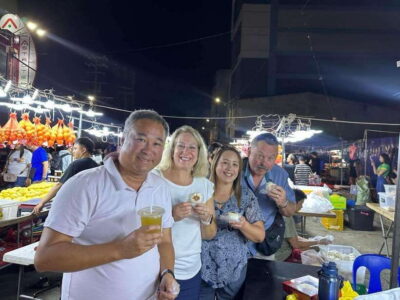

Private Market Tour and Filipino Cooking Class in Manila with Isi
Read the review →
Tagaytay Adventure: Volcano Views, Countryside, Market & Cruise!
Read the review →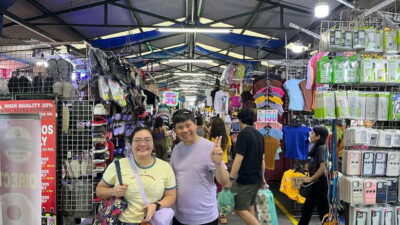
Where else this one shows up