
Reviewed · SCUBA DIVING
Boracay: Introduction to Scuba Diving Experience
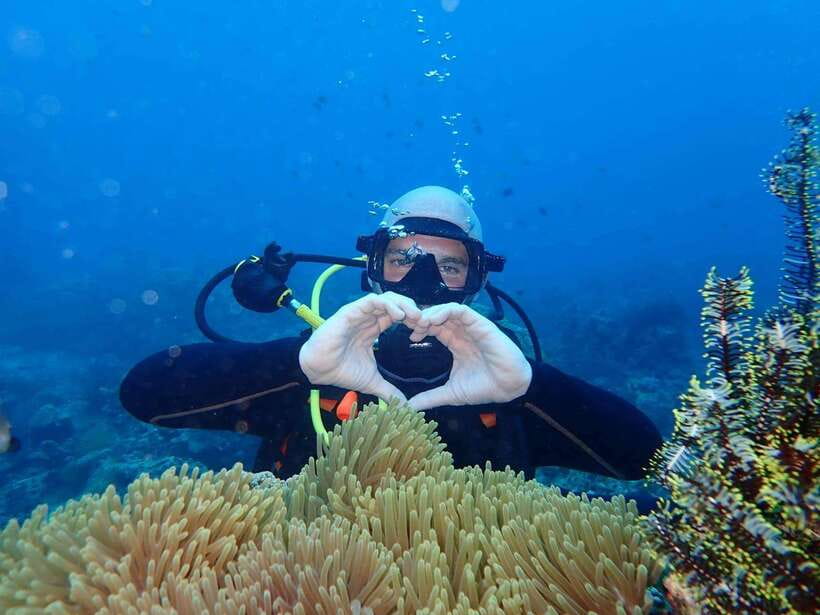
Scuba starts with one calm breath. This Boracay introduction is appealing because you get patient instruction before entering open water, then a guided look at coral and fish from as deep as 6 meters for most beginners. I also like that photos and videos are included, so you can keep a record of your first underwater outing. The main consideration is that the actual sea time is fairly short, and the experience may feel rushed if your group is larger or you are slow getting comfortable in the water.
The strongest part is the staff. Guides such as Butch, Roy, Joliou, Romeo, Bong, and Luis have been praised for helping nervous beginners settle down and for checking on people throughout the session. Still, this is an introductory experience, not a certification course, and one person reported poor photos, a worn boat, and an awkward jump into the water.
In This Review
- Key points to know before booking
- Meeting at Station 1 and getting organized
- The classroom lesson makes the first breath easier
- Fitting the mask, fins, and tank
- Shallow-water practice before open water
- The short boat ride to Boracay’s reef
- Thirty to forty minutes among coral and fish
- Photos, videos, and the completion certificate
- Is $50 a fair price?
- Who should choose this Boracay experience?
- How to get the most from the three hours
- Should you book it?
- FAQ
- Where is the meeting point?
- How long does the activity last?
- What start times are available?
- How deep will I go?
- How long will I spend underwater?
- Is scuba equipment included?
- Are photos and videos included?
- Can I fly after the activity?
Key points to know before booking
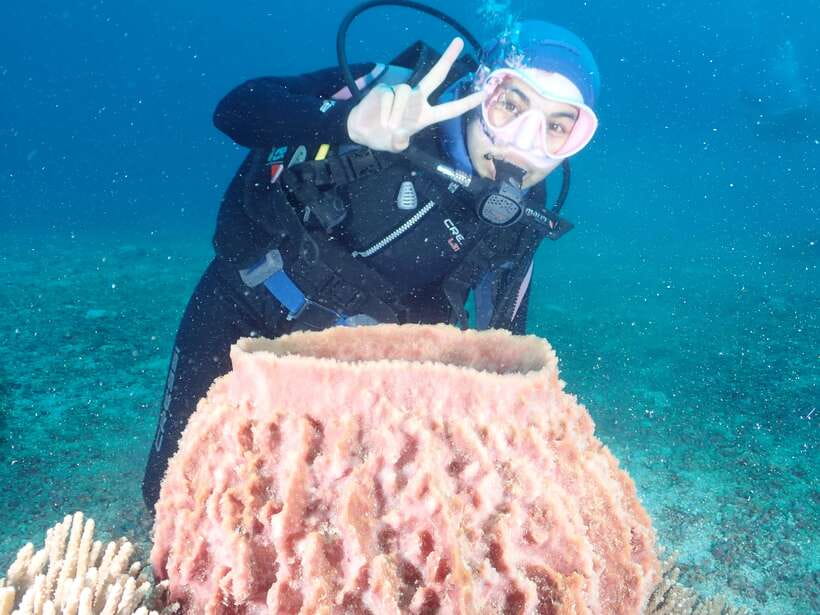
- Maximum depth is usually 6 meters: The package allows up to 12 meters, but beginners generally remain at about 6 meters.
- Practice comes before the boat trip: You learn breathing, pressure equalization, mask clearing, and regulator recovery in shallow water.
- Small guide groups matter: The normal ratio is one instructor or Divemaster for two to four participants.
- Photos and videos are included: Quality can vary, but solo participants may receive especially attentive camera support.
- Two start times are available: Choose 9:00 AM or 1:00 PM, with roughly three hours for the whole activity.
- Plan flights carefully: You must not take a flight within 12 to 24 hours after scuba activity.
Meeting at Station 1 and getting organized
You meet at Astoria Station 1 Beach Front, in front of Tiger Sugar Cafe. Look for the Boracay Adventures guide holding GetYourGuide signage. This is a public beachfront meeting point, so allow enough time to find the cafe and identify the guide before the scheduled start.
There is no hotel pickup or drop-off. You also need to arrange your own meal, though the session lasts only about two to three hours. The 9:00 AM start is useful if you want the rest of your day free. The 1:00 PM option works better if you prefer a slower morning, but you should keep your afternoon plans flexible in case preparation or boat movement takes longer than expected.
The listed duration is three hours, while the actual activity is described as two to three hours. That difference is normal for a beginner session. You are not spending three straight hours underwater. Time is used for registration, instruction, equipment fitting, shallow-water practice, the boat ride, and returning equipment.
More Scuba Diving in Boracay
- Boracay: Helmet Diving Experience with Photos and Videos
★ 4.7 · 155 reviews - WaterColors – Discover Scuba Diving in Boracay
★ 5.0 · 127 reviews - DiveGurus -Scuba Diving in Boracay
★ 5.0 · 25 reviews
The classroom lesson makes the first breath easier
The session begins with a theory and safety briefing led by an English-speaking PADI Instructor or Divemaster. Chinese and Korean instruction is also available. You learn the basic rules for breathing through a regulator, equalizing pressure in your ears, using hand signals, and responding to simple equipment problems.
This part deserves your full attention. Scuba feels strange at first because your breathing pattern changes and your ears react to pressure as you descend. The better you understand these sensations before entering open water, the less likely you are to panic when something feels unfamiliar.
The instructors explain how to clear water from your mask and how to recover a regulator if it moves out of your mouth. You also learn how to communicate underwater, where ordinary speech is not possible. The repeated message is simple: stay close to the guide and follow instructions.
Several people who were nervous at first found this preparation reassuring. Butch was praised for easing beginners into the activity, while Roy was noted for patient explanations and frequent checks. Romeo also received praise for helping a hesitant first-timer feel safe. Those details matter more here than flashy equipment or a dramatic location. A calm instructor can determine whether your first attempt feels manageable.
Fitting the mask, fins, and tank
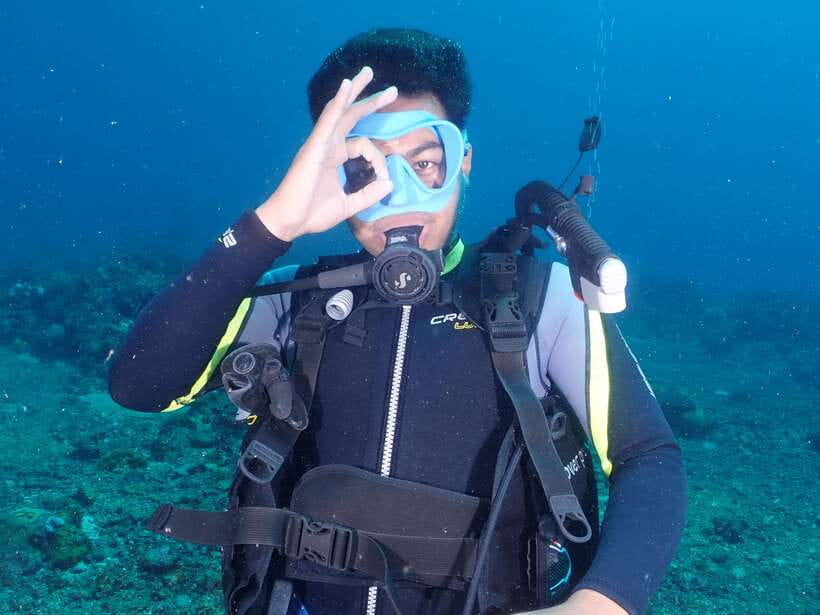
You are supplied with the main equipment: mask, snorkel, fins, wetsuit, regulator, buoyancy control device, tank, and weights. The BCD is the inflatable vest that helps you control your position in the water. Staff help you put on the equipment and adjust the fit.
A good fit is not a small matter. An uncomfortable mask can leak, fins that feel loose can make movement awkward, and a poorly adjusted BCD can distract you when you should be watching your guide. Tell the staff immediately if anything pinches, shifts, or feels wrong.
The included equipment made a good impression for several participants, but one person found the boat slightly worn. That is a useful distinction. The gear and instruction received far more praise than the boat itself, so I would judge the experience mainly on its safety preparation and staff attention rather than expecting a polished luxury setup.
Shallow-water practice before open water
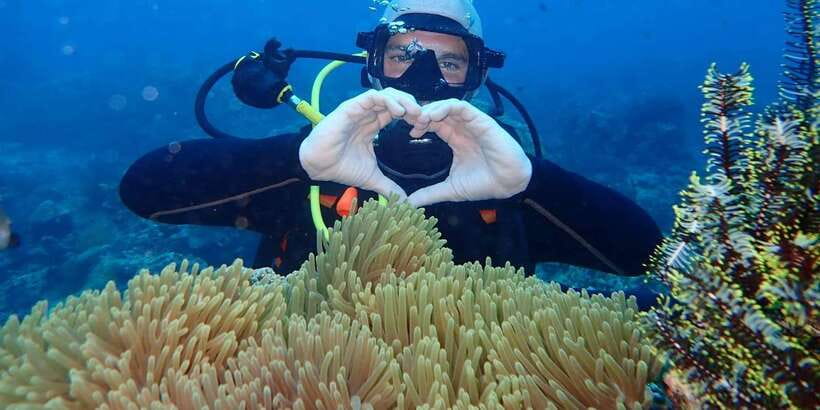
Before boarding the boat, you practice in calm, confined shallow water near the beach. This is where you learn to breathe naturally through the regulator and get used to the feel of the equipment.
You also practice clearing your mask and recovering your regulator. These exercises may sound basic, but they give you a plan for two of the situations that can unsettle a first-timer. If you know what to do before water enters your mask or your regulator shifts, you can solve the problem without immediately surfacing.
This practice is also the best time to be honest with your instructor. If you cannot equalize comfortably, feel anxious, or need a slower explanation, say so. One participant had difficulty equalizing underwater but was encouraged and supported by the instructor. That kind of problem is common enough among beginners that it should not be treated as a personal failure.
The shallow-water session is not a formal certification course. It is a short introduction designed to help you handle yourself with guidance. You should expect close supervision, not independent scuba skills.
More dive trips off Boracay:
- Discover Scuba Diving in Boracay
★ 4.9 · 22 reviews - Scuba Diving in Boracay: SSI Basic Diver for Beginners
★ 5.0 · 20 reviews - Boracay Helmet Diving
★ 4.5 · 17 reviews - Discover Scuba Diving in Boracay with U/W Photo and Video
★ 5.0 · 14 reviews
The short boat ride to Boracay’s reef
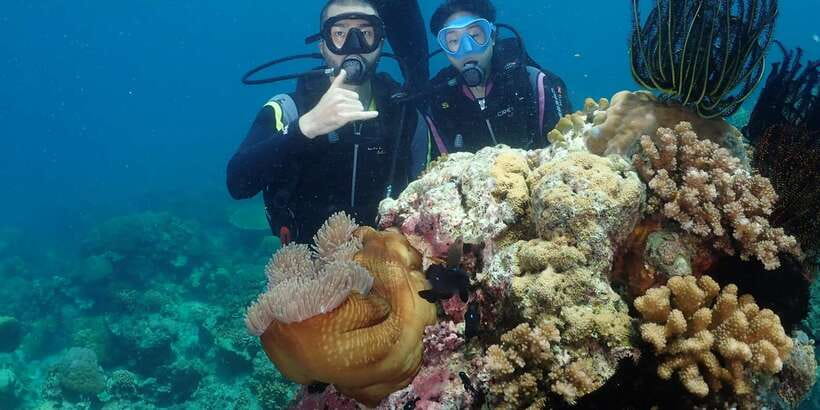
Once you are ready, you board a local boat and travel to a beginner-friendly site. The ride gives you a different view of Boracay’s famous white coastline, this time from the water rather than the sand.
The boat transfer is included in the $50 price, which improves the value. You are not paying separately for transport, equipment, or a second activity. Still, the boat is practical rather than luxurious, and one account described it as slightly broken. If you expect a smooth yacht-style outing, adjust your expectations.
The boat entry also deserves a little attention. Most people managed it without trouble, but one participant said the entry felt rushed and that older parents were asked to enter by stepping backward into the water instead of using the boat’s steps. If you have limited mobility, back problems, or concerns about water entry, ask the staff about the exact procedure before committing.
Thirty to forty minutes among coral and fish
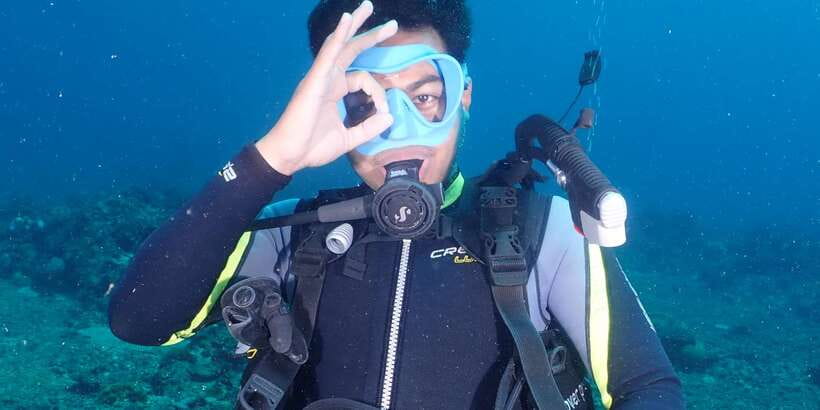
The open-water portion lasts about 30 to 40 minutes, though one account describes 40 to 50 minutes. Your instructor or Divemaster stays with you and leads the group. The normal guide ratio is one professional for every two to four participants, while solo bookings may receive one-on-one attention.
The planned depth is usually about 6 meters, or 20 feet. The package allows a maximum of 12 meters, or 40 feet, and some participants reported reaching around 10 to 12 meters. Your actual depth depends on comfort, conditions, instruction, and the guide’s judgment. Do not treat the maximum as a promise.
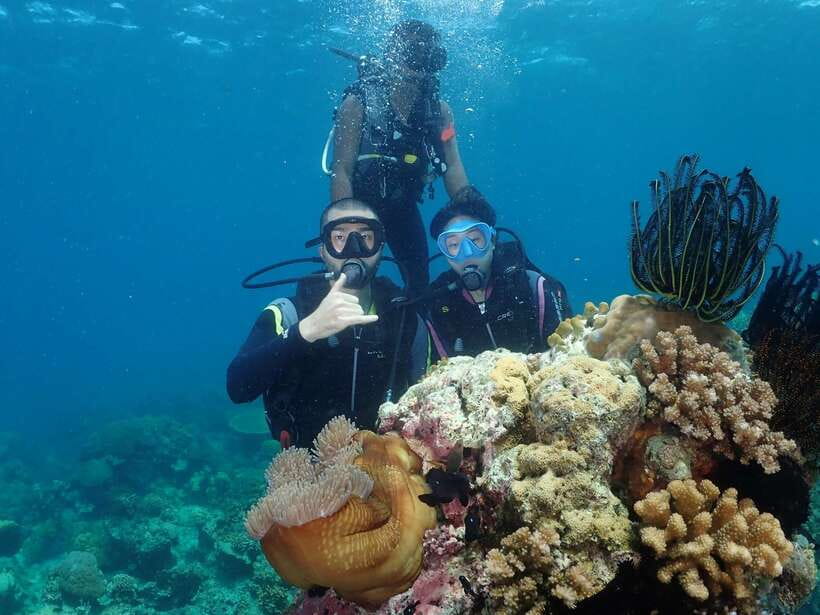
At the reef, you can expect the sensation of weightlessness above coral gardens. The marine life described includes parrotfish, clownfish, colorful reef fish, and possibly a turtle. One first-timer saw a large turtle, while others especially enjoyed fish and coral they had not seen while snorkeling.
The underwater setting is the reason to choose scuba instead of simply staying at the surface. You can move along the ocean floor and look at the reef from close range. The experience is not a long expedition, but 30 minutes can feel substantial when you are still learning to breathe, equalize, control your body position, and watch for signals.
Your guide remains nearby to point out marine life and check your comfort. That close support is particularly valuable if you are nervous about deep water or are not a confident swimmer. You should still be comfortable following instructions and managing basic movement in the water.
Photos, videos, and the completion certificate
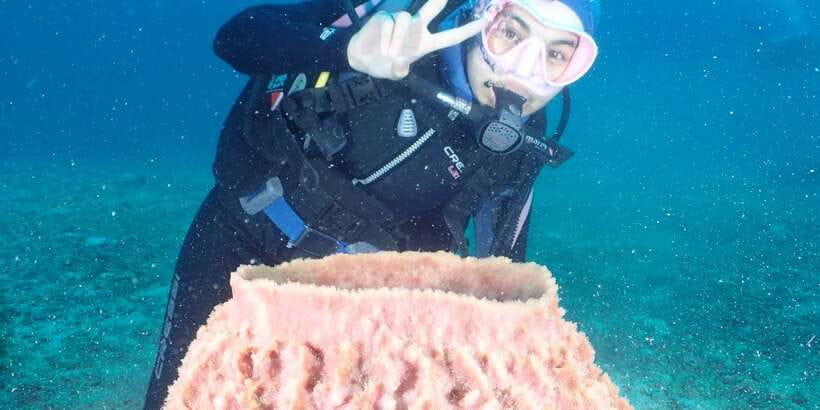
Underwater photos and videos are included. This is a real advantage because you are unlikely to take useful pictures while concentrating on breathing and staying with your guide. Several participants were delighted with the images, and solo participants sometimes received a second guide or photographer while the main instructor focused on safety.
The quality is not guaranteed. One person described the photos as poor, while another wanted longer videos and better camera work. I would treat the media as a pleasant extra, not the main reason to book. You may receive memorable images, but the consistency of the photography seems less certain than the quality of the instruction.
After returning to the beach and the shop, you receive a digital Discover Scuba Diving participation certificate. It commemorates your first attempt, but it is not a scuba license or a substitute for a full PADI certification course. If you enjoy the session, you can use it as a test of whether formal training interests you.
Is $50 a fair price?
At $50 per person, this is strong value for a first-time scuba session. The price includes the theory lesson, professional instruction, all listed equipment, shallow-water training, boat transfers, one guided open-water session, photos or videos, and the digital certificate.
A comparable self-arranged experience could involve separate charges for equipment, transport, instruction, and media. Here, most of the costs are bundled into one booking, which makes planning easier. The one-to-two-to-four guide ratio also adds value, especially if this is your first time breathing underwater.
The tradeoff is duration. You are paying for an introduction, not a full day on a boat or several reef descents. The actual underwater time is around 30 to 40 minutes for most people. If you already hold a certification or have substantial scuba experience, this package may feel too basic.
The price is particularly good for a nervous beginner who wants structure. You receive a lesson, supervised practice, a guided outing, and a keepsake without committing to a multi-day course. It is less compelling if you mainly want professional-quality underwater photography or a long session at sea.
Who should choose this Boracay experience?
I would choose this for adults and children aged 10 or older who want to try scuba without earning a license. It suits first-timers who feel uncertain about equipment, pressure, or deep water, provided they can follow instructions and meet the health requirements.
It is also a good fit for couples or small groups. One family of three received close attention, and the guides were able to help each person adjust at a comfortable pace. The normal ratio of one instructor for two to four participants keeps the group small enough for regular checks.
You should not book if you are pregnant, under 10, have back problems, altitude sickness, or a pre-existing medical condition. The activity is also listed as unsuitable for people with hearing impairment. If you are unsure about your health, get medical advice before booking rather than relying on a holiday waiver.
Plan your flights with care. You cannot take a flight within 12 to 24 hours after your last scuba session. The safest practical approach is to schedule this activity well before your departure, not on the final morning of your Boracay stay.
Free cancellation is available up to 24 hours before the start time, and you can reserve now and pay later. Those options help if weather, health, or flight plans are still uncertain, but they do not remove the flight-after-scuba rule.
How to get the most from the three hours
Arrive ready to listen. The briefing is not filler, and the skills practice gives you the tools to handle small problems underwater. If you feel pressure in your ears, tell the guide instead of forcing the descent.
Choose the start time that fits your wider schedule, then avoid packing the day too tightly. A beginner session includes equipment changes, water entry, and a boat transfer, so a little breathing room is wise.
Ask for a mask and BCD adjustment before leaving the beach. Speak up about the boat entry if you need steps or extra help. You can also ask when and how the photos and videos will be delivered, since the media is digital and included in the package.
Finally, keep your expectations realistic. The reef may be beautiful, and you might see a turtle, but marine life is never guaranteed. The sure thing is the chance to learn basic scuba skills in a supervised setting and spend a short period below the surface.
Should you book it?
I would book this if you want a low-cost first try with strong instructor support and no certification commitment. The staff have repeatedly been praised for patience, safety checks, and clear explanations, and the included boat ride, equipment, media, and certificate make $50 a sensible price.
I would skip it if you want a full-day scuba program, guaranteed long videos, polished boat service, or a formal license. For most beginners, the best reason to choose this experience is not the certificate or the camera. It is the chance to find out, safely and affordably, if scuba is something you want to pursue further.
FAQ
Where is the meeting point?
Meet at Astoria Station 1 Beach Front, in front of Tiger Sugar Cafe. Look for a Boracay Adventures guide holding GetYourGuide signage.
How long does the activity last?
The total activity lasts approximately two to three hours, with three hours listed for the booking. The schedule includes preparation, instruction, shallow-water practice, the boat ride, the guided sea session, and the return.
What start times are available?
You can choose a 9:00 AM or 1:00 PM start time.
How deep will I go?
Beginners typically go to about 6 meters, or 20 feet. The package allows a maximum depth of 12 meters, or 40 feet, depending on comfort and the instructor’s judgment.
How long will I spend underwater?
The guided open-water session usually lasts about 30 to 40 minutes. One experience was described as lasting 40 to 50 minutes.
Is scuba equipment included?
Yes. The package includes a BCD, regulator, tank, weights, mask, snorkel, fins, wetsuit, and the other necessary scuba equipment.
Are photos and videos included?
Yes. Complimentary underwater photos and or videos are included, though image and video quality can vary.
Can I fly after the activity?
No. You cannot take a flight within 12 to 24 hours after your last scuba session because of decompression safety rules.
Just added around Boracay
- Boracay Paraw Sailing★ 5.0 · 3 reviews
- Private Boracay Helicopter Tour with Hotel Pick Up★ 4.5 · 3 reviews
- 2-Hour Boracay Land Tour via Etrike★ 5.0 · 3 reviews
- 2 Days SSI Advanced Open Water Course in Boracay★ 5.0 · 3 reviews
- Boracay Kiteboarding Discovery Course★ 5.0 · 3 reviews
- Boracay Island Hopping Experience★ 3.5 · 3 reviews
- Iloilo City Tour (Garin Farm, Molo Mansion/Church, Vanishing Mansion)★ 3.0 · 3 reviews
- Boracay: Land Tour 3-Hours Guided Private Tour★ 4.3 · 3 reviews
Scuba Diving, side by side.
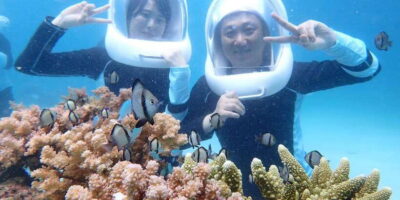
Helmet Diving Experience with Photos and Videos
Read the review →
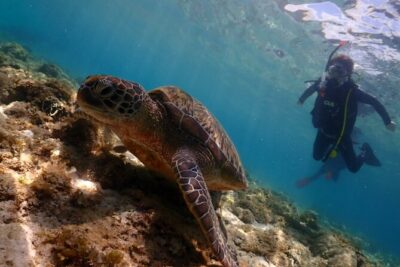
Discover Scuba Diving with Manta Rays in Sibaltan
Read the review →
Scuba Diving in Boracay: SSI Basic Diver for Beginners
Read the review →Where else this one shows up